





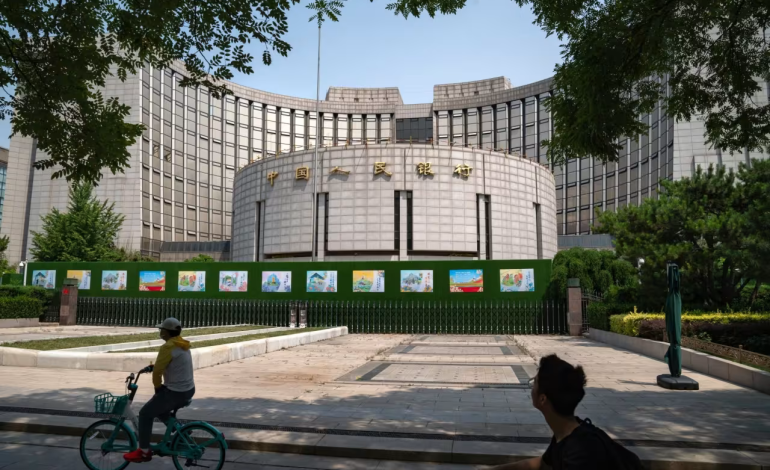

The People’s Bank of China (PBOC) has launched a new swap facility aimed at providing liquidity to institutional investors for stock purchases.
The initiative, valued at 500 billion yuan (approximately $70.6 billion), was initially announced last month as part of a broader stimulus package designed to support China’s slowing economy and boost the stock market.
Starting Thursday, eligible securities firms, funds, and insurance companies can apply to access highly liquid assets such as government bonds and central bank bills in exchange for specific collateral, including bonds, stock exchange-traded funds (ETFs), and shares of companies listed on the CSI 300 index.
PBOC Governor Pan Gongsheng highlighted the importance of this facility during a press conference, stating it would significantly enhance institutions’ ability to raise funds and increase their stock holdings. This announcement comes as China’s stock market has seen significant fluctuations, rallying by as much as 30% after the initial stimulus announcement before experiencing a downturn.
Market sentiment has cooled recently, particularly following a weeklong national holiday, which has left investors awaiting insights from Finance Minister Lan Fo’an, who is scheduled to hold a press briefing on Saturday. Analysts, including Serena Zhou from Mizuho Securities Asia Ltd., believe the new policy will support the stock market, although the timing should not be directly linked to current market performance.
Despite the introduction of this liquidity tool, some experts caution that the central bank’s move may not expand the overall money supply. According to the state-run China Securities Journal, Chinese law prohibits the PBOC from lending directly to nonbank financial institutions. Instead, the swap mechanism is intended to bolster financing capacity without providing direct funds.
The swap facility is part of a comprehensive set of policies announced by the PBOC to stimulate economic activity, especially as growth momentum weakens. With consumer spending remaining sluggish and the target for around 5% economic expansion at risk, the government is eager to implement measures to encourage spending and investment in the capital markets.
Bloomberg, Reuters, and the Wall Street Journal contributed to this report.



The latest news in your social feeds
Subscribe to our social media platforms to stay tuned