





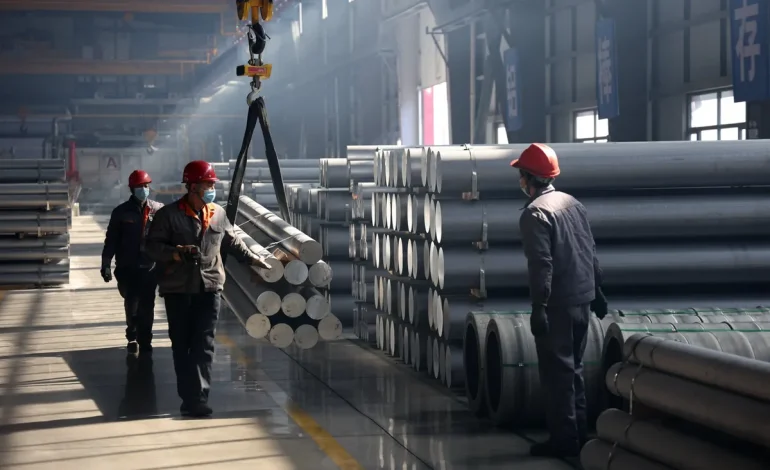

China’s manufacturing sector saw its fastest expansion in three months in February, driven by a post-holiday return to work and strong external demand.
The Caixin/S&P Global manufacturing purchasing managers index (PMI) rose to 50.8, surpassing market expectations and signaling continued momentum in the industrial sector.
The February PMI reading of 50.8 exceeded the Reuters forecast of 50.3 and improved from 50.1 in January and 50.5 in December. This marks the highest level since November, reflecting an improvement in manufacturing conditions. The private-sector index has remained above the 50-point threshold—indicating expansion—since last October.
The Caixin survey results align with the official manufacturing PMI released earlier, which showed an increase to 50.2 in February from 49.1 in January, according to the National Bureau of Statistics. The non-manufacturing PMI, which tracks services and construction activity, also rose slightly to 50.4 from 50.2.
Despite the positive data, concerns remain about the impact of rising US tariffs on China’s manufacturing sector. US President Donald Trump recently announced additional 10% tariffs on Chinese imports, following a previous round of levies in early February. These measures could pressure China’s export-driven industries and introduce new challenges in the months ahead.
However, some analysts suggest that the stronger export orders in February may be linked to companies accelerating shipments ahead of anticipated tariff hikes.
“Demand strengthened from foreign clients, possibly due to US importers front-running tariffs,” noted Zichun Huang, a China economist at Capital Economics.
The latest figures come as Chinese leaders gather for the annual National People’s Congress, where economic targets for 2025 and additional stimulus measures are expected to be announced. Amid signs of weakening domestic demand, policymakers are considering new fiscal measures to support economic growth, including increased government spending.
At the same time, Beijing is weighing potential countermeasures in response to the latest US trade actions. Reports suggest that tariffs on American agricultural and food products may be among the options under consideration.
While February’s PMI data signals resilience in China’s manufacturing sector, uncertainties remain. Rising tariffs, ongoing trade tensions, and domestic economic challenges could weigh on growth in the coming months. Analysts warn that without stronger government stimulus, sustaining this momentum may prove difficult.
With input from CNBC, the Associated Press, and Bloomberg.



The latest news in your social feeds
Subscribe to our social media platforms to stay tuned