





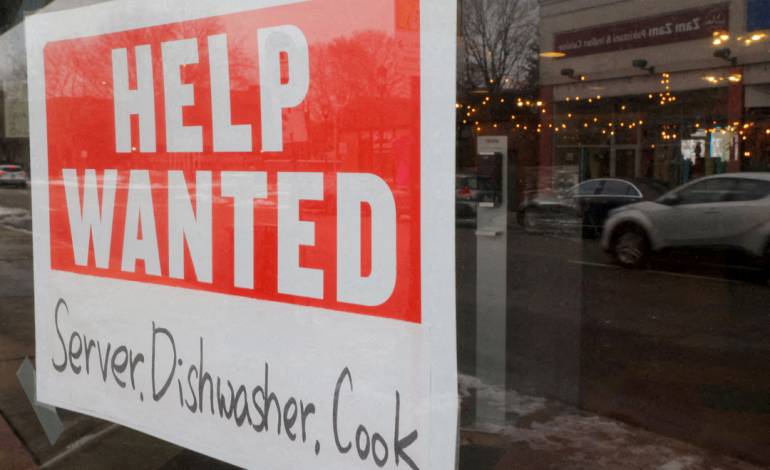

The US jobs engine wasn’t nearly as strong as the monthly headlines suggested. In its annual “benchmark” update, the Bureau of Labor Statistics (BLS) said employment from April 2024 through March 2025 was 911,000 jobs lower than first reported — the biggest preliminary downgrade on record going back to 2002. On average, that’s 76,000 fewer jobs a month.
This is the once-a-year reset where survey-based payroll estimates get reconciled with more complete payroll tax records from the Quarterly Census of Employment and Wages. It’s routine — but this year’s correction is anything but small. It shaved about 0.6% of total employment, and it far exceeds last year’s final benchmark cut of 598,000 (after an initial estimate of -818,000).
Most of the markdown hit the private sector. Biggest downgrades:
- Leisure & hospitality: -176,000
- Professional & business services: -158,000
- Retail trade: -126,200
Transportation/warehousing and utilities saw small upward tweaks. Government payrolls were trimmed by 31,000.
Layer this on top of recent weakness and the picture gets cooler still. Payroll gains averaged just ~29,000 a month over June–August; August added 22,000, unemployment ticked up to 4.3%, and June was revised to a 13,000 job loss — the first negative print since 2020.
The revision mostly covers the final months of the Biden administration and the early months of Trump’s second term — suggesting momentum was fading before newer policy shifts (tariffs, immigration enforcement) fully hit. It doesn’t change job gains since March; those will be benchmarked next year. And it’s preliminary: the BLS will issue the final benchmark in February 2026.
Still, a softer hiring path implies softer income growth. As Nationwide’s Oren Klachkin put it, the update shows “a much weaker labor market over most of 2024 and early 2025,” strengthening the case for the Federal Reserve to resume rate cuts.
Markets took it in stride: stocks wobbled but steadied; Treasury yields initially dipped then turned higher as traders weighed the odds of near-term easing.
The unusually large revision lands amid a brawl over the data itself. After July’s weak report and hefty downward changes, President Donald Trump fired BLS commissioner Erika McEntarfer and nominated Heritage Foundation economist E.J. Antoni to replace her. The White House seized on Tuesday’s figures to argue the agency needs an overhaul; critics counter the bigger culprit is underfunded, survey-based measurement in a fast-shifting economy — exactly what the annual benchmark is meant to correct.
First estimates rely on a monthly survey of ~121,000 employers and statistical models for business births and deaths. When the economy turns or the pandemic-era surge in new business formation fades, those models can miss. The benchmark replaces those estimates with near-census administrative records — a more accurate, but slower, lens.
The labor market hasn’t fallen off a cliff, but it has been cooling more than the monthly prints let on. With hiring slower, unemployment edging up, and the largest benchmark cut in decades, pressure is building on the Fed to pivot from “higher for longer.” Whether policymakers move next week or later this fall, the jobs story just got a clear downgrade.
Reuters, CNBC, the New York Times, and the Washington Post contributed to this report.


The latest news in your social feeds
Subscribe to our social media platforms to stay tuned