





EXCLUSIVE: UN Warns 250 Million Displaced by Climate Disasters as COP30 Opens in Brazil


As world leaders gather in Brazil for COP30, a stark new warning from the United Nations Refugee Agency (UNHCR) hangs over the talks: climate-linked disasters have displaced some 250 million people over the past decade, roughly 67,000 people every single day.
The agency’s report, No Escape II: The Way Forward, lays bare the scale of the crisis, showing that floods, droughts, wildfires, and heatwaves are now uprooting people faster than wars in many regions. The number of countries facing extreme climate exposure could jump from three to 65 by 2040, most of them already home to nearly half of the world’s conflict-displaced people.
To unpack what this means for global policy, Wyoming Star spoke with Dr. Jane McAdam, a prominenent expert on climate mobility and director of the Kaldor Centre for International Refugee Law.
People right across the world are at risk of displacement, even if it’s just short-term. In fact, in 2024, government-led evacuations accounted for nearly 20 per cent (8.3 million) of the 45.8 million recorded internal displacements linked to disasters that year. Climate change amplifies the frequency and intensity of extreme weather events.
This data underscores that climate shocks are now a structural force in global migration. Yet despite clear trends, she cautions that projections of future displacement remain uncertain.
It is very difficult to predict with any precision what the figures could look like, in part because we use proxy measures (e.g. housing loss) to estimate the scale of displacement. The drivers of movement are always multicausal; people may describe their motivations for leaving in different ways; and mitigating factors may be put in place which ultimately avert or reduce displacement.
At present, only internal displacement linked to disasters is being measured: it is even more challenging to account for cross-border movement in the context of disasters and climate change.
This point highlights one of the biggest blind spots in global policy, that those forced across borders by droughts, floods, or heatwaves fall outside current data frameworks.
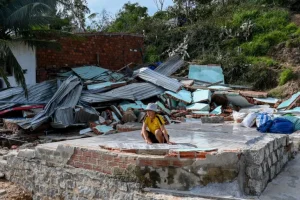
As governments debate funding and accountability at COP30, McAdam argues that solutions must go beyond emergency relief.
As we have outlined in the Kaldor Centre Principles on Climate Mobility, priorities include: Ensuring that responses to (actual or anticipated) displacement are developed together with affected communities; ensuring that people displaced in the context of climate change receive adequate protection and assistance; and facilitating migration with dignity for those who wish to move.
This message cuts to the heart of the COP30 agenda: without fair financing and stronger data systems, climate adaptation plans will fail the people already living its consequences.



The latest news in your social feeds
Subscribe to our social media platforms to stay tuned