






With input from Bloomberg, the Verge, Fortune, and Reuters.
China loves robots — and right now, it really loves humanoid robots. The problem, according to Beijing, is that investors might love them a little too much.
On Thursday, China’s top economic planner warned that a bubble is forming in the country’s fast-growing humanoid robotics sector, even as the government continues to promote the technology as a key engine for future growth.
At a press briefing, Li Chao, spokesperson for the National Development and Reform Commission (NDRC), said the industry needs to balance “the speed of growth against the risk of bubbles,” and avoid flooding the market with “highly repetitive” products.
Translation: too many similar robots, not enough real-world use.
Li said there are now more than 150 humanoid robot companies operating in China — and over half are either startups or firms jumping in from other industries.
Money has been pouring into the sector despite the fact that there are still very few proven, profitable uses for humanoid robots. The fear is that everyone is racing to build roughly the same thing, while actual research and long-term innovation gets squeezed.
The warning is notable because it’s coming from the same government that earlier this year labeled “embodied intelligence” — the tech behind humanoid robots — a national priority and one of six key future growth drivers.
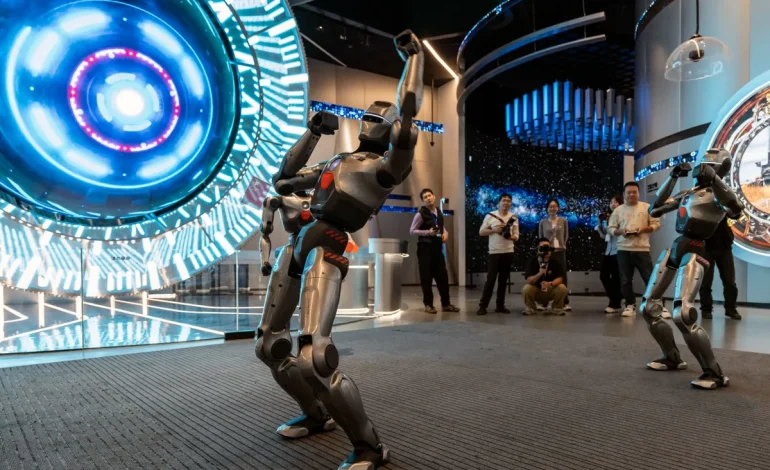
Interest in humanoid robots exploded after Chinese firm Unitree showed off its dancing robots during the Spring Festival Gala, one of the country’s biggest TV events. Clips of robots from startups like AgiBot and Galbot running marathons, kickboxing, or making coffee have gone viral on social media ever since.
That hype has fueled a rush of money into the sector. The Solactive China Humanoid Robotics Index, which tracks related stocks, is up nearly 30% this year. Citigroup thinks the global market for humanoid robots could reach $7 trillion by 2050.
But that’s far into the future. For now, widespread use in homes or factories is still years away.
Li’s comments echo an old lesson from past Chinese investment frenzies — think bike sharing or some segments of semiconductors — where too many companies crowded in, burned cash, and then vanished in brutal shakeouts.
To avoid a repeat, the NDRC says it plans to:
- Tighten entry and exit mechanisms for robot firms to promote fair competition;
- Support core technology R&D instead of endless copycat designs;
- Build more testing and training infrastructure;
- Encourage companies to share technology and industrial resources across regions;
- Push faster real-world applications of humanoid robots.
The idea is to keep innovation moving, but stop a flood of nearly identical robots from turning the whole sector into an overhyped mess.
The warning doesn’t mean China is backing away from robotics. Far from it.
The country:
- Produces over half of the world’s industrial robots;
- Installed more robots at home last year than the rest of the world combined;
- Has homegrown leaders like Roborock dominating markets once led by Western brands.
Chinese companies can often move from idea to product in months, not years, thanks to dense supply chains and intense domestic competition.
That’s exactly why Beijing is trying to cool things down before humanoid robots become the next speculative bubble — and not after.
For now, China is walking a tightrope: push hard on robotics and AI to boost growth and productivity, while quietly warning investors and companies that not every shiny humanoid robot is the next big thing.



The latest news in your social feeds
Subscribe to our social media platforms to stay tuned