




CNN, the New York Times, ABC News, and NPR contributed to this report.
Internet providers are sounding the alarm ahead of a major Supreme Court showdown they say could turn them into copyright cops — and potentially disconnect millions of Americans from the internet.
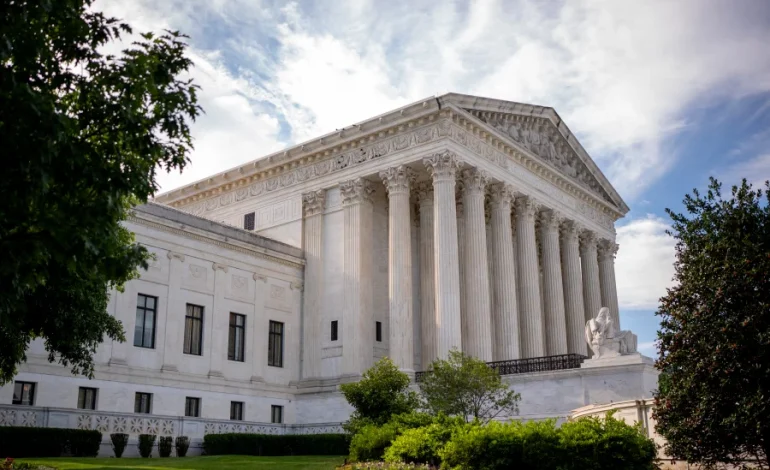
On Monday, the court takes up a high-stakes copyright fight between Cox Communications and some of the biggest names in the music business — Sony Music and a coalition of major labels representing artists like Beyoncé, Eminem, Bob Dylan and Bruce Springsteen. At the center of the dispute: whether ISPs should be held responsible when customers download pirated music through peer-to-peer platforms like BitTorrent.
The labels say Cox knowingly let “habitual offenders” keep using its network to pirate music, ignoring repeated warnings. They argue Cox had no problem cutting off customers for nonpayment — more than 619,000 during the same period — but shut down only 32 accounts for rampant copyright violations.
“Cox made a deliberate and egregious decision to elevate its profits over compliance,” the labels said, accusing the ISP of helping fuel mass infringement by refusing to act.
A jury agreed and slapped Cox with a $1 billion verdict in 2019. An appeals court later tossed out the damages but upheld the finding that Cox willfully contributed to copyright infringement. Cox appealed again — and now the Supreme Court will decide.
Cox says the stakes are far bigger than one ISP. If the labels win, Cox argues, internet companies could be forced to terminate service based on a mere accusation.
The result, they warn: “mass evictions from the internet” — including homes, student housing, hospitals, military bases, coffee shops and hotels.
“That notion turns internet providers into internet police,” Cox told the court.
They say fewer than 1% of subscribers ever violated music copyright rules, and their internal system already stopped 95% of those offenders without needing to cut people off entirely.
Major tech companies — including Google and X (formerly Twitter) — have lined up behind Cox, arguing the ruling could ripple far beyond music piracy.
X warned the appeals court’s decision could “wreak havoc” on the broader tech sector, especially AI platforms, where users’ actions could trigger massive copyright liability.
If AI companies can be sued for what users generate, X argued, they’d be forced to “constrain their actions” to avoid lawsuits — stifling innovation.
There’s an ironic twist: this isn’t the first time the entertainment industry tried to kill a new technology over piracy fears. In the 1980s, Universal Studios sued Sony to stop sales of the Betamax VCR, warning it would unleash mass copyright violations.
The Supreme Court disagreed — and Sony won. Now Sony is back on the other side of the courtroom, arguing for a much stricter liability standard.
Nearly 19 billion pirated movies and shows were downloaded via peer-to-peer networks last year alone. Record labels say the financial cost is enormous — more than $29 billion annually — and that ISPs must help curb the problem.
Free-speech advocates warn the opposite: if ISPs can lose billions for the actions of users they can’t fully identify, companies will crack down hard — sweeping up innocent people along the way.
“Innocent users could lose their internet lifelines merely because a guest downloaded a couple of songs,” Cox argued.
The justices will hear oral arguments Monday and are expected to issue a ruling by June 2026. The decision could reshape how the internet works — from how people get online to how tech companies, streaming platforms and AI tools operate.
It’s one of the biggest copyright cases in decades, and whichever way the court goes, the consequences will ripple far beyond illegal music downloads.


The latest news in your social feeds
Subscribe to our social media platforms to stay tuned