

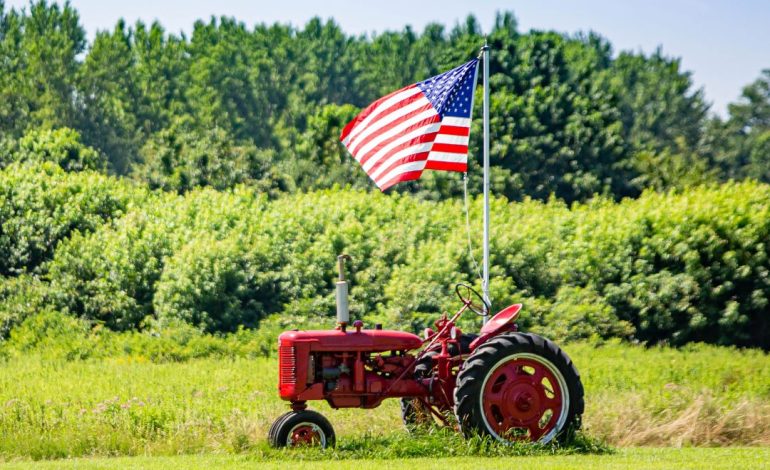


As the current President of the United States touts an “America First” policy, many of the country’s farmers – who helped elect him on that promise – are being ruined.
Agriculture has long been essential to the American economy, and farmers are, in many ways, America’s first patriots. At the time of independence from Great Britain, farming was the livelihood of 90% of all Americans, including many of the founders. George Washington famously said, “I had rather be on my farm than emperor of the world,” and the likes of Thomas Jefferson, Benjamin Franklin, John Adams, James Madison, and Henry Clay were all notable farmers as much as they were statesmen.
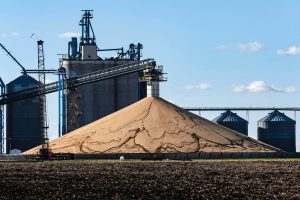
Amid economic policies professedly aimed at bolstering American business and domestic production of all sorts, critical agricultural concerns are emerging. Why is the US, formerly the world’s largest exporter of beef, now a net importer of beef? What is going to happen next year to the farmers who lost $12 billion of soybean business as China, in response to tariffs, chooses instead to source soybeans from Argentina? Amid these dynamics, why is the current Administration providing $40 billion in bailout funds to Argentina and exploring large-scale importation of its beef? And with beef prices the highest they have ever been, why are American cattle farmers the ones being told to reduce their prices?
The nexus between agriculture and prosperity has always been central to the American story. Benjamin Franklin once mused:
“There seem to be but three ways for a nation to acquire wealth. The first is by war… This is robbery. The second by commerce, which is generally cheating. The third by agriculture, the only honest way, wherein man receives a real increase of the seed thrown into the ground, in a kind of continual miracle, wrought by the hand of God in his favor, as a reward for his innocent life and his virtuous industry.”
It is interesting, therefore, that at present, the US government seems to be more interested in funding the renamed “Department of War,” expanding military and defense industrial activities, and realigning commerce, all while the agricultural sector struggles for survival.
When the current administration cut all spending and effectively shut down the United States Agency for International Development (USAID), it claimed to have saved the country $40 billion in spending. But at least $2 billion of that money was part of standing contracts to purchase American-grown food supplies to send overseas. America’s farms and farmers were harmed by the cuts as much as those due to receive the food. This “America First” initiative indicated that American farmers are not America’s first priority. Indeed, they seem to be collateral damage in the government’s effort to remake the American economy, and that spells catastrophe for the future.
Part of the problem facing American farmers now is the general ignorance of agricultural needs and what would, realistically, rebalance the sector to support American farming. Even with 10% tariffs, it is still roughly 20% cheaper for a food production company in an inland state like Kentucky to import a commodity like corn from Türkiye than to purchase it from an American farm across the street. And part of the reason for the high costs of farming in the United States is that the price of everything needed to manage and maintain farm production is increasing at a rate that outpaces the narrow margin of resilience inherent in agriculture. When a plastic stake increases from $0.65 to $1.30 on account of tariffs, it may seem like a manageable impact for a residential customer. But when a farmer needs 1 million of them, that increase in a single simple item can destroy the profitability of a farm.
The price of everything – from equipment to feed to packaging to shipping – has increased. And thanks to the erratic trade policies of 2025, price volatility has made forecasting and planning almost impossible. Agricultural businesses – particularly the small and midsized businesses that lack the clout to make separate, more beneficial arrangements – are making “bet the company” decisions on a daily basis, unsure as to whether a new announcement might make or break the company’s profitability the next day.
The implications of these agricultural challenges are dire. Abraham Maslow’s “Hierarchy of Needs” reminds us that food is far more fundamental than an iPhone, yet Apple is getting tariff relief while apple farmers are going bankrupt. The price of eggs may have stabilized for now, but $14 per dozen eggs could return if American agricultural and trade policies are not reformed to prioritize farmers. The vastness of the American territory means that the United States has the space to ensure not only food security but food sovereignty – controlling its entire food supply. But at present, our policies are heading for an eventuality where the best American-made food is exported, and the grocery stores are stocked with highly overpriced, lower-quality goods sourced from overseas. That said, the undulating tariff policies make it so that consistent supply, never mind consistent price, will be unachievable. So Americans will have enough food, but they will not like the selection, and they will struggle to afford it.
Every public servant – at the federal, state and local levels – should have a better understanding of the agricultural sector and do more to advance it, particularly for the small and medium enterprises that are hit most by the current turbulence. There is, therefore, no truer America First policy than to prioritize American farmers. Doing so ensures the food supply for all Americans, helps address the cost of living crisis, bolsters a critical segment of the national economy, and, perhaps most of all, restores due regard for America’s first patriots. Our farmers cannot be left to fend for themselves amid disruptive and destructive volatility, and they cannot be forgotten as without them, we lose the foundation of human society. As much as Americans love to celebrate Thanksgiving – more than any other holiday – gratitude seems to be in short supply for the roughly 2 million farms that provide the country with its sustenance. Republicans, Democrats and Independents all need food to survive, and hunger is colorblind. Regardless of any administration’s other national priorities, America’s first patriots should always be a first priority. Or as Thomas Jefferson so famously said:
“Cultivators of the earth are the most valuable citizens. They are the most vigorous, the most independent, the most virtuous, & they are tied to their country & wedded to its liberty & interests by the most lasting bonds.”


The latest news in your social feeds
Subscribe to our social media platforms to stay tuned