




Proposed Seminoe Power Plant Raises Alarms over Wyoming’s Prized Bighorn Sheep and Trout Fishery

The original story by Mark Heinz for Cowboy State Daily.
A massive power project proposed for Seminoe Reservoir is being pitched as an economic win for central Wyoming — but wildlife officials, county leaders and conservation groups say it could come at a steep cost to some of the state’s most treasured natural resources.
The project, put forward by Salt Lake City–based rPlus Hydro, would be a 900-megawatt pumped storage power facility built near the Seminoe Dam in Carbon County. Supporters call it a major energy investment. Critics worry it could devastate Wyoming’s healthiest bighorn sheep herd and damage one of the West’s most famous trout fisheries.
Concerns have been building for months, but pressure is now ramping up as a Jan. 2 deadline approaches for public comments to the Federal Energy Regulatory Commission (FERC), which will ultimately decide the project’s fate.
The latest government body to weigh in is the Natrona County Commission. A draft letter the commission plans to send to FERC warns that the project could harm wildlife and undercut a recreation-based economy that brings in millions of dollars.
Carbon County commissioners and the Wyoming Game and Fish Department have already sent similar warnings.
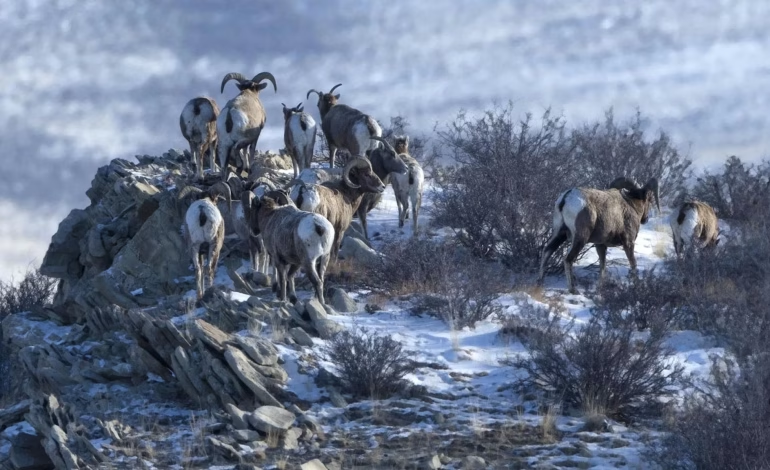
In a letter to FERC earlier this year, Game and Fish Deputy Director of External Affairs Doug Brimeyer said the project’s roughly five-year construction timeline could affect “an entire generation of wildlife.” He singled out the Ferris-Seminoe bighorn sheep herd, saying the project could disrupt critical winter habitat.
rPlus Hydro hopes to begin construction by 2027. The plan would involve blasting tunnels to move water between the existing Seminoe Reservoir and a newly built upper reservoir — a process that would require massive, constant water movement.
Carbon County Commissioner Gwynn Bartlett said she’s not convinced wildlife protections have been given enough weight during planning. Fellow Commissioner Sue Jones was even more blunt.
“There will be blasting, and a lot of it,” Jones said, noting that the heart of the bighorn sheep range lies right where the work would happen.
Jones also questioned whether the long-term economic benefits of the power plant would outweigh what the county already gains from outdoor recreation.
“Seminoe is one of the sacred areas of Carbon County,” she said. “It’s a destination for people from Cheyenne and Colorado. We already see millions of dollars in economic benefit from hunting, fishing and recreation.”
Jones said her commission reached out to Natrona County officials after realizing many of them were largely unaware of the scope of the project and its possible impacts.
Natrona County Commission Chairman Dave North said the sheer amount of water that would be pumped — about 454 gallons per minute — could spell trouble for fisheries in the reservoir and downstream along the North Platte River’s famed Miracle Mile.
“The volume of water they’re talking about pumping into and out of Seminoe is amazing,” North said.
Changes in water temperature could disrupt fish habitat and spawning cycles, he added.
And the bighorns?
“Bighorn sheep don’t do well with disturbance,” North said.
Wildlife advocates say the Ferris-Seminoe herd isn’t just another group of bighorns — it’s the most important one Wyoming has.
“It is the healthiest bighorn sheep herd in Wyoming,” said Katie Cheesbrough, executive director of the Wyoming Wild Sheep Foundation.
Bighorns across the West are highly vulnerable to deadly pneumonia outbreaks. While many herds have been hammered by the disease — including the famous Whiskey Mountain herd near Dubois — the Ferris-Seminoe sheep have so far tested negative for the most destructive strains.
That makes them incredibly valuable for conservation.
Because the herd is disease-free, it serves as a “source herd,” meaning sheep can be safely captured and relocated to reestablish or bolster struggling herds elsewhere in Wyoming.
“If this herd is impacted too heavily and we can no longer use it as a source herd for transplants, that has potential impacts on Wyoming’s entire bighorn sheep population,” Cheesbrough said.
She also warned that the project could disrupt lambing areas in the spring, when ewes retreat to quiet, secluded spots to give birth.
On top of that, Cheesbrough said the plan appears to conflict with the Bureau of Land Management’s Rawlins field office resource management plan, which specifically calls for protecting bighorn sheep habitat. Changing that plan, she said, would amount to rewriting it to benefit a single developer.
With the FERC comment deadline fast approaching, opposition to the Seminoe Pumped Storage Project is growing louder. While supporters stress the value of new power generation, critics say the price could be the long-term health of Wyoming’s best bighorn sheep herd — and one of its most iconic trout fisheries.
For now, the fight is far from over.



The latest news in your social feeds
Subscribe to our social media platforms to stay tuned