


Montana Grizzlies Trucked to Wyoming Are Roaming, Denning — and May Soon Be Parents

The original story by for WyoFile.
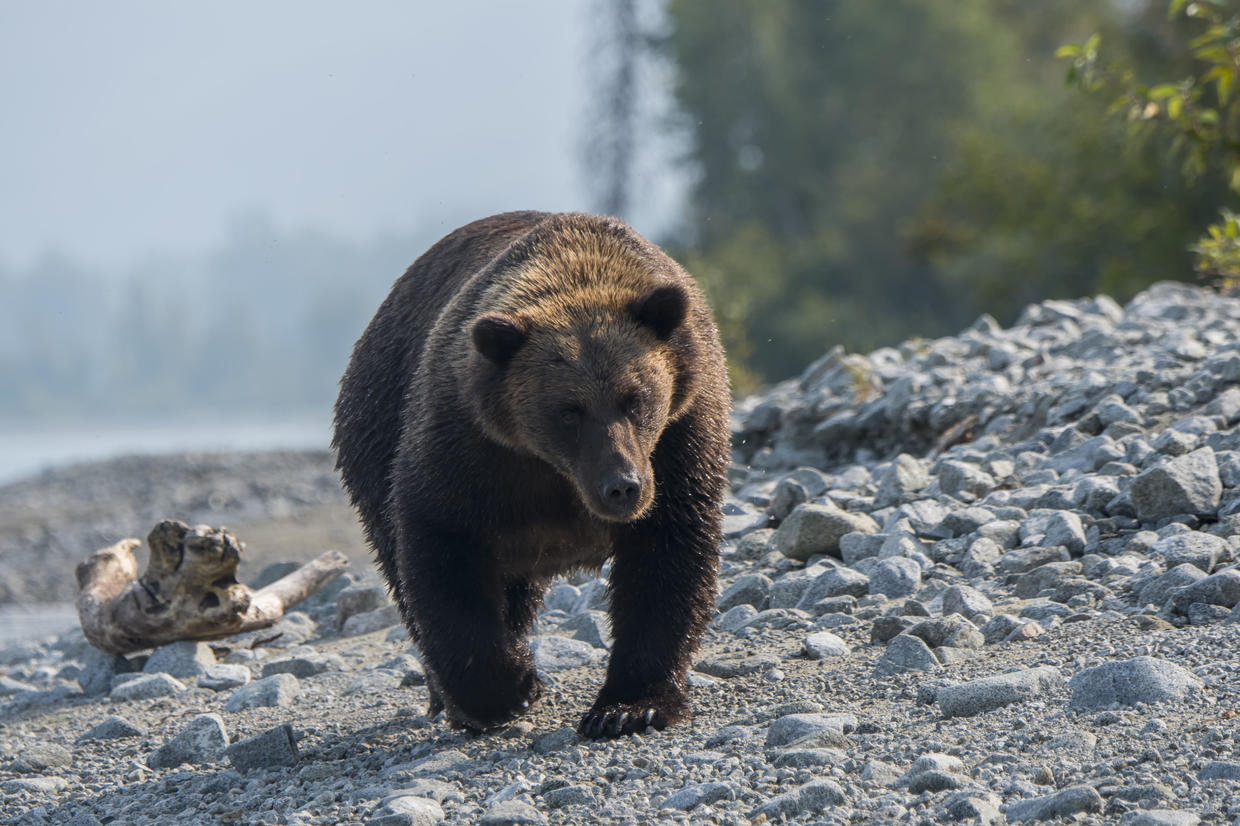
Two young grizzly bears that Wyoming trucked in from Montana to boost genetic diversity around Yellowstone are still very much on the landscape — and biologists are now watching to see if they’ve started families.
So far there’s no hard proof that either bear has passed on its genes. But both are alive, settled into the Greater Yellowstone Ecosystem and, if all went as expected, may already have bred.
When Grizzly 1126F was released in Wyoming two summers ago, she hit the ground running — literally.
“She moves everywhere,” said Dan Thompson, who heads large carnivore management for the Wyoming Game and Fish Department.
The 4-year-old female was captured near Montana’s Middle Fork of the Flathead River in the Northern Continental Divide Ecosystem (NCDE) and moved south in July 2024, along with a male, Grizzly 1129M. The goal: inject fresh genetics into the Greater Yellowstone grizzly population, which is still isolated from other bear strongholds.
Once released near Blackrock Creek southwest of Togwotee Pass, 1126F went on a tour of the region.
“She has made several loops around the entire ecosystem,” Thompson said. “Around Yellowstone, into Idaho, up toward Cody. Then she went down toward Jackson, Wilson, into Idaho again and came back across the north end of the Tetons.”
She’s finally paused long enough to den in a remote spot deep in the Teton Wilderness, beyond the North Fork of the Buffalo Fork River.
If her timing lined up with other adult females, Thompson says, she likely bred this past season.
“She should have bred this year,” he said. “So it’ll be interesting to see if she has cubs this spring.”
Grizzly monitoring crews will be watching closely.
While 1126F has been racking up miles, her Montana-born counterpart, Grizzly 1129M, has done the opposite.
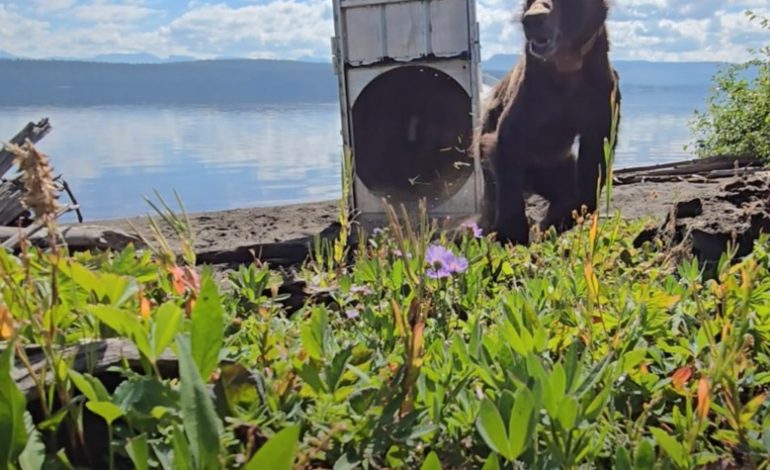
Turned loose along a remote shoreline on Yellowstone Lake, the 4-year-old male has mostly stayed put.
“He really has maintained a location in the southern half of Yellowstone, south of Yellowstone Lake,” Thompson said.
That’s a twist on the usual pattern, where males tend to roam and females stick closer to home. It’s been odd enough that biologists joke they might have mixed up the sexes — they didn’t, Thompson added.
Whether 1129M has already spread his genes will be hard to know anytime soon. At 4, he’s not yet in his prime breeding years, but he’s certainly capable of mating.
“We can only discern that through DNA tests,” Thompson said.
Over time, blood samples taken during routine captures could reveal offspring that carry genetic markers from both the Northern Continental Divide and Greater Yellowstone grizzly populations.
The relocation of 1126F and 1129M was a coordinated effort between agencies and is tied to the bear’s threatened status under the Endangered Species Act.
Grizzlies in both the NCDE (in western Montana) and the Greater Yellowstone Ecosystem are doing well and have exceeded recovery goals for years. But the two populations remain separate, with about 35 miles between them and no documented case of a bear traveling from one recovery zone, breeding in the other and connecting the gene pools.
Northern Montana’s grizzlies also link into a much larger Canadian population, making them a valuable source of new genetic material. Adding a few of those bloodlines into Yellowstone’s isolated bears helps address long-term concerns about genetic health.
Thompson stressed that the move wasn’t because Yellowstone grizzlies are currently inbred or in immediate trouble.
“This was not because we were worried about the genetic vigor of the population,” he said.
But a 2018 ruling from US District Judge Dana Christensen — which blocked efforts by Wyoming, Montana and Idaho to take over grizzly management and potentially allow hunting — hammered the federal government for not having a more proactive genetic plan. The judge faulted the US Fish and Wildlife Service for essentially waiting until there was clear genetic damage before stepping in.
Seven years later, trucking two Montana-born grizzlies south is one way to answer that criticism.
For now, Thompson and other carnivore managers are pleased with one basic fact: both bears are still in the Greater Yellowstone region and haven’t gotten into trouble.
Neither 1126F nor 1129M has been tied to any known conflicts with people, livestock or property — a big win for such high-profile transplants.
The real test, though, will be whether they leave a genetic legacy.
If 1126F steps out of her Teton Wilderness den this spring trailed by cubs, or if future DNA work starts turning up young bears with a mix of NCDE and Yellowstone markers, it’ll be a sign the experiment is working.
Until then, the two grizzlies that made the journey from northern Montana are quietly spending their winters in Wyoming dens — and biologists are waiting to see if the next generation looks a little more diverse because of it.
The latest news in your social feeds
Subscribe to our social media platforms to stay tuned