




‘Trump Accounts’ for Kids Are Coming. Here’s How they Work — and What Experts Think.

Bloomberg, CNBC, and Axios contributed to this report.
A brand-new kind of investment account for kids is suddenly getting a lot of attention — and not just because it has Donald Trump’s name attached to it.
So-called “Trump accounts” are government-sponsored investment accounts for children under 18, created as part of the One Big Beautiful Bill Act that Trump signed into law on July 4, 2025. They’re officially part of the broader Invest America initiative, and they’re designed to nudge kids into the investing world from birth.
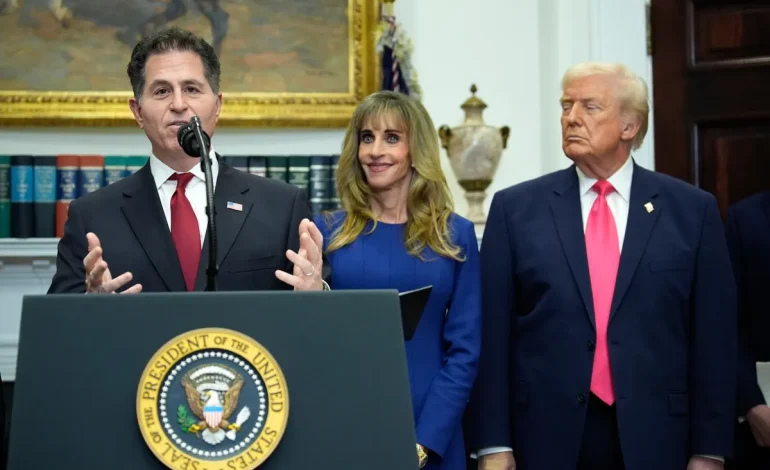
That interest spiked this week after Michael and Susan Dell pledged a massive $6.25 billion donation to help fund them.
Here’s what parents need to know.
Trump accounts are government-seeded investment accounts for US kids:
- They go live on July 4, 2026.
- Parents of US citizens born between 2025 and 2028 will be able to opt in.
- Each eligible child gets an initial $1,000 deposit from the federal government.
On top of that, the Dells’ donation will provide an extra $250 for children age 10 and under in certain ZIP codes, if their families open an account for them.
“It’s a huge green light to at least open the Trump account and get that free thousand dollars if your child qualifies,” says Elliot Pepper, a financial planner and director of tax at Northbrook Financial in Baltimore.
The idea: give kids a small but meaningful stake in the markets early — and let compounding do the heavy lifting over time.
These accounts aren’t strictly college funds, but they’re cousins of 529 plans.
Some key points based on IRS guidance so far:
- Money in a Trump account can likely be used for higher education expenses without early withdrawal penalties, similar to a 529.
- Once the child turns 18, the account will be converted into an individual retirement account (IRA) and then follow standard IRA rules and tax treatment.
So in theory, the same pot of money could help with college first and then roll into retirement savings later — assuming it’s not fully spent.
529 plans have been around since 1996 and are:
- Sponsored by states, not the federal government;
- Aimed primarily at education savings;
- Often offering state tax deductions or credits on contributions;
- Allowing tax-free withdrawals for qualified education expenses.
Trump accounts:
- Are federal and tied to a specific birth window (2025–2028);
- Come with an automatic government seed ($1,000) if you opt in;
- May allow penalty-free use for education, but then flip to an IRA at age 18;
- Don’t yet have fully fleshed-out rules, so some details are still missing.
“Fundamentally, any way that people can save money is good, whether it’s the 529 accounts or the Trump accounts or Roth IRAs or HSAs,” says Michael Green, a certified financial planner with Apollon Wealth. “They’re all good tools. It really comes down to what people are trying to accomplish and what their goal is, what their capacity to save is.”
Most advisers see Trump accounts as one more tool, not a replacement for 529s or other savings vehicles.
Because the Dells wrote a very big check.
Their $6.25 billion pledge will fund a $250 starting deposit for millions of kids in certain lower-income areas, as long as families open a Trump account for them. It’s one of the largest philanthropic gifts in US history, and it’s aimed squarely at helping children build wealth from a young age.
It’s also a different style of giving than the classic billionaire model of funding universities, museums or foundations. Instead, it sends money directly to households, via an existing government program.
That concept — helping people by putting cash directly into investment accounts — has fans on both the left and the right, even though “Trump accounts” themselves were created by Republicans.
The idea isn’t entirely new internationally: the UK ran a similar experiment with Child Trust Funds starting in 2002 under Tony Blair’s Labour government, though that program was later wound down and many accounts were forgotten or lost track of.
Some experts warn Trump accounts could face the same risk if parents don’t keep good records or forget to check on them years later.
Trump accounts also fit into a much broader trend: shifting financial risk from governments and employers to individuals and families.
Over the past few decades:
- Pensions largely gave way to 401(k)s;
- 529 plans became a way for families to shoulder more of rising college costs;
- HSAs and similar tools pushed more health-related financial decisions onto individuals.
Trump accounts extend that logic to children: “a 401(k) from birth,” as one investor put it.
Supporters say this will:
- Get more Americans invested in the stock market;
- Give more people an early stake in the financial system;
- Potentially help narrow wealth gaps if seeded and structured well.
Critics worry that:
- These accounts will be used more effectively by wealthier families, who have extra cash to contribute and more financial savvy.
- They could replace more stable social benefits that act as a safety net, especially since they were paired with cuts to programs like Medicaid and SNAP in the same bill.
- They may increase inequality, as higher-income households are better positioned to add to the accounts and benefit from tax advantages.
Economist Neale Mahoney notes that higher earners are also more likely to get employer contributions into various savings plans, compounding the advantage.
If your child is eligible (born between 2025 and 2028) and you’re comfortable with investing:
- The $1,000 federal seed — plus any Dell-funded $250 boost if you qualify — is effectively free money.
- For many families, advisers say it’s worth opening an account just to get that initial contribution, then deciding how much more to add over time.
The key, experts say, is not to see Trump accounts as magic solutions, but as one piece of a broader plan that might also include:
- A 529 plan for education;
- A custodial brokerage account;
- A custodial Roth IRA once a child has earned income;
- Or simply old-school savings for short-term needs.
Or as planner Michael Green puts it: the best account is the one that actually gets funded, fits your goals — and doesn’t get forgotten.

The latest news in your social feeds
Subscribe to our social media platforms to stay tuned