


‘We’re Running a Prison on Empty’: Wyoming Lawmakers Weigh $9.3M Fix for DOC Staffing Crisis

The original story by .
Wyoming lawmakers are staring down a prison staffing crisis that’s costing the state millions — and the governor says it can’t wait for the next budget cycle.
After a Thursday meeting with the Joint Appropriations Committee (JAC), Gov. Mark Gordon called for $9.3 million in emergency funding for the Wyoming Department of Corrections (DOC) to deal with chronic staff shortages and the high cost of housing inmates in other states.
DOC Director Dan Shannon told legislators the agency is still short 136 positions, including 80 correctional officers. Those vacancies, he said, are the “number one contributor” to a domino effect that’s pushed inmates out of Wyoming and blown up the department’s budget.
“We’re at the point where staffing controls everything we do,” Shannon said.
Because of low staffing levels, DOC has had to close parts of the Wyoming State Penitentiary in Rawlins and ship inmates elsewhere.
At one point, 240 inmates were moved to county jails and a private facility in Mississippi. While 112 have since come back, 128 inmates are still being housed out of state.
The price tag is huge.
- DOC spent $15 million last year on out-of-state housing, Shannon said.
- The daily rate is $75 per inmate, plus full medical costs.
- Because Wyoming is using a private contractor, the state can’t negotiate discounted medical rates.
- Monthly medical bills alone have hit $250,000–$300,000 at times, averaging about $220,000 a month.
“Having these inmates return is not only my top priority, it controls our entire operational budget and overall budget,” Shannon told lawmakers.
To bring the remaining inmates home and safely reopen B Unit — which can house 168 people at the State Penitentiary — DOC needs a net gain of 25 more officers.
In his proposed budget, Gordon acknowledged DOC is feeling the squeeze from inflation and warned that staffing shortages are blocking efforts to bring all Wyoming inmates back from out of state.
He wrote that the department needs $9.3 million “to be effective immediately” to meet its current obligations, even though the overall budget is for the 2027–28 biennium.
“The Department of Corrections plays a primary role in the State’s administration of criminal justice,” Gordon said in a statement, calling DOC “a model of efficiency and effectiveness at housing and rehabilitating the incarcerated and supervision of probationers and parolees.”
If lawmakers leave the request intact, that emergency money would be available as soon as Gordon signs the budget.
To try to fix staffing, DOC recently got permission to boost correctional officer pay from $19 to $25 an hour, hoping to compete with county jails in places like Rawlins, Lusk and Riverton that often pay more.
Shannon asked legislators to withdraw the agency’s separate $4 million request for salary adjustments, saying the governor’s broader pay plan should cover that. But he insisted they keep a $400,000 request for overtime funding to match the higher hourly wage.
New safety rules are also adding pressure.
After high-profile incidents in Idaho and Texas, where correctional officers were shot during inmate transports, Wyoming DOC now requires three officers for unscheduled medical trips outside prison walls. That’s good for safety — but it eats up staff time fast.
Even so, Shannon said recruitment has helped nudge staffing at the Rawlins prison from 65% to 75% as of November. It’s better, but not good enough.
Despite the grim budget math, several lawmakers praised DOC’s performance.
Sen. Mike Gierau, D-Jackson, highlighted a key stat: 91% of DOC’s released inmates do not return to prison within three years with a new felony conviction.
“That’s a success story,” Gierau said, crediting the department’s rehabilitation work.
Rep. Jeremy Haroldson, R-Wheatland, thanked Shannon for being blunt about the reality on the ground.
“We’d love it if you had a deficit of offenders,” Haroldson said. “We’re not in that world right now.”
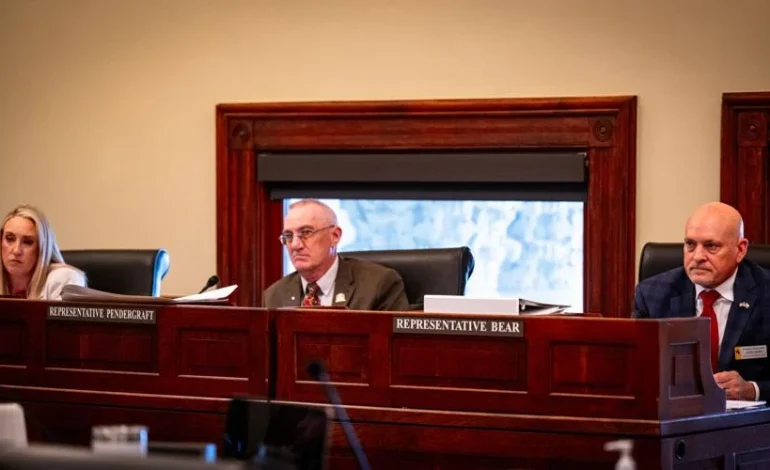
Rep. Ken Pendergraft, R-Sheridan, said no one disputes that DOC is essential — but warned that taxpayers are feeling inflation too.
“There’s that natural tension between what it costs to operate government, and what we can afford as taxpayers, or what we’re willing to afford,” he said, noting what he called “a bit of a tax rebellion” in recent years.
The $9.3 million emergency request is still in the draft budget. Lawmakers didn’t make any changes Thursday, but the Joint Appropriations Committee will keep working through agency budgets in the coming weeks.
If the funding survives that process and the full Legislature signs off, DOC could get the money right away — a key step, Shannon argued, toward hiring enough officers, reopening prison housing units and bringing Wyoming’s inmates, and their tax dollars, back home.

The latest news in your social feeds
Subscribe to our social media platforms to stay tuned