




With input from Bloomberg and Reuters.
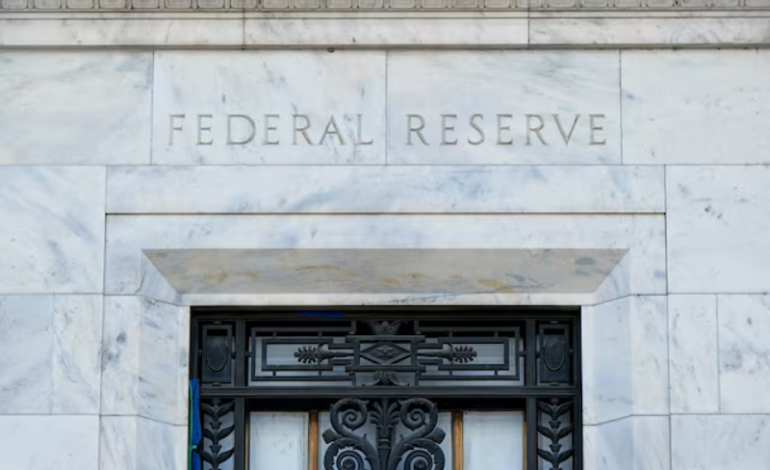
Federal Reserve officials are widely expected to cut interest rates again next week — and most economists think that move is just the start of a new easing cycle that will stretch into 2026.
In a new survey of economists, the median forecast calls for:
- A quarter-point rate cut in December,
- Followed by two more quarter-point cuts in 2026, starting in March.
That December move would be the third straight cut, after reductions at the Fed’s September and October meetings, and would bring borrowing costs down another notch as officials try to guard against a sharper slowdown in the job market.
“Fed doves appear to slightly be in primacy over the hawks,” said Dennis Shen, economist at Scope Ratings. “If the Federal Reserve does ease again, we would expect Powell to emphasize a temporary pause afterward, awaiting further economic signals.”
Economists in the survey say the main reason for cutting now is growing risk to the labor market, not a sudden victory over inflation.
Recent data has been messy:
- Big employers like Verizon and Amazon have announced notable job cuts.
- But weekly unemployment claims remain low, suggesting layoffs aren’t yet widespread.
- The most recent inflation reading — before data releases were delayed by the fall government shutdown — showed consumer prices running at 3% in September.
To make things harder, the Bureau of Labor Statistics is still catching up after the shutdown, so policymakers don’t have their usual full set of fresh inflation reports heading into the Dec. 10 meeting.
Even with that uncertainty, most economists in the survey see weakness in the job market as the bigger looming threat. Only about 18% said they see higher inflation as the more serious risk.
The Fed will announce its decision on Dec. 10 at 2 p.m. Washington time, followed by a press conference with Chair Jerome Powell at 2:30 p.m.
Economists also expect:
- A repeat of the October language that “downside risks to employment rose in recent months.”
- A split vote on the rate decision, reflecting growing disagreement inside the Fed.
- Updated Fed forecasts that show slightly higher growth, slightly lower inflation, and possibly a small uptick in the projected unemployment rate for 2026.
The era of calm, unanimous Fed votes appears to be over.
Survey respondents expect:
- Kansas City Fed President Jeff Schmid to dissent again, after opposing the October cut.
- More than a third think St. Louis Fed President Alberto Musalem will also vote “no,” given his recent remarks about inflation worries.
- Fed Governor Stephen Miran is expected to push for an even bigger cut — voting against a quarter-point move in favor of a half-point reduction, as he did in September and October.
Most economists now think the Fed’s policymaking is shifting from quiet consensus toward more frequent split decisions, with many expecting dissents at “most” meetings in 2026.
Looking further ahead, the survey also touched on Fed leadership. Chair Jerome Powell’s term ends in May 2026, and economists think the White House is likely to tap National Economic Council Director Kevin Hassett as the next chair — a move that aligns with recent signals from President Donald Trump, who has publicly called Hassett a “potential Fed chair.”
But when asked who would be the best choice from the administration’s reported shortlist, most economists picked Fed Governor Christopher Waller, citing his deep institutional knowledge and solid relationships with other Fed officials.
On the market side, big banks like Morgan Stanley, J.P. Morgan and BofA Global Research have all shifted to expecting a December cut, citing softer recent data and more dovish comments from key Fed officials like John Williams, Christopher Waller and Mary Daly.
Traders are now pricing in roughly an 87% chance of a quarter-point cut next week, according to futures markets.
Morgan Stanley expects:
- A quarter-point cut in December,
- Followed by two more in January and April,
- Taking the federal funds rate down to a 3.0%–3.25% range.
They also think Powell will use his press conference to signal that the Fed’s “recalibration phase” is largely done — and that any future adjustments will be “meeting by meeting” and driven by incoming data.
The bottom line: barring a surprise, borrowing costs are likely headed a bit lower — but the debates inside the Fed about how fast, how far and how risky those cuts might be are only just beginning.

The latest news in your social feeds
Subscribe to our social media platforms to stay tuned