




The original story by
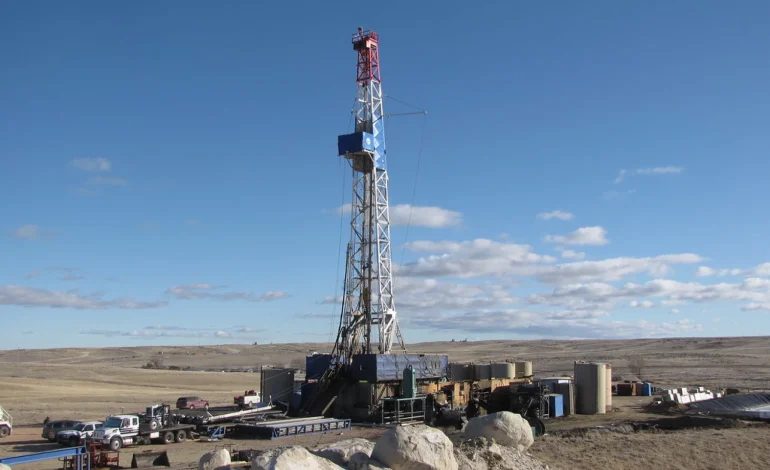
The federal government is sending about $4 billion back to US states this year from energy produced on federal land — and once again, the Mountain West is getting a big slice of the pie.
Washington collects money from energy companies in the form of rent, royalties and lease fees for drilling, mining and other development on federal land. A portion of that cash is then redistributed to states, which use it for everything from basic operations to long-term savings.
No surprise at the top of the list: New Mexico.
Thanks to its position over the oil-rich Permian Basin, New Mexico pulled in roughly $2.76 billion in fiscal year 2025 — almost 70% of all state disbursements.
“If you took out New Mexico, there’d be a different story in these numbers,” said Kristin Smith, a researcher with Headwaters Economics, a Montana-based nonprofit.
Wyoming was the second-largest recipient, getting about $544.87 million this year. But the trend line isn’t great.
Smith said Wyoming’s story is increasingly about declining coal revenues. The state’s latest payment is:
- Nearly $50,000 less than 2024;
- Almost $300,000 less than 2023.
It’s not a cliff, but it’s a slide — and it highlights how tied Wyoming still is to coal and fossil fuel markets.
Here’s how some Mountain West states stacked up in FY 2025:
- New Mexico – $2.76 billion;
- Wyoming – $544.87 million;
- Colorado – $90.77 million;
- Utah – $81.72 million;
- Montana – $27.02 million;
- Nevada – $11.97 million;
- Idaho – $6.36 million;
- Arizona – $354.52.
Some highlights:
- Utah saw declines in some areas but picked up about $5 million from geothermal energy.
- Montana and Colorado enjoyed modest upticks, mostly thanks to oil and gas.
- Other big checks went to Louisiana, North Dakota, Texas, Mississippi, Alabama, California and Alaska.
Overall, the total sent to states dipped slightly from previous years. The Trump administration pointed to lower commodity prices, while also claiming its “unleash American energy” agenda helped generate the dollars that did come in.
Smith, meanwhile, says the market usually calls the shots.
“When you think about where are the places that are benefiting the most or the least, or who’s experiencing changes, that is often dictated by market and commodity prices,” she said.
One key message from Smith: these payments are highly volatile, and states shouldn’t get too comfortable building their annual budgets around them.
“There’s always a risk of economic dependence,” she said. “You don’t wanna be dependent on revenue that just goes poof and isn’t there next year.”
That’s why many analysts argue states should treat this money more like a bonus — something to steer into savings, infrastructure or long-term investments, rather than plugging everyday budget holes.
States aren’t the only ones getting a cut. The federal government also shares this energy revenue with:
- Tribal nations;
- The Reclamation Fund;
- The Land and Water Conservation Fund;
- The Historic Preservation Fund;
- Other federal agencies.
For now, the Mountain West remains one of the biggest beneficiaries of drilling and mining on federal land. But as markets shift — and coal, oil, gas and renewables wrestle for dominance — the size and stability of those checks are anything but guaranteed.


The latest news in your social feeds
Subscribe to our social media platforms to stay tuned