





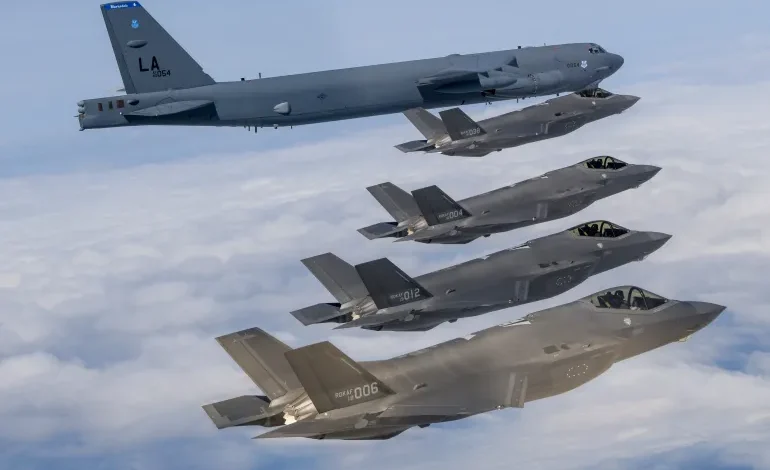

Revenues from the world’s 100 biggest weapons makers surged to an unprecedented $679bn in 2024, a jump SIPRI bluntly ties to the wars in Gaza and Ukraine, and a planet tilting deeper into confrontation.
The Stockholm institute’s new report, released Monday, shows global arms sales rose 5.9 percent year-on-year, with most of the growth driven by the US and Europe. Every major region saw an uptick except Asia and Oceania, where internal troubles in China’s defence industry dragged totals down.
In the United States, the usual giants, Lockheed Martin, Northrop Grumman and General Dynamics, stayed on top. Combined US arms revenue climbed to $334bn, up 3.8 percent, with 30 of 39 American firms registering gains. But SIPRI notes the Pentagon’s chronic headaches haven’t gone anywhere: delays and cost overruns continue to follow marquee programmes like the F-35, the Columbia and Virginia-class submarines, and the Sentinel ICBM.
One newcomer stood out: Elon Musk’s SpaceX cracked the top 100 for the first time after its military revenue more than doubled to $1.8bn.
Europe’s picture is even sharper. Excluding Russia, 23 of the continent’s 26 listed companies increased their sales, pushing regional arms revenue up 13 percent to $151bn. The Czech firm Czechoslovak Group posted the largest percentage leap in the entire ranking, a staggering 193 percent, off the back of producing artillery shells for Ukraine.
European manufacturers are expanding production lines accordingly, though SIPRI flags a looming supply-chain problem: critical minerals. As China tightens export controls, accessing those inputs “could pose a growing challenge.”
Russia, meanwhile, still secured two spots on the list. Rostec and United Shipbuilding Corporation increased their combined revenues by 23 percent to $31.2bn, a notable rise given Western sanctions and export restrictions.
Asia and Oceania’s arms makers held at $130bn but slipped 1.2 percent overall, largely because China’s eight listed companies saw a combined 10 percent drop. NORINCO, the country’s flagship land-systems producer, posted the steepest fall at 31 percent.



The latest news in your social feeds
Subscribe to our social media platforms to stay tuned