





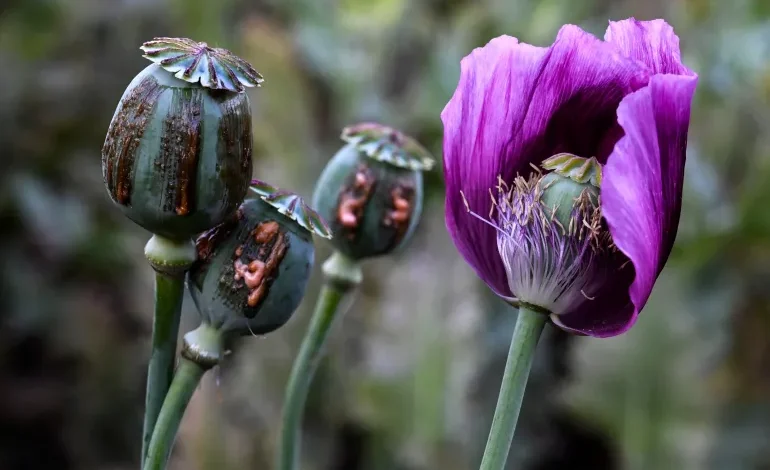

Myanmar’s opium fields are expanding at a pace not seen in a decade, with new UN data showing a sharp rise in poppy cultivation across all major growing regions as conflict and economic collapse push communities deeper into the drug economy.
In its latest survey, the UN Office on Drugs and Crime (UNODC) reports a 17 percent jump in cultivation between 2024 and 2025, from 45,200 to 53,100 hectares, reaffirming Myanmar’s position as “the world’s known main source of illicit opium, following the continued decline of cultivation in Afghanistan”.
“This major expansion in cultivation shows the extent to which the opium economy has re-established itself over the past years, and points to potential further growth in the future,” said Delphine Schantz, UNODC’s representative for Southeast Asia and the Pacific.
The boom, however, is not translating into proportionate increases in output. According to UNODC analysts, insecurity, displacement and broken supply chains are depressing yields even as farmers plant more land. Fields are being abandoned mid-season, villages are on the move, and weather-dependent maintenance has become erratic in conflict zones.
But one factor is pushing the poppy revival with unmistakable force: price.
Opium has more than doubled in value since 2019, from $145 per kilogram to $329 today, a surge that makes the crop one of the few stable sources of income left for rural families caught between armed groups, collapsing markets and vanishing state services.
The UNODC also warns that Myanmar’s opium boom is now intersecting with the global heroin market. With Afghanistan’s output declining under Taliban restrictions, “emerging signs” show heroin produced in and around Myanmar filling gaps abroad. The agency notes a 2024–25 spike in heroin seizures from passengers flying from Thailand to the European Union, including 60kg intercepted by EU authorities.
“Driven by the intensifying conflict, the need to survive and the lure of rising prices,” Schantz said, farmers are being pulled deeper into poppy cultivation. “The increase we have seen in the past year will have significant implications for Myanmar’s future.”



The latest news in your social feeds
Subscribe to our social media platforms to stay tuned