






The original story by Kate Meadows for Cowboy State Daily.
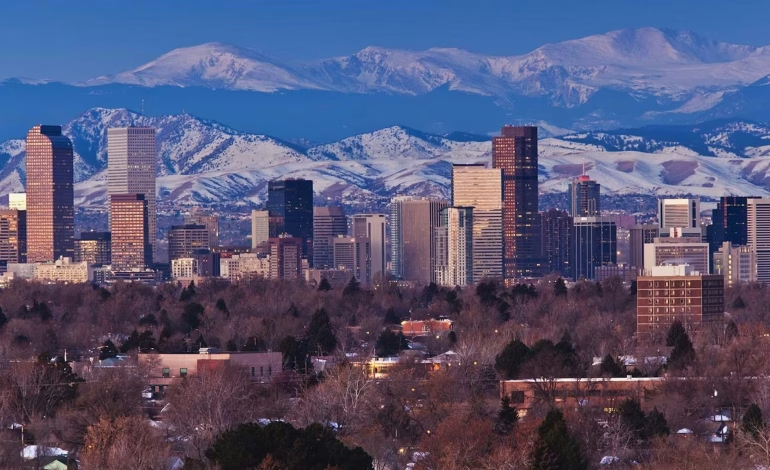
For years, Denver’s real estate market was white-hot, a magnet for newcomers and investors alike. Not anymore.
The Denver metro area is seeing a dramatic slowdown in growth, with a roughly 70% drop in net migration since 2015 — and that’s not automatically good news for Wyoming.
“We need businesses and people to be interested in the Front Range,” said Dale Steenbergen, president and CEO of the Greater Cheyenne Chamber of Commerce. “We’re not growing. We’re getting older and it’s a big problem for us that we have to work on.”
Two recent studies show the same trend: people just aren’t flocking to Denver like they used to.
MoveBuddha, a relocation tech company, found people are about 48% less likely to move to Denver now than before 2019. Another report from the right-leaning Common Sense Institute of Colorado shows the Denver metro has had a 69.6% decline in net migration since 2015.
Net migration is simple math: the number of people moving in minus the number moving out. For Denver, that number has been shrinking fast.
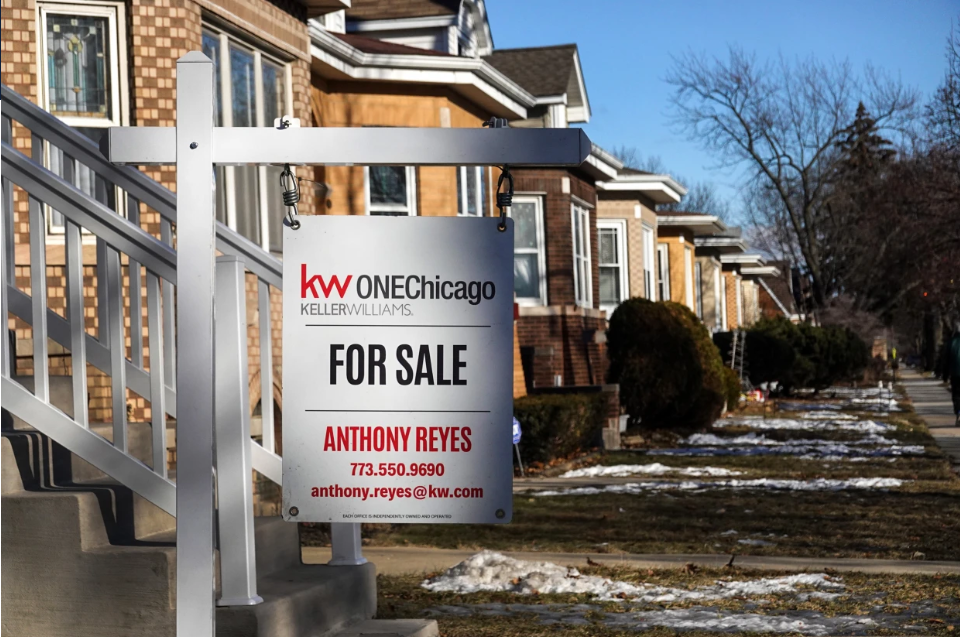
High housing costs are a big piece of the puzzle. One realtor.com study found there are about 90% more homes on the market in Denver now than before the COVID-19 pandemic. Growth has slowed, and some longtime residents are deciding they’ve had enough.
You might think fewer people moving to Denver would help Wyoming. But state leaders say it’s not that simple.
“While that may be true about Denver and parts of Colorado, Wyoming’s workforce-age outmigration rate is double the national average — worst in the country,” said Ron Guilberg, strategic partnerships director for the Wyoming Business Council.
For many young, educated and skilled Wyomingites, Denver — and other metro areas like Salt Lake City and Houston — have been the dream destinations for jobs and amenities Wyoming doesn’t offer at the same scale.
“So, the only way Wyoming can benefit from what’s in this report is to create good jobs, address infrastructure needs, attract businesses and curtail regulatory barriers such as housing development,” Guilberg said.
Steenbergen agrees. While many Wyoming residents might be tempted to say “I told you so” about Denver’s rapid growth and rising costs, he said the bigger issue is in Wyoming’s own backyard.
Wyoming is the No. 1 state for young people to leave, Steenbergen said, calling the loss of young professionals one of the state’s biggest challenges.
Despite those worries, Wyoming does have some strong selling points.
On the business side, the state’s lack of income tax, relatively light regulations and friendly small-business culture all work in its favor, Steenbergen said.
Wenlin Liu, chief economist at the Wyoming Economic Analysis Division, said new businesses are popping up across the state, something reflected in rising general fund revenues helped by business registration fees.
“Wyoming’s migration has always been driven by employment,” Liu said. But lifestyle plays a role too. “We can attract people who love open spaces – fishing, hunting, hiking.”
Colorado, in fact, is second only to California as the largest source of people moving to Wyoming, Liu noted. So yes, some folks are crossing the border north.
“It could be opportunity,” Steenbergen said — especially in areas where Wyoming needs help, like the tech sector.
But he also admits that opportunity has to come with a paycheck to match.
“I think the big challenge right now is, if you poll folks coming out of college, their No. 1 interest is how big their paycheck is,” he said. “Ten years ago, if you asked the same question, the No. 1 answer would be quality of life. When the paycheck is the No. 1 interest, Wyoming has a hard time competing. The question is, what are we going to do with payroll and quality of life to entice them to come here?”
For some, Denver’s slowdown is no surprise.
John Baggett, who grew up in Wyoming, moved to Denver in 1988 when it was still, as he put it, a “great big cow town.” He and his wife, Deb, spent 32 years there, raised their kids, and stayed in the same house for three decades.
“Our boys didn’t know any other place,” he said.
But as traffic worsened and the city grew, Baggett says Denver moved away from the lifestyle he loved. He would tell friends visiting from Wyoming to park in Broomfield, a suburb 18 miles out, so they didn’t have to drive in the congestion.
“Watching that growth and that change and some of the things that came with it … clashed with who I am,” he said.
Six years ago, he was “desperate to move out.” In 2019, the couple sold their Denver home at the peak of the market and relocated to his hometown of Sheridan. Deb, who grew up in Cincinnati, wasn’t initially thrilled about the move — but now she has a few horses and “loves the lifestyle,” Baggett said.
Still, there are things he misses: Broncos games, concerts at Red Rocks, and the old-school mix of cowboy boots and skyscrapers that defined Denver in the ’80s.
Across state lines, leaders in both places know the real driver is the economy.
“We know the thing that’s driving people right now is economy,” Steenbergen said.
Guilberg called it a “chicken-and-egg problem.” The hottest in-migration markets right now, he said, are college towns near larger metro areas — exactly the kind of places competing with Wyoming for young, educated workers.
Even with Denver cooling off, Wyoming can’t assume people will just come north on their own.
To really benefit from Denver’s slowdown, Wyoming needs to do more than rely on its wide-open spaces and low taxes. It has to offer competitive pay, housing people can actually find and afford, and industries that appeal to the next generation.
Until then, Denver’s decline in migration isn’t automatically Wyoming’s gain — it’s just another reminder that the race for people and talent is heating up, even as some housing markets cool down.


The latest news in your social feeds
Subscribe to our social media platforms to stay tuned