


Hamas signals red lines as Israel eyes phase two of US Gaza plan, disputes over international force ahead

Israel and Hamas are edging toward phase two of a US-led roadmap to end Israel’s war on Gaza, but the next stage is already snagged on a central question: who will secure Gaza, and under what authority.
Hamas official Basem Naim said Sunday the group needs “a lot of clarifications” on the proposal. He said Hamas is open to “freezing or storing” its weapons under the current truce, but firmly rejects granting an international stabilisation force any power inside Gaza.
“We are welcoming a United Nations force to be near the borders, supervising the ceasefire agreement, reporting about violations, preventing any kind of escalations,” Naim said. But he stressed the group will not accept the force having “any kind of mandates” on Palestinian territory.
His comments came hours after Israeli Prime Minister Benjamin Netanyahu announced plans to meet Donald Trump later this month to discuss moving into the next phase, which he described as focused on dismantling Hamas power in Gaza and “achieving the disarmament of Hamas and the demilitarisation of Gaza”.
Whether Hamas’s idea of storing weapons satisfies Israel’s demand for total disarmament remains unclear. Naim insisted Hamas retains its “right to resist” and said a full laying down of arms could come only as part of a path toward Palestinian statehood, with the possibility of a long truce lasting five to ten years.
The US draft leaves the possibility of Palestinian independence open, but Netanyahu has repeatedly rejected a Palestinian state, arguing it “rewards” Hamas.
The Trump administration’s 20-point Gaza plan sketches a stabilisation force and a technocratic Palestinian administration under an international “board of peace”, but specifics are vague. US officials expect foreign troops on the ground next year and say Indonesia has agreed to contribute, yet there is no blueprint for force composition, command or authority.
Netanyahu acknowledged the ambiguities:
“What will be the timeline? What are the forces that are coming in? Will we have international forces? If not, what are the alternatives? These are all topics that are being discussed.”
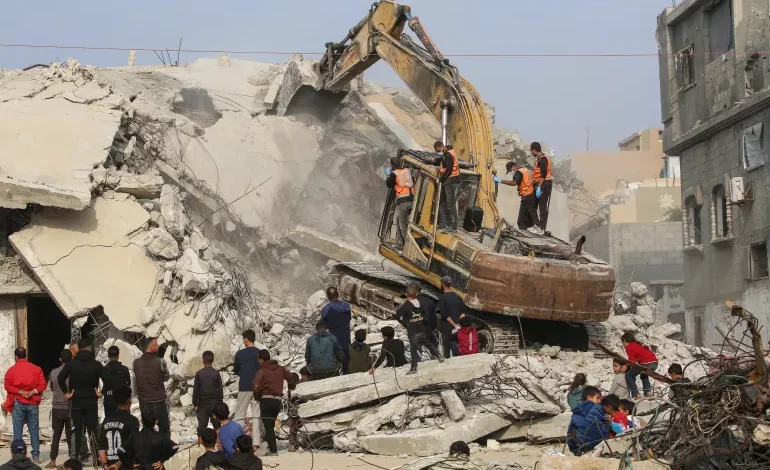
Phase one has been turbulent in practice. Despite the ceasefire, Israel continued airstrikes that have killed more than 370 Palestinians, according to Gaza health officials, while accusing Hamas of delaying captive releases. Phase two, Netanyahu warned, will be “more difficult”.


The latest news in your social feeds
Subscribe to our social media platforms to stay tuned