



The original story by Clair McFarland for Cowboy State Daily.
Wyoming lawmakers are raising eyebrows over a proposed state-backed emergency insurance program dubbed “Bear Care,” with critics warning it could put the government squarely in competition with private insurers.
The idea comes from the Wyoming Department of Health (WDH), which included Bear Care as part of a pitch for federal funding under Congress’ new $50 billion Rural Health Transformation Fund. Wyoming is seeking about $100 million a year for five years to support rural health care projects.
Bear Care would offer catastrophic and emergency-only coverage for individuals and small businesses — not full insurance — aimed at lowering costs by skipping many of the benefits required under the Affordable Care Act.
But during a Monday hearing of the Joint Appropriations Committee, skepticism ran high.
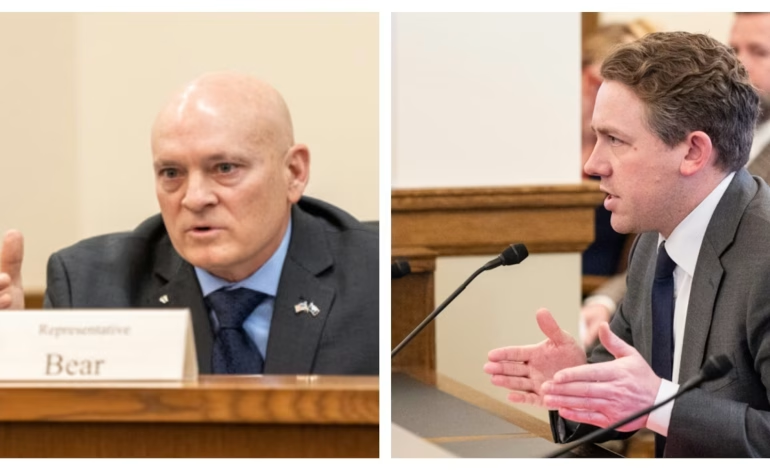
House Appropriations Chair Rep. John Bear, R-Gillette, minced no words.
“Government created the problem in the first place,” Bear said. “I’m not inclined to want to compete in the private sector.”
Bear even joked about renaming the plan “Gordon Care,” a jab at Gov. Mark Gordon, who has made health care funding a budget priority. Sen. Mike Gierau, D-Jackson, countered with “Wyoming Care.” Behind the humor, though, several lawmakers clearly wanted more answers.
WDH Director Stefan Johansson told the committee the department should know by the end of the year whether the federal government approves its funding request. If approved, Bear Care would use federal “seed money” to launch, then operate as a self-sustaining, at-cost program paid for by its members.
Johansson framed Bear Care as a low-cost alternative to ACA plans, aimed at people who only want protection for major emergencies and can’t afford so-called “Cadillac” coverage.
Under federal law, ACA plans must include 10 essential health benefits, like mental health services, prescription drugs and maternity care. Wyoming isn’t required to offer all of those at the state level, Johansson said, which gives it flexibility to create a stripped-down, emergency-only plan.
Lawmakers weren’t convinced.
Rep. Abby Angelos, R-Gillette, said government involvement has historically driven up costs.
“Anytime the government has gotten involved in health care, education, home loans — those industries have gone up in price significantly,” she said.
Rep. Ken Pendergraft, R-Sheridan, added he doesn’t see how competing with private insurers fits the government’s role.
Bear also questioned why the state isn’t instead focusing on wiping out hospitals’ unpaid bills. Johansson replied that federal guidelines don’t allow that approach and warned of a “moral hazard” if they tried.
Despite the resistance, Johansson said survey data from more than 1,300 Wyoming residents and a dozen town halls showed that health insurance costs are the No. 2 concern statewide. The hope, he said, is that cheaper catastrophic coverage could help small businesses save money and potentially pay workers more.
WDH Deputy Director Franz Fuchs emphasized that Bear Care would be completely optional.
“Because it would be self-insured, there’d be no additional costs for people who are enrolled,” Fuchs said. “The costs would be borne by the pool.”
Johansson also said the program could rebuild trust in insurance by ensuring people actually get reimbursed when emergencies hit — something many feel hasn’t always happened after years of paying premiums.
For now, Bear Care remains just a proposal. The budget committee will continue its work through December and January, and the full Legislature will take up the state budget — including the health department’s plans — when the session begins Feb. 9.



The latest news in your social feeds
Subscribe to our social media platforms to stay tuned