




‘We the People’ Teaches Wyoming Teens How To Argue Politics Without Losing Their Cool

The original story by
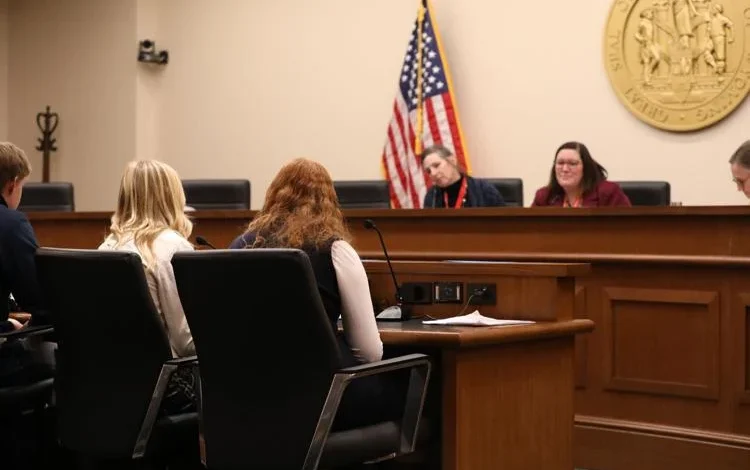
Students from all over Wyoming packed into the state Capitol on Monday, not to protest or watch a vote, but to show off how well they understand the Constitution — and how to disagree without blowing up at each other.
It was the 2025 “We the People: The Citizen and the Constitution” state finals, featuring teams from 12 high schools. All day, students fielded tough questions on constitutional history, political philosophy and the foundations of American government.
But just as important as what they knew was how they talked about it.
“They really do see this polarization,” said Bryce Strampe, a teacher and mentor from Cheyenne Central High School. “But if we can learn civic discourse – how to respectfully disagree with one another without making it emotional – I think that’s really where we the people start impacting our government.”
Strampe and co-mentor Don Morris have been working with Central’s team all year. Their students have been wrestling with big themes: political polarization, internal and external threats to democracy, and what it means when government is a mirror of the people.
“Our government’s a reflection of us,” Strampe said. “And, unfortunately, through maybe things like social media, it looks divided.”
For him, the antidote is face-to-face conversations grounded in facts and respect.
“Maybe there are things that we can find common ground on that we didn’t believe we could,” he said. “And even if we don’t find common ground, we can still believe in higher ideals, like all men are created equal.”
Central senior Noah Make said “We the People” has changed the way he and his classmates talk about politics.
“The usefulness of ‘We the People’ is that we know the framework behind their beliefs,” he said. “It helps us dig deep into expressing what we believe in the most useful manner.”
His teammate, senior Shelby Kirkbride, agreed.
“What we’ve learned just really opens up the conversation around politics,” she said. “We feel more comfortable bringing up political conversations now, because we understand how to politely disagree with one another.”
That outcome isn’t accidental. It’s baked into the program.
Cheyenne East mentor Mike Seivley said he deliberately builds “productive conflict” into his classroom from day one.
“I put people that have similar interests but different perspectives in the same groups, so that they intentionally have to fight it out,” he said. “From the very beginning of class, my goal is to have them be able to have difficult conversations in a civil fashion.”
The students aren’t just learning from teachers and textbooks. They’re also watching Wyoming politicians up close and taking notes.
Kirkbride and Central junior Mischa Rieste pointed to Sen. Mike Gierau, D-Jackson, who they met earlier in the day, as an example of someone navigating politics from the minority party.
“He was talking about the importance of really listening to his colleagues and understanding the issues they’re bringing up so that you can mutually support each other,” Kirkbride said. “I think that’s really reflective of what we were doing today.”
Rieste, who describes herself as “very Republican,” said that meeting didn’t change her politics — but it changed how she thinks about talking to people who disagree with her.
“I’m very Republican, but I can listen to what Democrats are saying and have a conversation with them where it’s not attacking their beliefs,” she said. “It’s just trying to understand where they’re coming from, and we can find common ground.”
Make and fellow senior Eli Lacey pointed to Gov. Mark Gordon as another example of someone who tries to work across divides.
“He’s a prime example of how to work across party lines,” Lacey said. “Obviously, he’s big with the coal and oil industries and protecting those in Wyoming, but he also works across party lines in order to work with things that will generate income for our state, like nuclear and other green-energy options.”
Seivley said he hopes what students learn in “We the People” lasts long after they leave high school.
“I hope that it allows them to be able to have civil conversations in the future,” he said. “I don’t know that’s always the case. I think sometimes they forget, once they get to a certain age, how to do that.”
The students interviewed say they don’t plan to forget.
Make said Strampe and Morris have taught them how to argue hard, stay respectful and still feel like one team.
“You can have different beliefs, but we’re all one team,” he said. “We’re all one people, just like life itself.”
At a celebratory dinner Monday evening at Little America in Cheyenne, teams from Cheyenne East, Cheyenne Central, Sheridan, Cody and Laramie were announced as finalists.
Saratoga High School also made the top six but won’t compete Tuesday because of transportation issues.
The five remaining teams will be back at it Tuesday morning, taking part in simulated congressional hearings, delivering testimony and answering rapid-fire questions from judges.
By Tuesday afternoon, one team will be crowned state champion and earn the chance to represent Wyoming at the National Finals in Washington, D.C. this spring — a pretty fitting destination for a group of teenagers who just spent days proving they know how democracy is supposed to work.
The latest news in your social feeds
Subscribe to our social media platforms to stay tuned