






The original story by
Wyoming’s largest state agency was in the hot seat Monday as lawmakers dug into a more than $3 billion proposed budget for the Wyoming Department of Health (WDH) for the 2027–28 biennium.
The Legislature’s Joint Appropriations Committee (JAC) spent the day grilling health officials on everything from federal grant money to waitlists for disability services and rural maternity care.
WDH Director Stefan Johansson opened by reminding lawmakers that about 95% of the agency’s budget goes straight out the door to providers, hospitals, nursing homes, and other facilities across the state.
He also thanked legislators for the extra scrutiny, noting a subcommittee has already been working closely with WDH on the budget for months leading up to these hearings.
A major focus was potential federal cash from the “One Big Beautiful Bill” Act, which could send Wyoming $500–$800 million over five years for “rural health transformation.”
Because federal details are still fuzzy, WDH has submitted a placeholder request for $344 million in federal spending authority for the next two-year budget, just to be ready if the money starts flowing.
A big chunk of that planning revolves around a controversial idea: a new, state-backed insurance product.
One of the more spirited exchanges came over WDH’s proposed “Bare Care” public major medical plan — a low-cost, catastrophic-only insurance option for individuals and small businesses, pitched as an alternative to expensive Affordable Care Act marketplace plans.
Johansson said “Bare Care” is meant to cover only the “bare necessities” of major medical needs, not full benefits. He also emphasized it’s not named after Rep. John Bear, R-Gillette, despite the coincidence.
Bear was not amused.
“I’m not inclined to want to compete in the private sector,” he said. “I don’t think it’s the proper role of government to do so.”
He argued the state shouldn’t be launching a new public insurance product at all and said federal dollars would be better spent helping rural hospitals cover unpaid bills.
Throughout the meeting, Bear pointedly referred to the plan as “Gordon Care,” tying it to Gov. Mark Gordon and his support for health spending.
Johansson pushed back, saying federal rules favor long-term system changes rather than one-time debt payoffs. He said the idea is to invest the federal money into a “Rural Health Transformation perpetuity” so the benefits outlast the five-year grant and avoid the classic “fiscal cliff.”
Rep. Bill Allemand, R-Midwest, pressed him on whether the state might end up on the hook later.
“Three, five, 10 years down the road — is this going to push us into an income tax to pay for this?” he asked. “Once we initiate a program, it’s very hard to bring the people back off of it.”
Johansson said they designed the plan specifically to avoid that outcome and told lawmakers he does not believe it would ever require implementing a state income tax to sustain it.
Lawmakers also zeroed in on the Intellectual and Developmental Disabilities (I/DD) and brain injury waiver programs, which provide critical support for people with significant needs.
WDH is asking for about $15.6 million in state general funds to:
- Boost provider reimbursement rates (continuing a nearly 5% increase previously funded by federal ARPA money);
- Fund extraordinary care;
- Start chipping away at the waitlist, which is expected to reach 450–500 people by mid-2026.
Johansson said that under current projections, the request would allow WDH to fund about one-fourth of the people expected to be on the waitlist.
Sen. Mike Gierau, D-Jackson, worried they might be spreading limited resources too thin.
“Are we just kind of exacerbating a bit of a problem already?” he asked. “We’re going to end up shortening the waitlist, but we’re going to give a half a loaf to the people that are already on it.”
Johansson admitted it’s a tough balance but said both sides have to move together.
“You must have providers … to serve the clientele,” he said, noting that if rates aren’t sustainable, providers disappear, and clearing the waitlist becomes meaningless.
The committee also drilled into administrative capacity — especially in programs where mistakes can get very expensive.
WDH is asking for two new full-time positions in its Long-Term Care Eligibility division, which processes applications for nursing home coverage and disability waivers. Staff there are currently juggling more than 600 cases each.
State Medicaid Agent Jesse Springer warned that even small error rates add up fast.
“These staff are controlling access to program costs of about $400 million a year, so a 1% error rate is $4 million,” he said.
He added that application times are creeping close to the 45-day federal limit, and if they exceed it, the state could face costly timeliness errors and penalties.
Bear also asked about the department’s 362 staff vacancies, which Johansson said are mostly in direct care roles — nurses, CNAs and similar positions in state facilities. To keep services running, WDH is having to rely on expensive contract workers at two to three times the cost of state employees, which eats up any savings from leaving positions unfilled.
Another big concern: keeping obstetrics (OB) and labor-and-delivery services alive in rural hospitals.
WDH is proposing higher reimbursement rates for Critical Access Hospitals (CAHs) that maintain OB services, plus increased rates for physicians providing maternity care.
Rep. Abby Angelos, R-Gillette, pointed out that high malpractice insurance costs are often the main reason OB providers leave rural practice and asked how better Medicaid rates really help.
Johansson said the proposal doesn’t solve malpractice issues but does try to keep the service from disappearing altogether.
The plan would:
- Pay CAHs 100% of costs for OB services if they keep them open;
- Raise physician maternity care rates to 105% of cost coverage;
- Keep most other physician services at about 90% of cost coverage.
Johansson reminded lawmakers that in just the last five years, four or five hospitals in Wyoming have stopped offering labor and delivery altogether.
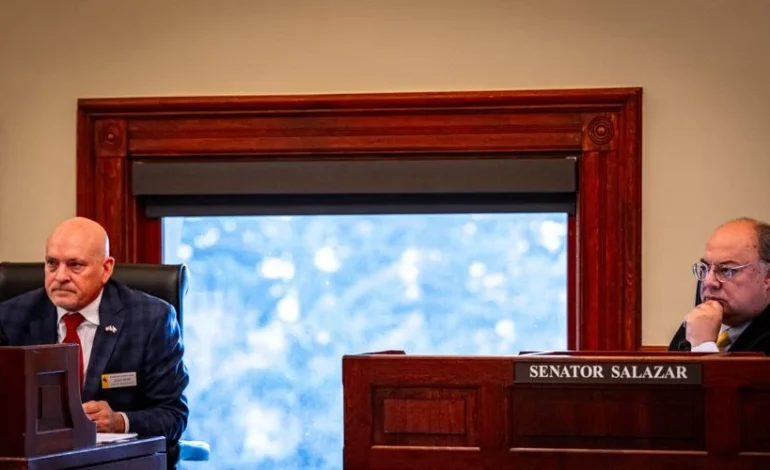
Committee Co-Chair Sen. Tim Salazar, R-Riverton, closed the meeting by asking WDH to send more data and reports, especially around the long-term sustainability of these federal-funded ideas, before lawmakers finalize the budget.
The JAC will continue budget hearings into January, with more agencies on deck, before the 68th Wyoming Legislature’s budget session kicks off Feb. 9 — where this $3 billion health budget, “Bare Care” and all, will get its next big test.


The latest news in your social feeds
Subscribe to our social media platforms to stay tuned