





Bloomberg, Axios, and Reuters contributed to this report.
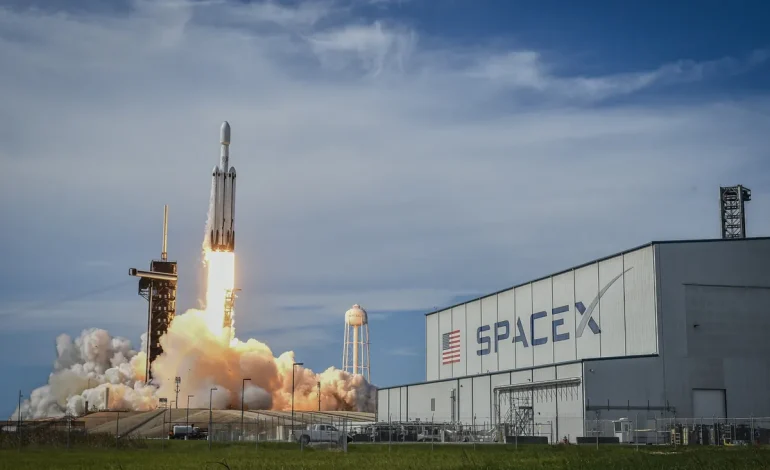
If SpaceX really goes public in 2026 at the nosebleed valuation it’s reportedly chasing, Elon Musk’s wealth could explode to almost a trillion dollars — and that’s before you even factor in Tesla hitting its own wild targets.
Here’s how the math shakes out.
Musk is already the richest person on the planet with an estimated fortune of about $460.6 billion. But if SpaceX lists at a $1.5 trillion valuation, his stake in the rocket company becomes a whole different beast.
- Musk owns roughly 42% of SpaceX.
- At a $1.5 trillion “pre-money” valuation, that stake would be worth more than $625 billion.
- Today, based on a late-2024 secondary sale valuing SpaceX around $350 billion, that same stake is valued at about $136 billion after applying a standard private-company discount.
Plug in the new IPO number, and Bloomberg’s billionaire math says Musk’s total net worth would jump to about $952 billion — an increase of roughly $491 billion.
And that’s just from SpaceX. That figure doesn’t include:
- His massive holdings in Tesla, the world’s most valuable carmaker;
- His newer AI venture xAI, which reportedly hit a $200 billion valuation this fall;
- His other stakes and companies scattered across tech, AI and space.
In other words, SpaceX alone could put him within striking distance of becoming the world’s first trillionaire.
This SpaceX IPO path is actually Musk’s second big route toward a trillion-dollar fortune.
The first is his insanely large Tesla pay package, which shareholders approved and which could be worth up to $1 trillion if every performance milestone is hit.
Those Tesla targets are no joke:
- Market value goal: $8.5 trillion (Tesla’s around $1.5 trillion now);
- Adjusted EBITDA goal: $400 billion (vs less than $13 billion last year).
Tesla’s board argues the package is necessary to keep Musk focused on the company. But between Tesla, SpaceX and xAI, he’s juggling some of the most valuable companies on Earth.
If SpaceX also lists at $1.5 trillion, it would be within shouting distance of Saudi Aramco’s record IPO, which came at a roughly $1.7 trillion valuation back in 2019 — and Aramco did that with about $360 billion in revenue the year before. SpaceX, by comparison, is said to expect around $15 billion in revenue this year. The gap between revenue and valuation is… large.
Right now, SpaceX is already a private-market monster:
- A 2024 secondary sale priced the company around $350–400 billion, depending on the deal.
- The company is reportedly working on a new transaction that would let employees sell around $2 billion in stock at a valuation of more than $800 billion.
- If that goes through, SpaceX would reclaim the title of world’s most valuable private company, after briefly losing it to OpenAI.
A public valuation of $1.5 trillion would blow past that again — and likely ignite a wave of big IPOs from other “centicorns” (private companies valued over $100 billion) like:
- OpenAI;
- ByteDance;
- Stripe;
- Databricks;
- Anthropic.
Bankers and investors are already salivating. After years of sluggish IPO activity, a SpaceX listing would be a mega-signal that the IPO market is back and open for truly gigantic deals.
On one hand, SpaceX is a dream stock for a lot of investors:
- It’s pioneered reusable rockets and dominates the launch business.
- It’s the only commercial US company that can send astronauts to orbit on its own.
- Its Starlink satellite network is the biggest constellation ever built, providing broadband to millions of customers worldwide.
- It’s eyeing space-based data centers and a direct-to-cell business using newly acquired spectrum.
On the other hand, going public would come with serious trade-offs:
- SpaceX is still in the middle of capital-heavy projects like Starship — the giant fully reusable rocket Musk wants to use to send people to the Moon and Mars.
- Public shareholders tend to care a lot about quarterly profits, not just long-term Mars dreams.
- SpaceX has always prided itself on being lean, fast and independent. Some analysts question whether that culture survives the constant scrutiny of public markets.
As one space industry CEO put it: SpaceX’s identity is so tied to independence that it’s hard to imagine it fully adapting to public-market “rules and rails.”
If SpaceX is valued at $1.5 trillion and only lists, say, 5% of its shares, that’s still a $75 billion IPO — more than double the size of the biggest IPO ever done so far.
That kind of deal:
- Would be a must-own stock for big institutional investors;
- Could reset expectations for every other late-stage private giant;
- Would test whether markets really believe companies with relatively low revenue can justify such stratospheric valuations.
A lot of skeptics — including veteran equity capital markets bankers — say public investors will eventually demand the math to make sense: growth, revenue and profits that justify the hype.
Historically, Musk has said SpaceX wouldn’t go public until it was flying regularly to Mars. That line was echoed by SpaceX President Gwynne Shotwell back in 2018:
“We can’t go public until we’re flying regularly to Mars.”
Now, with private valuations ballooning and employees hungry for liquidity, that stance appears to be softening. SpaceX has reportedly told investors it’s planning a 2026 IPO, though like everything with Musk, plans can change.
If it does happen — and if the valuations hold — Musk could find himself in a position no one’s ever been in before:
- CEO of two public companies worth over $1 trillion;
- Controlling stakes in multiple other massive private tech and AI firms;
- And a personal fortune closing in on $1 trillion.
Whether that’s sustainable — or whether markets are willing to keep betting on valuations this wild — is the next big question. But if SpaceX hits that $1.5 trillion launchpad, Musk’s wealth will be in a different orbit than anyone else in history.


The latest news in your social feeds
Subscribe to our social media platforms to stay tuned