


Cap City News, Wyoming News Now, and Wyoming Tribune Eagle contributed to this report.
Cheyenne’s got a lot on its plate right now – from how to spend federal housing dollars to which big-ticket projects should land on the 2026 Sixth Penny ballot. Toss in an airport master plan and a push for new community facilities, and you’ve got a city quietly reshaping itself on several fronts at once.
Here’s a closer look at what’s on the table – and where residents can weigh in.
The city’s Housing and Community Development Division is proposing a major tweak to how it uses its Community Development Block Grant (CDBG) funds – federal money that comes from HUD.
Right now, Cheyenne is asking residents to comment on a Substantial Amendment to its 2025–27 Consolidated Plan and Program Year 2025 Annual Action Plan. In plain English, that means the city wants to shift some unspent and repaid CDBG money into projects it thinks better match current needs.
The amendment does three big things:
- Adds a new long-term goal: “Provide Safe, Decent, Affordable Housing.”
- Creates a real property acquisition activity so the city can buy land or property for future affordable housing development.
- Launches a new public service activity to support a local food bank serving low- and moderate-income residents.
On top of that, the city plans to reallocate public service funds from two canceled projects into other eligible activities – instead of letting that money sit idle.
City officials say the changes line up with HUD’s national objectives and reflect a continued push to address affordable housing and basic needs like food access.
A public comment period is open through Jan. 6, and people are being actively invited to dig into the details and speak up.
You can review the amended documents:
- Online: at org/cdbg;
- In person:
- Mayor’s Office, 2101 O’Neil Ave.
- City Clerk’s Office, 2101 O’Neil Ave.
- Laramie County Library, 2200 Pioneer Ave.
There are also two public hearings on the proposed changes:
- City Council Meeting – Dec. 22, 6 p.m.;
- City Council Finance Committee – Jan. 6, noon.
Both will be held in City Council Chambers, 2101 O’Neil Ave.
Written comments are welcome until 5 p.m. Jan. 6 and can be emailed to [email protected]. (No phone comments, though.) Residents who need accommodations or help accessing the meetings can contact Human Resources at 307-637-6340, and a Zoom link is available by emailing [email protected] at least two business days ahead of a hearing.
The city is trying to point federal dollars more directly at housing and hunger, and it’s asking the community to either bless that move or push back.
While the housing conversation is about long-term land use and social needs, another big discussion is happening around infrastructure and connectivity.
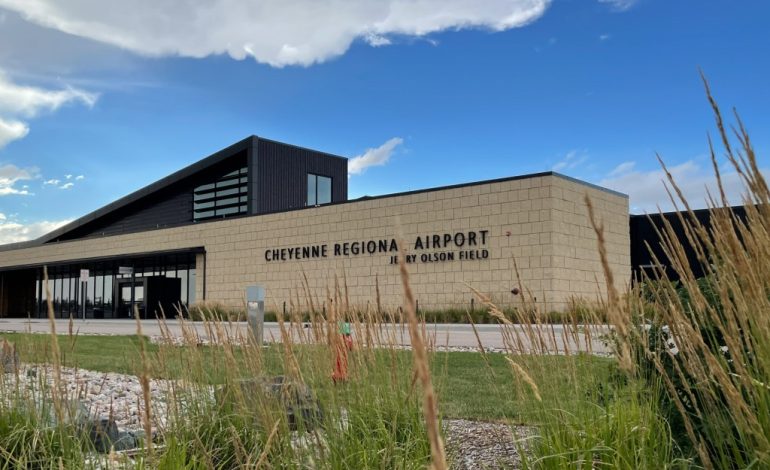
The Cheyenne City Council will hold a work session to hear updates on the Cheyenne Regional Airport Master Plan:.
- When: Friday, Dec. 12 at noon;
- Where: City Council Chambers, 2101 O’Neil Ave.
- How to watch: In person, or remotely via Zoom (link at org/zoom).
This isn’t a debate or voting meeting – no public comment will be taken, and no votes will happen. It’s strictly an information session. An agenda will be posted at cheyennecity.org/minutesandagendas.
Still, airport planning has big ripple effects: it ties into economic development, tourism, regional travel and even how the city plans surrounding land and transportation. So while you won’t be able to speak at that session, it’s a chance to see what direction the airport may be heading in the years ahead.
If the CDBG amendment is about federal dollars, the Sixth Penny tax is all about local choice.
The Sixth Penny is a voter-approved, specific-purpose sales tax. Residents get to vote on a list of proposed projects. If a project slate is approved, an extra “sixth penny” is tacked onto sales tax until the set dollar amount is collected – then the tax automatically stops.
On Wednesday at 6 p.m., the Cheyenne City Council will hold a special meeting to go over the city’s proposed slate of projects that could appear on the 2026 Sixth Penny ballot.
Councilman Jeff White summed up the pitch this way:
“When the voters give their approval, they’re really investing in the future of our community.”
It’s a big lift, he admits – these are expensive projects, and the Sixth Penny is “really the only mechanism” the city has for funding many of them.
Past Sixth Penny dollars have paid for things like:
- Sections of the Greenway;
- Local library projects;
- Fire stations;
- Improvements to city buildings.
On the current draft slate for the 2026 ballot are ideas such as:
- Replacement of the Johnson Pool;
- Two additional fire stations;
- Greenway expansion;
- The Reed Avenue Corridor project;
- Renovation of a new city building.
During the last Sixth Penny election in 2021, voters approved almost every item on the ballot — a sign, White says, that residents see the value in the tax when they can clearly see what they’re buying.
“I think the 6th penny has proven itself in the past,” White said, pointing to the visible projects that have since materialized. “So I really hope we can keep that momentum going.”
Residents can attend public meetings and comment directly, and fill out an online survey, which is open through Dec. 17.
After that, local leaders will spend the next few months finalizing the ballot and deciding which projects actually go before voters.
Even beyond what’s formally in front of City Council, there’s a broader wave of investment happening around Cheyenne:
- The Brown Foundation has started planning for a large south-side community recreation center.
- SCSD1 is expanding career and technical education (CTE) with the purchase of a 43,000-square-foot facility.
- The Outlaw Saloon property has been purchased for $1.65 million, with plans to turn it into a south-side community center.
Taken together, these moves suggest a city paying a lot more attention to recreation, education, and equity between neighborhoods, especially on the south side.
Step back and a pattern starts to emerge:
- Federal money (CDBG) is being steered toward affordable housing and food security.
- Local tax tools (Sixth Penny) are being lined up to fund major infrastructure and quality-of-life projects.
- Transportation planning (airport master plan) is under review to keep Cheyenne connected and competitive.
- Community and education projects are popping up in key growth areas like the south side and CTE training.
The common thread? Public process. Nearly every one of these efforts comes with:
- Public comment periods;
- Hearings or work sessions;
- Online documents and surveys.
If you live in Cheyenne, this is one of those moments where showing up – or even just firing off an email – can genuinely help shape what the city looks like in five, ten, or twenty years.
Whether you care most about housing, parks and pools, emergency services, local food access, or how the city grows, there’s a project in the pipeline that touches your corner of Cheyenne.


The latest news in your social feeds
Subscribe to our social media platforms to stay tuned