






The original story by and for Business Insider.
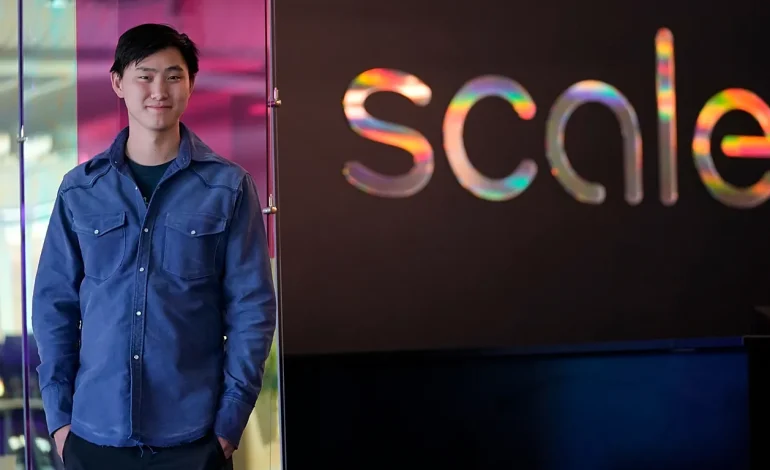
Five months after Meta dropped a massive $14 billion investment into Scale AI and scooped up its 28-year-old founder Alexandr Wang, the once-hot startup is showing real signs of strain. Workers are complaining about pay and shrinking workloads, rivals are circling its customers, and private market valuations are sliding fast.
This summer, as headlines about the Meta deal and the sudden loss of major clients like OpenAI and Google spread, one nervous Scale AI contractor even asked ChatGPT what it thought about the company’s future. The bot didn’t sugarcoat it, predicting Scale would lose its credibility as an independent company within two years. The response quickly circulated among workers, and at least one called the company a “ticking time bomb.”
Until recently, Scale AI was one of the tech world’s fastest-rising stars — the go-to shop for stress-testing and fine-tuning the world’s most powerful AI models. But that reputation has taken hits since the Meta deal.
Interviews with current and former contractors paint a rough picture:
- Pay rates have dropped sharply, with some projects paying as little as $20 an hour — down from $50.
- Unpaid onboarding has grown, with one tasker saying they spent close to 40 unpaid hours in a single month without securing any real work.
- Actual paid task opportunities have dried up for many.
- Activity in Outlier, Scale’s main gig-work platform with more than 100,000 taskers, has plunged, with internal discussions shrinking from hundreds of comments to just dozens.
One worker shared screenshots showing a “$20 an hour” gig that only allowed three minutes of work every two days — earning just 99 cents per session.
Scale AI spokesperson Joe Osborne pushed back, saying company finances are improving, not deteriorating. According to him:
- This quarter could be Scale’s biggest of 2025.
- The data business is now more profitable than before Meta’s investment.
- Revenue from applications work with governments and Fortune 500 firms has doubled in the second half of the year.
- Outlier has seen an increase in active users.
- Pay rates are posted upfront, and workers can decline any job.
Scale is also leaning into new markets, especially robotics, and has picked up up to $199 million in defense contracts since the Meta deal.
Some investors still believe in the company’s long-term prospects. One said Meta has largely let Scale operate independently, and with roughly $1 billion on the balance sheet, there’s no rush to raise more money. An IPO isn’t off the table.
Others are far more skeptical.
Although Meta’s deal valued Scale at $29 billion, secondary market platforms now show valuations sinking as low as $7.3 billion to $15 billion. Augment CEO Noel Moldvai, who runs a platform that trades startup equity, said Scale stock trading dried up after the Meta deal, then slowly resumed at much lower prices.
His takeaway: Meta mostly wanted Alexandr Wang, and the deal structure made that possible. Scale, he said, might recover — but there are no guarantees.
Not long after the Meta investment, Scale laid off 14% of its 1,400 full-time staff. The company said the goal was to make its data division profitable — which it now claims it is.
More cuts followed:
- 12 red-team contractors were terminated in September.
- A Dallas-based contractor team focused on general AI work was shut down as Scale shifted toward more specialized projects.
Former workers said workloads thinned dramatically after the Meta deal. Scale counters that these workers were part of its temporary workforce and only a small fraction of total staff.
While Scale retrenches, competitors are surging:
- Surge AI has reportedly hit a $24 billion valuation.
- Mercor, run by three 22-year-olds, raised $350 million at a $10 billion valuation in October.
- Mercor has already won at least one major project from Meta.
Scale has sued Mercor in California, accusing it of hiring away sales staff to poach clients — an allegation Mercor denies.
Former Scale consultant Tammy Hartline, now at Mercor, said the company grew so quickly that quality slipped:
“Spam and low-quality data became accepted as a cost of doing business,” she said.
Scale has also faced security headaches. An earlier investigation found the company used public Google Docs to track sensitive AI work for big-name clients, exposing confidential data and contractor information. Scale says it has since locked down those systems.
Even so, documents reviewed by journalists showed widespread data quality and security issues on projects for Google in 2023 and 2024, with workers flagged as suspected cheaters and spammers.
Scale AI still has major contracts, deep pockets, and powerful backers — but it’s no longer the untouchable startup it once was. Workers are uneasy, competitors are aggressive, and investor confidence is shaken.
Whether Scale can reinvent itself in an AI industry it largely helped build remains an open question. For many of the workers who depended on it, the answer will come too late to matter.


The latest news in your social feeds
Subscribe to our social media platforms to stay tuned