


CNN, the Guardian, and Reuters contributed to this report.
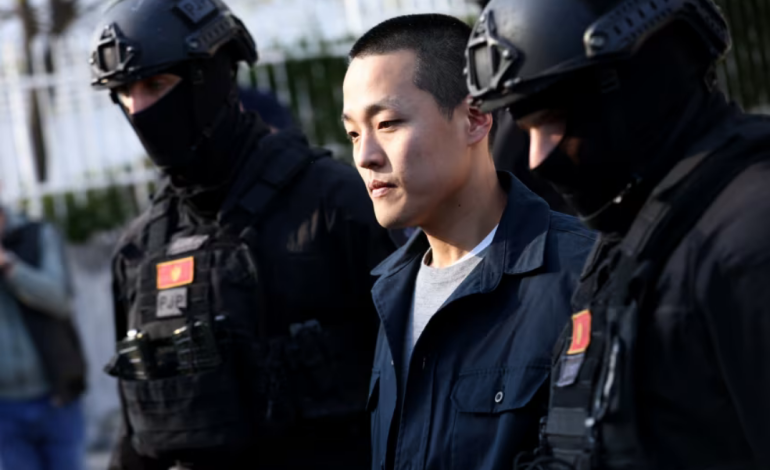
Do Kwon, the crypto wunderkind once hailed as a visionary, is now headed to federal prison for 15 years after a US judge slammed his role in one of the most damaging financial scandals in crypto history.
Kwon, 34, co-founded Singapore-based Terraform Labs and created the so-called “stablecoin” TerraUSD and its sister token Luna — a crypto ecosystem that imploded in 2022, wiping out an estimated $40 billion and helping trigger the wider “crypto winter.”
On Thursday in a New York courtroom, US District Judge Paul Engelmayer handed down a longer sentence than even prosecutors had asked for, calling the scheme:
“A fraud of epic generational scale.”
Prosecutors had recommended 12 years in prison. Kwon’s lawyers pushed for no more than five, arguing he was trying to save his company, not loot it for personal gain.
Engelmayer wasn’t buying it.
He called the defense request “wildly unreasonable” and said few federal cases have inflicted as much monetary damage as Kwon’s did.
“In the history of federal prosecutions, very few cases have caused more monetary harm than you did,” the judge told him.
Kwon had already pleaded guilty to two US charges:
- Conspiracy to defraud;
- Wire fraud.
He admitted misleading investors about how TerraUSD worked and how its $1 price peg was supposedly maintained.
Wearing jail-issued yellow, Kwon apologized in court and took personal responsibility — at least in words.
“I don’t argue nor will I ever argue that my conduct was industry standard and market practice,” he said. “If they were, they were bad industry standards and market practices and I as one of the market leaders should be personally responsible. The blame should be pointed at me for everyone’s suffering.”
He said he’s spent “almost every waking moment” of the past few years thinking about what he did wrong and what he could do to make things right.
But for many victims, the damage is permanent.
The judge said he received 315 victim letters from around the world — people who lost homes, retirement savings, college funds and money for medical care.
Reading some of those letters, Engelmayer said, felt like reading “the words of cult followers,” noting that some investors still believe in Kwon even after his guilty plea.
Terraform Labs marketed TerraUSD as a “stablecoin” that would always stay at $1, supposedly thanks to a clever algorithm called the Terra Protocol that linked it to Luna.
But when TerraUSD slipped below its $1 peg in May 2021, prosecutors say Kwon lied.
Instead of an algorithm magically fixing things, he secretly arranged for a high-frequency trading firm to buy millions of dollars’ worth of TerraUSD to prop up the price. Publicly, he claimed the system had worked as designed.
That false confidence — plus other misleading statements — drew in more retail and institutional investors. At its peak in spring 2022, Luna and the broader Terra ecosystem were valued at around $50 billion.
Then it all collapsed. TerraUSD lost its peg for good, Luna crashed, and the fallout rippled across the entire crypto market, helping topple other firms and contributing to the broader 2022 crypto meltdown.
US prosecutors say Kwon’s actions helped set the stage for the failure of other big names in crypto, including FTX.
After the collapse, Kwon left South Korea and tried to carry on Terraform’s operations abroad. Eventually he ended up in Montenegro, where he was arrested in 2023 for traveling on a fake passport.
He was extradited to the US last year and has been in custody since. As part of his plea deal, Kwon:
- Agreed to forfeit $19.3 million and certain properties prosecutors say were tied to the fraud;
- Previously reached a $4.55 billion civil settlement with the US Securities and Exchange Commission in 2024, including an $80 million civil fine and a ban from crypto transactions.
Prosecutors told the court they’d support Kwon serving the second half of his sentence in South Korea, where he still faces charges, as long as he sticks to the terms of his US plea deal.
With so many victims spread across the globe — and so much of the money tied up in volatile digital assets — prosecutors said it would be too complicated to calculate individual losses.
They told the judge they would not seek formal restitution, even though total investor losses are estimated at around $40 billion.
That means many of the people who lost everything will see no direct repayment from this case.
Kwon now joins a growing list of once-celebrated crypto leaders brought down by fraud charges:
- Sam Bankman-Fried, founder of FTX, was sentenced to 25 years in prison in 2024.
- Other crypto executives around the world are facing their own investigations and trials after the 2022 crash exposed shaky business models, hidden risks and outright scams.
For Kwon, the 15-year sentence is a stark final verdict on his experiment with “algorithmic” money — and a warning shot to the rest of the industry that, eventually, the law catches up.

The latest news in your social feeds
Subscribe to our social media platforms to stay tuned