





The original story by for WyoFile.
The US Senate on Thursday voted down competing health insurance plans from Democrats and Republicans, effectively sealing the fate of enhanced Obamacare tax subsidies that have kept premiums in check for millions of Americans.
For Wyoming, that decision is about to hurt.
Without an extension of those subsidies, Wyoming will see the biggest premium spike in the nation for some Affordable Care Act (ACA) marketplace customers — and both of the state’s Republican senators, John Barrasso and Cynthia Lummis, voted no on keeping the aid in place.
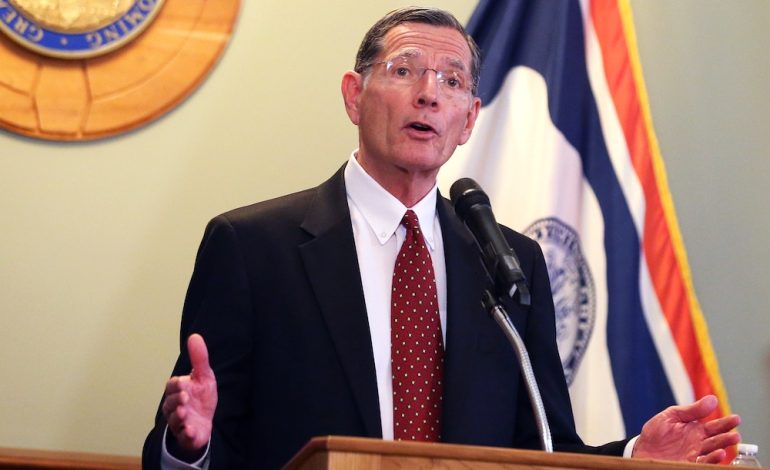
Sen. John Barrasso, a retired physician and the Senate Majority Whip, has become one of the loudest Republican voices against extending the ACA tax credits. Speaking on the Senate floor, he blasted the Democratic bill that would have continued the subsidies.
“What [the Democrats] are proposing isn’t a serious plan,” Barrasso said. “It’s a disaster. Our nation can’t afford it. The American people can’t afford to pay these high costs for health care. We need to focus on the cost of care.”
Barrasso argued that Obamacare is fundamentally broken and that the federal government can’t keep pouring money into what he sees as an unsustainable system. He pushed instead for a Republican proposal to expand Health Savings Accounts (HSAs) — a plan that also failed to pass.
Lummis joined Barrasso in voting against the subsidy extension, lining up with most Republicans who say the tax credits were meant to be a temporary COVID-era patch, not a permanent entitlement.
For many Wyoming residents, the impact isn’t theoretical — it’s about to hit their wallets hard.
According to data from KFF (Kaiser Family Foundation), a 60-year-old in Wyoming earning around $63,000 a year and buying insurance on the ACA marketplace is staring at an average 421% increase in monthly premiums once the subsidies expire.
No other state matches that jump.
For comparison, that same 60-year-old would see increases of:
- 231% in Montana;
- 166% in Colorado;
- 192% in Utah;
- 134% in Idaho.
Not all of Wyoming’s roughly 45,000 ACA enrollees will see hikes that extreme — premiums depend on age, income and plan choice. But health advocates warn that many people will still face big jumps and some will simply drop their coverage altogether.
That worries clinics, hospitals and insurance navigators.
Without subsidies, some people may switch to cheaper, bare-bones private plans that don’t cover much, or go completely uninsured and pray they don’t get sick or injured.
Either way, the cost of unpaid care doesn’t just vanish. Hospitals are still required to treat emergencies, which can shift costs onto local health systems and insured patients through higher prices.
The Affordable Care Act marketplace — often called the “Obamacare exchange” — launched in 2010 to serve people who don’t get insurance through work and don’t qualify for Medicaid.
In 2020, as COVID upended work, income and coverage, Congress created the Enhanced Premium Tax Credits, which:
- Dramatically lowered monthly premiums;
- In some cases reduced costs to $0 per month for low-income customers;
- Helped drive the US uninsured rate to near-record lows.
But the extra help was expensive. The Congressional Budget Office estimated in 2020 that extending the credits would add about $212 billion to the deficit over 10 years. Fiscal conservatives argued that was too much.
Congress extended the enhanced credits once in 2022, but not again this year. A fight over those subsidies was a major factor in the historic government shutdown earlier this fall.
On Nov. 12, Congress cut a deal to reopen the government without an extension of the extra ACA help. Both parties promised to keep working on a fix, which led to Thursday’s votes:
- Democrats’ bill: Extend the ACA tax subsidies again;
- Republicans’ bill: Shift support toward HSAs instead.
Both failed.
On the Senate floor, Democrats framed the vote as literally life-or-death.
“This is not a political fight,” said Senate Majority Leader Chuck Schumer. “This is a life and death vote, because people who will lose their health care could face that horrible, horrible end.”
Schumer emphasized that Democrats were united behind a “clean, simple extension” of the subsidies, while Republicans were split among multiple replacement ideas.
“Democrats are fighting to lower the health care costs for the American people, while Republicans are fighting among themselves,” he said, noting that GOP lawmakers had floated “nine different health care proposals and counting.”
Barrasso, meanwhile, argued the ACA is fundamentally flawed and that Democrats are trying to hide that with taxpayer cash.
He called Obamacare a program that has “robbed the American people of choice as well as affordability,” and said the enhanced subsidies were sold during COVID as temporary emergency measures.
“Now these tax-and-spend radicals who run the Democratic Party want to extend them again… for another three years,” Barrasso said. “And they want to do it with zero reforms.”
Wyoming’s health care market was already tight before the subsidy fight.
This year, Mountain Health Co-op exited the Wyoming marketplace, leaving just two insurers offering ACA plans in the state. That shrinking competition comes on top of baseline premium increases and inflation in medical costs.
All of that, stacked with the end of enhanced subsidies, makes the outlook especially tough for Wyoming consumers.
Key enrollment dates:
- Dec. 15 – Last day to sign up for coverage that begins Jan. 1;
- Jan. 15 – Final deadline to enroll for 2026 marketplace coverage (for plans starting Feb. 1).
Health insurance navigators are urging people to review their plans carefully instead of letting coverage auto-renew. For those shopping outside the ACA marketplace, experts recommend:
- Calling insurers directly, not just using third-party websites;
- Reading the fine print on deductibles, networks and exclusions;
- Being wary of online plans that look “too good to be true.”
For now, with the Senate blocking both the subsidy extension and the GOP’s alternative, one thing is certain: Wyoming consumers are heading into one of the roughest health insurance years in the country — with little relief in sight.


The latest news in your social feeds
Subscribe to our social media platforms to stay tuned