

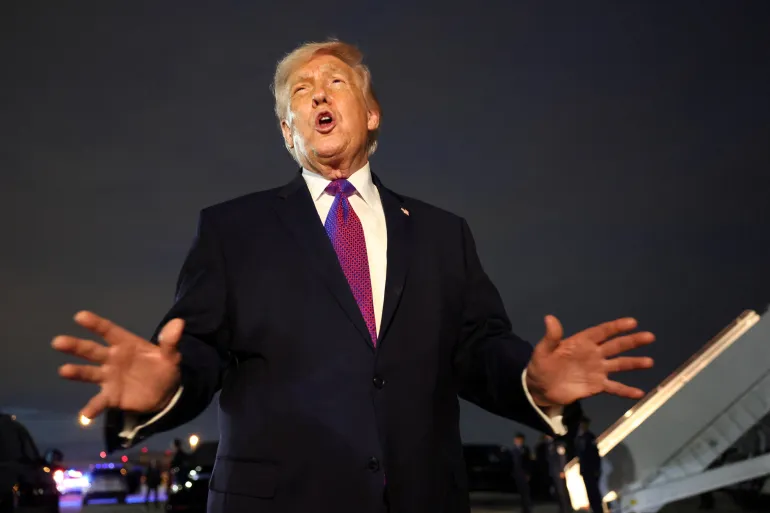

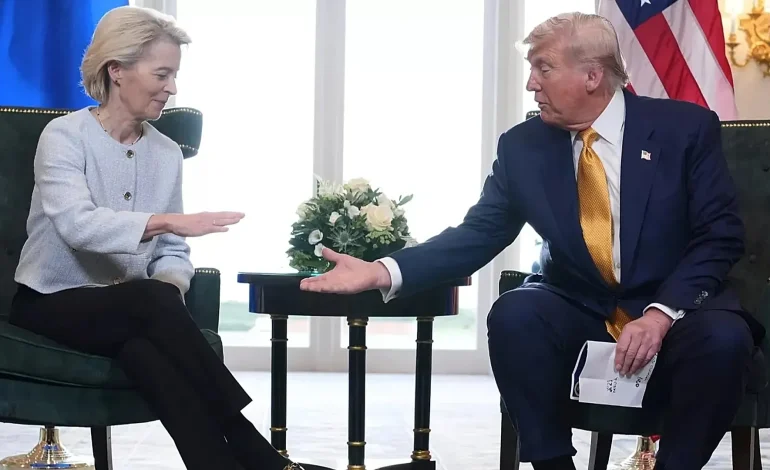

Disputes over recent elections in Romania and Moldova have outlined a deeper rift between Washington and Brussels over democracy, sovereignty and power on a global scale. That rift has sharpened under Donald Trump’s second presidency, as the United States reassesses not only its relationship with the EU, but also Europe’s place in a multipolar world.
The controversies in Romania and Moldova, from annulled election results and blocked candidates to disputed diaspora voting and administrative pressure on opposition parties, have fed a broader debate about how democratic standards are applied and enforced in Europe. While EU institutions frame their actions as legal safeguards, critics in Washington see selective enforcement that risks hollowing out political competition.
The Trump administration’s 2025 National Security Strategy reflects that concern, placing unusual emphasis not only on adversaries but also on democratic backsliding among allies and supranational bodies.
However, the clash goes far beyond election management.
Trump’s evolving approach to Europe marks a departure from decades of US foreign policy that prioritised close alignment with Western European powers such as Germany, France and the United Kingdom. Instead, his administration has shown growing interest in conservative, post-Eastern Bloc states like Hungary, governments that openly challenge Brussels’ authority and promote a more nationalist vision of sovereignty.

For Trump, these governments represent resistance to what he sees as overcentralised, unelected power in Brussels. For the EU, that alignment is unsettling as it weakens internal cohesion and amplifies ideological divisions at a moment when the bloc is already under strain.
Yet some analysts argue that focusing solely on personalities or electoral disputes misses the larger picture.
Jeffrey Sachs, Director of the Center for Sustainable Development at Columbia University, told the Wyoming Star the conflict between Washington and Brussels reflects something deeper and more structural.
“The relationship of the Trump Administration and the European Commission is what psychologists call a folie a deux,” Sachs said. “Both the US and Europe are delusional about their place in the world, with delusions of grandeur.”
He argues that the transatlantic dispute is less about values than about competing illusions of power in a world that has already moved on.
They are fighting with each other over which specific wars to fight and who will pay for them, but neither is making much sense in their relations with Russia, China, and the rest of the world.
From Sachs’s perspective, both sides have failed to adapt to the emergence of a multipolar global order. While the United States pressures allies and neighbours and attempts to manage the war in Ukraine, Europe, he says, remains committed to prolonging that conflict rather than reassessing its strategic costs.
“Neither the US nor Europe has adjusted realistically to a multi-polar world,” Sachs said. “Both pushed NATO enlargement to the point of war with Russia.”
At the same time, he argues, Washington and Brussels share more in common than either admits, including a confrontational posture toward China and unified support for Israel’s military campaign in Gaza.
“Both the US and Europe are hostile towards China, rather than working with China. Both supported Israel in its murderous rampage in Gaza,” Sachs said.
For Sachs, the roots of today’s tensions stretch back decades. He contends that NATO should have been dismantled at the end of the Cold War, when its original adversary ceased to exist.
“NATO should have been disbanded back in 1990 when the Soviet Union ended the Warsaw Pact, or at least at the end of 1991, when the Soviet Union itself ended,” he said. “Both the U.S. and Europe squandered the historic chance for peace.”
In this context, Trump’s pivot toward governments like Hungary’s is less an ideological endorsement than a symptom of a broader breakdown in the transatlantic consensus. Election disputes in Romania and Moldova have become convenient flashpoints, concrete examples through which Washington questions Brussels’ authority and democratic credibility.
For the EU, the risk is reputational. If democratic norms appear inconsistently applied, especially in smaller or more vulnerable states, the bloc’s claim to moral leadership weakens. For the United States, the challenge is strategic: recalibrating alliances without further fragmenting an already unstable international system.
As Sachs suggests, the deeper danger is that both sides remain locked in outdated assumptions about power, security and influence: arguing over control of a world that no longer exists.


The latest news in your social feeds
Subscribe to our social media platforms to stay tuned