


Ukraine signals NATO flexibility as talks with US and Europe intensify in Berlin
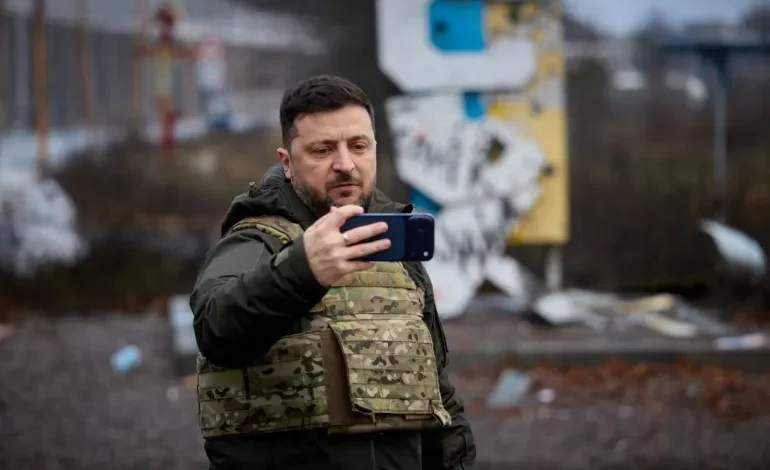

Ukraine’s Volodymyr Zelensky has signalled a major shift in Kyiv’s long-standing security strategy, indicating that Ukraine may be willing to step back from its ambition to join NATO in exchange for binding security guarantees from Western partners.
The comments came on Sunday as Ukrainian, US and European officials gathered in Berlin for high-level talks aimed at exploring a potential settlement framework. The discussions included US President Donald Trump’s envoy Steve Witkoff and Trump’s son-in-law Jared Kushner, whose presence underscored Washington’s push to accelerate diplomatic movement.
Speaking to reporters in a WhatsApp chat ahead of the meetings, Zelenskyy framed the proposal as a concession by Ukraine after years of advocating NATO membership as the strongest deterrent against future conflict.
“From the very beginning, Ukraine’s desire was to join NATO; these are real security guarantees. Some partners from the US and Europe did not support this direction,” Zelensky said. “Thus, today, bilateral security guarantees between Ukraine and the US, Article 5-like guarantees for us from the US, and security guarantees from European colleagues, as well as other countries – Canada, Japan – are an opportunity to prevent another invasion,” he added. “And it is already a compromise from our part.”
Zelensky stressed that any such guarantees would need to be legally binding to be credible. If formalised, the move would mark one of the most significant recalibrations of Ukraine’s foreign policy since the war began. NATO membership has long been a red line for Kyiv, even as concerns persisted among some alliance members about the risks of expansion.
While Zelensky signalled flexibility on NATO, Ukrainian officials reiterated that Kyiv was not prepared to compromise on territorial issues. The president said he was seeking what he described as a “dignified” peace and firm guarantees to prevent a renewed conflict.
Following the talks, Witkoff said “a lot of progress was made,” suggesting that the discussions had gone beyond exploratory exchanges. Zelensky’s adviser Dmytro Lytvyn said negotiations lasted more than five hours and would resume on Monday, with officials reviewing draft documents.
“They went on for more than five hours and ended for today with an agreement to resume tomorrow morning,” Lytvyn said.
Germany’s Defence Minister Boris Pistorius welcomed Washington’s engagement, calling it “a good sign” that Trump had sent senior envoys to the talks. At the same time, he struck a note of caution regarding the substance of the proposal.
Ukraine, Pistorius noted, has past experience with security assurances that failed to prevent conflict. In 1994, Kyiv gave up its nuclear arsenal under the Budapest Memorandum in exchange for guarantees from the US, Russia and the UK.
“Therefore, it remains to be seen to what extent this statement Zelensky has now made will actually hold true, and what preconditions must be met,” Pistorius said, pointing to unresolved territorial questions and the need for firm commitments from all sides.
He added that security guarantees without substantial US involvement “wouldn’t be worth much”.
Zelensky said Ukraine, the US and European partners were also reviewing a broader 20-point plan that could lead to a ceasefire. While no final decisions have been announced, the Berlin talks suggest momentum toward a framework that prioritises security guarantees over formal alliance membership.


The latest news in your social feeds
Subscribe to our social media platforms to stay tuned