





The original story by David Madison for Cowboy State Daily.
President Donald Trump is promising to rip up a chunk of the environmental rulebook that farmers say has turned tractors into overpriced, overcomplicated computers on wheels.
Speaking at a White House roundtable last week, Trump went straight at emissions requirements on farm machinery, calling them costly, impractical, and — in his words — basically pointless.
“We’re going to take off a lot of the environmental restrictions that they have on machinery. It’s ridiculous,” Trump said. “Farming equipment has gotten too expensive. And a lot of the reason is because they put these environmental excesses on the equipment which don’t do a damn thing except make it complicated, make it impractical.”
For Wyoming producers, who run diesel equipment across some of the biggest operations in the country, that’s music to the ears.
Trump also argued the new tech has made it nearly impossible for farmers to fix their own machines.
“The machines, they’re always under repair because they’re so complicated that you can’t fix them,” he said. “The old days, you used to fix it yourself. Now you can’t do that. You have to be a Ph.D.”
He even dragged lawn mowers into it, saying equipment in general has gotten absurdly complex:
“You need about 185 IQ to turn on a lawn mower now. So we’re going to take that crap off.”
Trump’s comments came after an August announcement from the Environmental Protection Agency that tackled one of the most hated parts of modern diesel equipment: the diesel exhaust fluid (DEF) system and the dreaded “limp mode.”
DEF systems are designed to cut emissions, but when sensors detect a problem, they can force machinery to slow down dramatically — or even shut down — right when operators need it most.
Under the new EPA guidance, manufacturers are being directed to give operators 36 hours before limp mode kicks in, instead of triggering slowdowns immediately. EPA Administrator Lee Zeldin rolled out the change at the Iowa State Fair and said it could save family farms $727 million a year.
“It is unacceptable that farmers, truckers, construction workers, and many other small businesses continually experience failures of diesel-powered equipment when they need it most — costing millions of dollars in lost productivity,” Zeldin said.
The DEF requirements trace back to the Obama administration’s first term, when new EPA emissions standards pushed manufacturers to add systems that recycle exhaust gases and burn fuel more cleanly. The technology works — but it also adds sensors, computers, and a lot more things that can fail.
And when they fail, farmers say they don’t just lose time. They lose money.
Ward Tigner, who owns Tractor Guys in Worland and has been working on equipment for four decades, says the shift has been brutal on repair costs.
“A lot of the new stuff, you have to have electronics and computers to control what’s happening in your machine,” Tigner said.
He added that tractors built in the last 15 years can have three to 12 computers onboard.
Translation: when something goes wrong, you’re not grabbing a wrench — you’re calling the dealership.
“You’re forced to go to the dealer and pay a much, much larger price to have something repaired,” Tigner said.
Tigner also said removing emissions equipment can noticeably boost performance, claiming horsepower can jump by as much as 25% — the kind of bump that can make a big difference when you’re pulling massive implements all day.
“If you have the same tractor and now instead of pulling a 70-foot implement, I can pull a 90-foot,” he said. “It makes things simpler and cheaper for the farmer in the long run.”
Dennis Sun, a rancher and publisher of the Wyoming Livestock Roundup, said producers aren’t asking to trash clean air — but they want fair standards across the board.
“Why are you picking on a tractor when you have all the locomotives and all the other stuff out there?” Sun said. “We just want a level playing field here.”
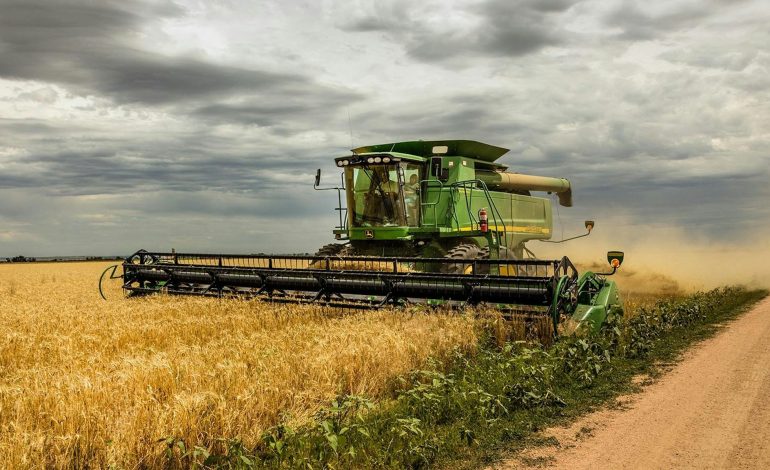
Cyrus Western, the EPA’s Region 8 administrator (which covers Wyoming), said the DEF sensor problem hits hardest during harvest, when a faulty reading can drop equipment into limp mode and bring operations to a standstill.
Western said equipment from model years 2026–27 and onward will come with updated software designed to prevent instant shutdowns. Owners of older machines will be able to get their equipment reprogrammed at dealerships at no cost, he said.
He framed the move as part of the Trump administration’s approach to “cooperative federalism,” saying the agency worked with manufacturers to keep emissions systems practical instead of punishing.
“That’s why this year, EPA worked with manufacturers to provide practical, commonsense guidance that reduces engine derates and lowers DEF-related costs,” Western said.
He added that Wyoming farmers face unique challenges because the state has the largest average farm size in the nation, and the updated guidance should help with the realities of long distances and remote work.
Trump is making a broader political promise — fewer environmental restrictions and cheaper, easier-to-fix equipment — while the EPA is already making a narrower, immediate change: more time before limp mode ruins your day.
For Wyoming’s farmers and ranchers, that combination could mean less downtime, fewer dealership bills, and one less reason to dread that flashing warning light when the work absolutely has to get done.



The latest news in your social feeds
Subscribe to our social media platforms to stay tuned