



Wyoming’s Black Bears Are Back — Spreading into Old Country Even as Hunters Notch Record Kills

The original story by for WyoFile.
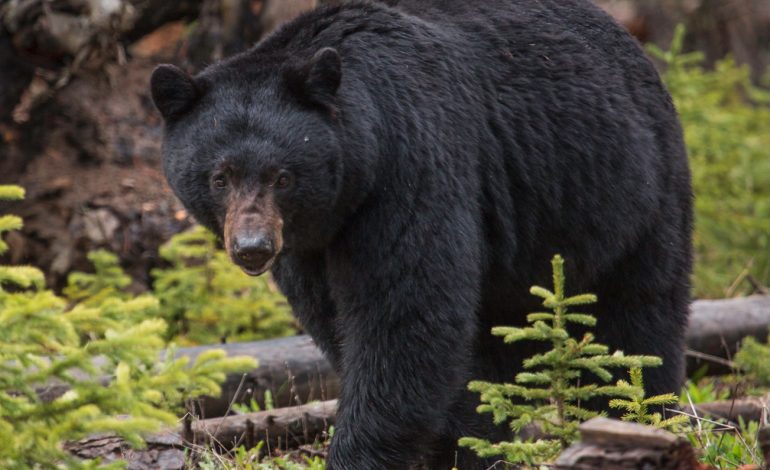
Black bears used to be a lot rarer around Wyoming than people remember. When the West was being settled, Ursus americanus got hammered — wiped out from big chunks of its native range as towns grew, forests got logged, and predators were treated like pests.
Fast forward to 2025 and the story has flipped: black bears are thriving, they’re expanding into places they haven’t been seen in generations, and — here’s the part that surprises some folks — that’s happening while hunters are killing more bears than ever.
“We can have regulated hunting seasons for a species and at the same time increase numbers and the health of a population,” said Joe Kondelis, a Cody resident who leads the American Bear Foundation. “We have healthy populations across the US.”
If you want the boots-on-the-ground version of the trend, talk to Rob Brossman.
Brossman runs bait sites in the southeast corner of the Wind River Range, where he leaves out peanuts to draw bears in. He says it’s not hard to find them anymore.
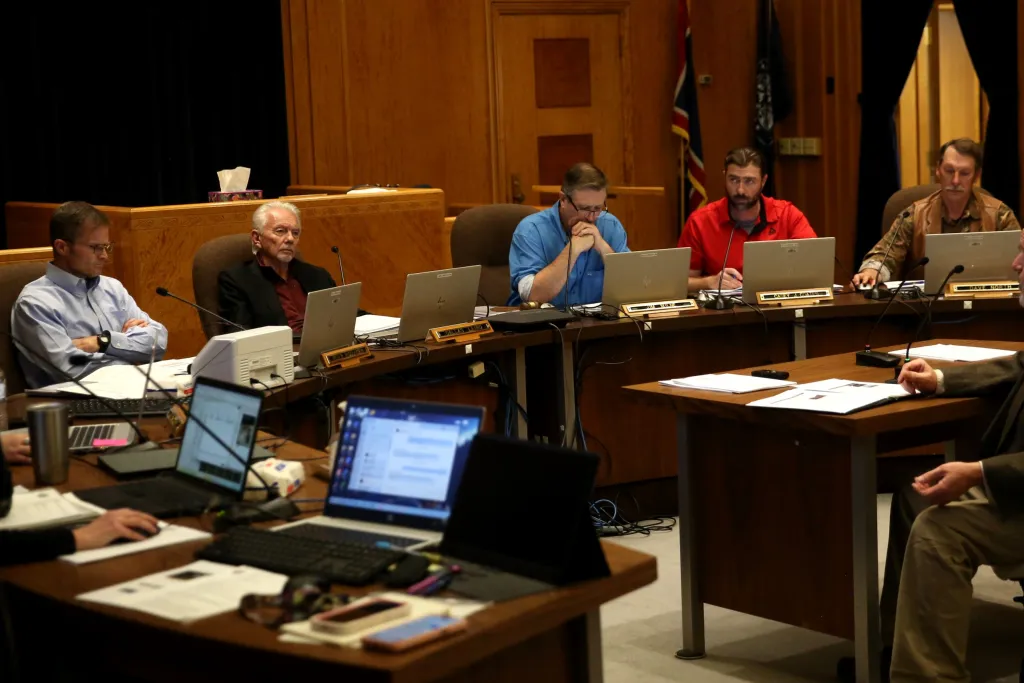
“I know the population where I hunt is getting bigger and bigger,” he told state wildlife managers at a Wyoming Game and Fish public meeting in Lander on Dec. 2, “because I’m seeing a lot of bears.”
Brossman says he and his friends and family might only harvest two or three bears a year, but he’s seeing 15 to 20 individual bears annually — a big jump from when he started hunting in Wyoming about a decade ago.
And he wasn’t there just to chat. In his hunt unit, Game and Fish is considering a proposal to increase how many female bears can be taken — and Brossman didn’t seem worried about it. Similar increases have been proposed in places like the Gros Ventre Range, Sierra Madre Range, Snowy Range, and the Laramie Mountains, too.
Here’s the part that sounds like a contradiction until you dig into it.
Wyoming is in the middle of a modern black bear hunting boom — regulated, monitored, and increasingly popular. In fact, Wyoming hunters have set a new record for bear harvests in each of the last three years.
Since the late 1990s, the number of black bear licenses sold has roughly tripled — from about 2,000 to nearly 7,000. Success rates have stayed pretty steady at around 10%, but with more hunters in the mix, the number of bears taken has also roughly tripled, from under 200 a year to nearly 700 annually.
So why aren’t bear numbers crashing?
Because Game and Fish says hunting isn’t hammering the population in a way that stops growth — especially since Wyoming’s system is designed to protect the animals that matter most for reproduction.
“Hunting is not negatively impacting black bear populations,” said Dan Thompson, Game and Fish’s large carnivore supervisor, speaking at the Lander meeting. “And I would say that across North America.”
Wyoming manages black bears as a game species — but with a big emphasis on limiting female harvest. In 33 of Wyoming’s 35 bear hunt areas, there are caps on how many sows can be killed.
That’s a big deal, because females are the “reproductive engines” of any bear population. Keep too many of them alive, and populations can hold steady or expand even while people hunt.
Only two hunt areas don’t have female limits:
- Area 32 (lower-elevation parts of the Bighorn Basin);
- Area 35 (a massive area stretching from southwest to northeast Wyoming that used to be mostly unoccupied).
This management approach — hunting, but careful hunting — is one reason bears can keep pushing into new territory.
What’s happening now isn’t a sudden bear “invasion.” It’s more like a slow, steady creep back into habitat that used to be bear country before settlement knocked populations down.
“From here, we’ve seen expansion into Green Mountain, the Seminoes,” Thompson said. “From other directions, we’ve seen expansion east of the Bighorns. It’s not monumental. It’s more incremental.”
The one big gap? Northeast Wyoming.
Thompson said the only major chunk of forested habitat bears still haven’t truly reoccupied is the far northeast corner — places like the Bear Lodge Mountains and Black Hills. But even there, hunters have “picked up a few,” and there are signs bears are starting to move back in — kind of like mountain lions did around the turn of the century.
One reason this doesn’t dominate headlines: black bears don’t trigger the same political food fight that wolves, grizzlies, or mountain lions can.
“I would say there’s not the controversial drama with black bears as there is with some of the other species we have,” Thompson said.
There have been moments, though. After the brutal winter of 2022–23 slammed mule deer and pronghorn herds, some outfitters demanded wildlife managers knock back carnivores in the Wyoming Range — black bears included. The state increased efforts on mountain lions and coyotes, but didn’t change bear regulations much, partly because bears were already being hunted hard.
“We’re essentially harvesting up to a third of the population annually,” Thompson said, pointing to the Wyoming Range.
That kind of pressure leaves a mark, too. Thompson said bear age structure in the Wyoming Range is heavily skewed younger — “primarily a sub-adult population” — because older animals get hunted out.
To Kondelis, Wyoming’s bear numbers are proof that regulated hunting can coexist with healthy wildlife populations — even for a slow-reproducing animal like a bear.
He credits Game and Fish with threading a tricky needle: more people want to hunt bears, but bears don’t reproduce like deer or elk. Managing that balance takes careful limits, especially on females.
“To me, it’s a testament to the survivability of black bears,” Kondelis said. “They are one of the most adaptable species in North America.”
And that adaptability is exactly why Wyoming is seeing what it’s seeing: bears are rebounding, they’re moving, and they’re finding space in landscapes that — not all that long ago, historically speaking — had pushed them out.
The short version: Wyoming’s black bears aren’t just hanging on. They’re quietly taking ground back.

The latest news in your social feeds
Subscribe to our social media platforms to stay tuned