





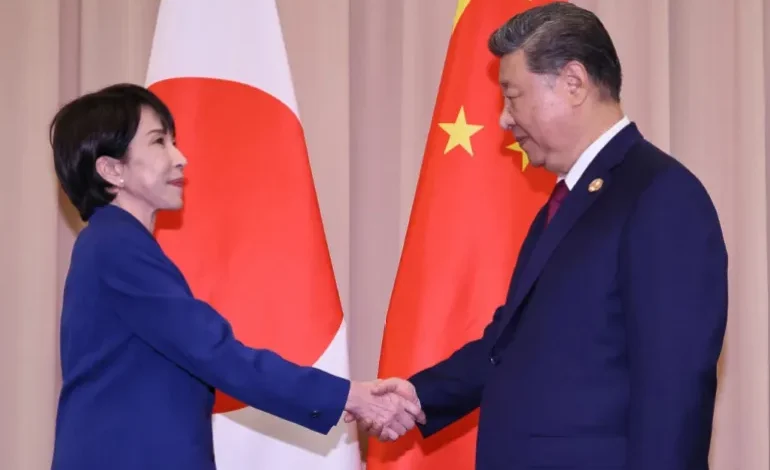

Xi Jinping has invited Lee Jae Myung to a state visit in Beijing, a swift diplomatic push that signals China’s intent to reinforce relations with South Korea as tensions ripple across Northeast Asia.
South Korea’s national security adviser, Wi Sung-lac, said on Friday that Lee will meet Xi in Beijing on Monday before heading to Shanghai to visit the historic site of South Korea’s provisional government, which operated during Japan’s 35-year colonial rule. The schedule, unusually packed and quick, underscores how much weight both sides are placing on the visit.
According to Yonhap News Agency, the leaders are expected to discuss “practical cooperation” spanning supply-chain investment, tourism and responses to transnational crime. Lee will also press China to take a “constructive” role in pushing for “a breakthrough in resolving issues on the Korean Peninsula”, Wi said.
The meeting will be the second between Xi and Lee in just two months, a turnaround that analysts see as deliberate. Beijing appears keen to shore up ties with Seoul before South Korea next sits down with Japan, especially as China-Japan relations remain strained.
Those strains sharpened after Japanese Prime Minister Sanae Takaichi suggested in November that a hypothetical Chinese attack on Taiwan could prompt a military response from Tokyo. Against that backdrop, Wi reiterated Seoul’s stance on Friday, saying South Korea “respect[s] the one China policy and act[s] in accordance with that position”.
Kang Jun-young, a professor of political economics at Hankuk University of Foreign Studies, said the timing reflects a recalibration in Beijing’s approach.
“China wants to emphasise South Korea’s importance slightly more than before,” Kang told Reuters. “China appears to have strategically decided that it would be better to have [Lee] visit China before South Korea holds a summit with Japan again.”
Lee’s administration has framed the outreach as part of an effort to “restore” ties with China, South Korea’s largest trading partner, without abandoning alliances with Japan and the United States. That marks a tonal shift from former president Yoon Suk Yeol, under whom Seoul leaned closer to Washington and Tokyo and took a sharper line on Taiwan.
Security issues are also likely to surface. Shin Beom-chul, a former South Korean vice defence minister and senior fellow at the Sejong Institute, said the talks could touch on efforts to modernise the South Korea-US alliance, often viewed in Beijing as a counterweight to China’s regional influence.
Roughly 28,500 US troops are stationed in South Korea, and Washington has hinted at making those forces more flexible to respond to wider regional challenges, including Taiwan.
“Korea is not simply responding to threats on the peninsula,” said General Xavier Brunson, commander of US Forces Korea, at a forum last month. “Korea sits at the crossroads of broader regional dynamics that shape the balance of power across Northeast Asia.”
With China remaining North Korea’s key ally and economic lifeline, Lee is also expected to seek Beijing’s help in nudging Pyongyang back toward dialogue, even as relations between China and North Korea continue to deepen.
Beyond geopolitics, the visit will spotlight economics. Lee’s office said cooperation on critical minerals, supply chains and green industries is high on the agenda. Nearly half of South Korea’s rare earth imports come from China, and Beijing remains Seoul’s largest market for semiconductor exports.
Officials from both sides agreed last month to work towards stabilising rare earth supplies, while partnerships in AI and advanced technologies are also on the table. Huawei Technologies has said it plans to launch its Ascend 950 AI chips in South Korea next year, potentially offering local firms an alternative to US suppliers.
Cultural issues may surface as well. China’s effective ban on K-pop content, dating back to 2017 after the deployment of the US THAAD missile defence system in South Korea, has long rankled Seoul. Local media report that the chief executive of SM Entertainment will join Lee’s business delegation, hinting that soft power could feature alongside steelier strategic concerns.



The latest news in your social feeds
Subscribe to our social media platforms to stay tuned