


US Coast Guard halts survivor search after latest boat strikes in Pacific
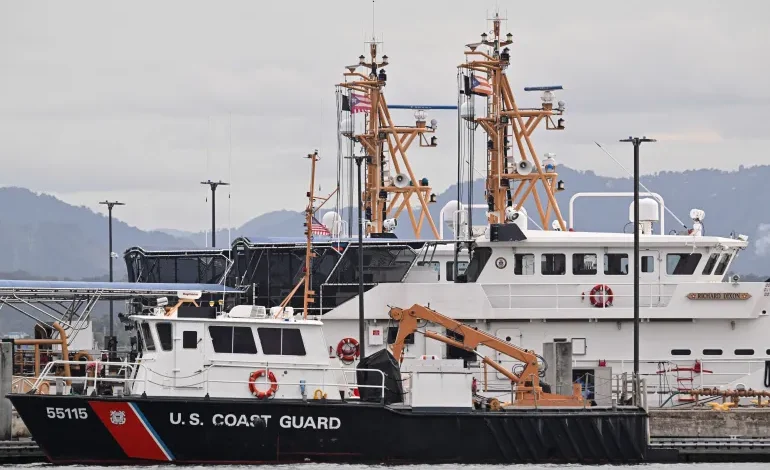

The United States Coast Guard has suspended its search for survivors days after the US military said it carried out additional strikes on boats in the eastern Pacific, part of its expanding campaign in waters in and around Venezuela.
In a statement published on its website on Friday, the Coast Guard said the three-day operation focused on waters “approximately 400 nautical miles [about 740km] southwest of the Mexico/Guatemala border” and lasted more than 65 hours, with no reported sightings of survivors.
US media outlets previously reported that the search was conducted amid harsh conditions, including “nine-foot seas, and 40-knot winds”.
Earlier this week, the US military’s Southern Command said it struck three boats travelling together in the eastern Pacific. According to the command, three people were killed on one vessel, while passengers aboard the other two jumped into the water, “distancing themselves before follow-on engagements sank their respective vessels”.
The military later said two more people were killed in a subsequent strike on another boat, though it did not disclose the location.
In both cases, US forces claimed the boats were smuggling drugs, without providing evidence.
The latest incidents bring the total number of known boat strikes to 33, with at least 115 people killed since early September, according to figures released by the administration of US President Donald Trump.
The Coast Guard did not say how many survivors were believed to be in the water. The military had earlier said it immediately alerted the Coast Guard because it had no Navy vessels in the immediate vicinity.
The Coast Guard then dispatched a plane from California and issued alerts to ships operating nearby.
Human rights groups and international law experts have warned that US strikes on alleged drug-smuggling vessels may amount to extrajudicial killings, carried out without legal authority or due process.
The Trump administration has defended the operations, arguing that the targets are “narcoterrorists” motivated not by profit but by efforts to destabilise the United States through the drug trade.
Scrutiny of the campaign intensified after a follow-on strike in the Caribbean in early September appeared to kill survivors of an earlier attack. Critics said the incident may have violated both US rules of engagement and the laws of armed conflict.
There have also been documented cases of survivors. In late October, the Mexican Navy suspended a separate search after four days. That same month, two survivors from a strike on a submersible vessel in the Caribbean Sea were rescued and returned to their home countries, Ecuador and Colombia.
Authorities in Ecuador later released one of the men, saying there was no evidence he had committed a crime.
US military operations have been heavily concentrated in waters near Venezuela, which has faced tightening US sanctions, a buildup of American military forces along its borders, and what Trump has described as an attack on a dock inside Venezuelan territory.
The Trump administration has also imposed a blockade on sanctioned Venezuelan oil tankers entering and leaving the country’s coast.
Venezuela’s president, Nicolas Maduro, has accused the US of attempting to overthrow his government and seize the country’s vast oil reserves. Still, on Thursday, he struck a more conciliatory note, saying he remains open to negotiating a deal with Washington to combat drug trafficking.


The latest news in your social feeds
Subscribe to our social media platforms to stay tuned