



China has moved to weaponise trade in its deepening dispute with Japan, unveiling new export controls on sensitive goods after Tokyo issued unusually blunt warnings about a potential conflict over Taiwan.
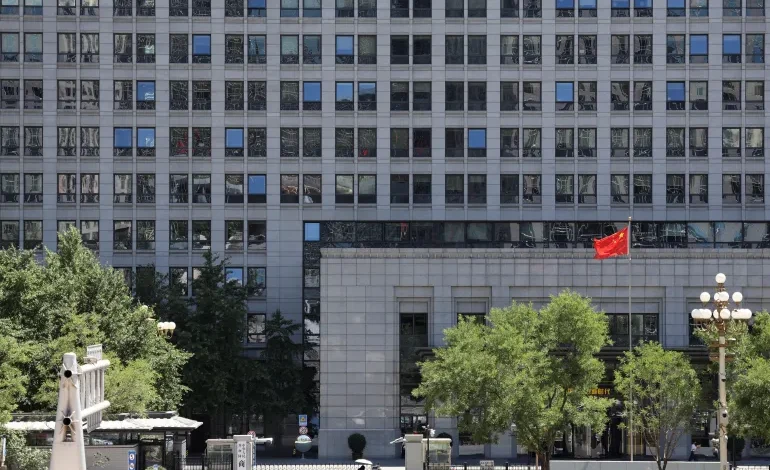
Beijing’s Ministry of Commerce said it was banning so-called dual-use items, goods with possible military applications, citing Japan’s “erroneous” and “egregious” statements about the self-governing island, which China claims as its own territory.
In a statement on Tuesday, the ministry said the restrictions were designed to “safeguard national security” and would apply to any items that could “enhance Japan’s military capabilities”. It did not specify which products would be affected, leaving companies and officials guessing about the practical scope of the measures.
Tokyo reacted swiftly. Japan’s Ministry of Foreign Affairs said it had lodged a formal protest with Beijing and demanded the withdrawal of the export controls.
Masaaki Kanai, secretary-general of Japan’s Asian and Oceanian Affairs Bureau, told the Chinese Embassy’s deputy chief of mission, Shi Yong, that the move was “absolutely unacceptable”, “deeply regrettable”, and inconsistent with international practice, according to the Japanese Foreign Ministry.
The trade clash is the latest escalation in a relationship already strained by history, territory and security. Tensions spiked late last year after Japanese Prime Minister Sanae Takaichi suggested Tokyo could intervene militarily if China attacked Taiwan.
Speaking to parliament in November, Takaichi said a Chinese assault on Taiwan would constitute a “survival-threatening situation” for Japan, language that would allow Tokyo to invoke the right of collective self-defence under its war-renouncing constitution.
Those remarks infuriated Beijing, which has long insisted that Taiwan must eventually be unified with the mainland, by force if necessary.
In his New Year’s address, Chinese President Xi Jinping described reunification as “unstoppable”, comments delivered just days after China’s military concluded live-fire drills simulating a blockade of the island.
Taiwan’s governing Democratic Progressive Party views the island as a de facto independent state, even though it has never formally declared independence. Taiwan elects its own leaders and maintains its own military, passport and currency, but lacks formal diplomatic recognition from most of the world, including Japan.


The latest news in your social feeds
Subscribe to our social media platforms to stay tuned