





EXCLUSIVE: Drones, Narratives, Negotiations: What Russia’s Putin Residence Incident Really Tells Us About Ukraine War
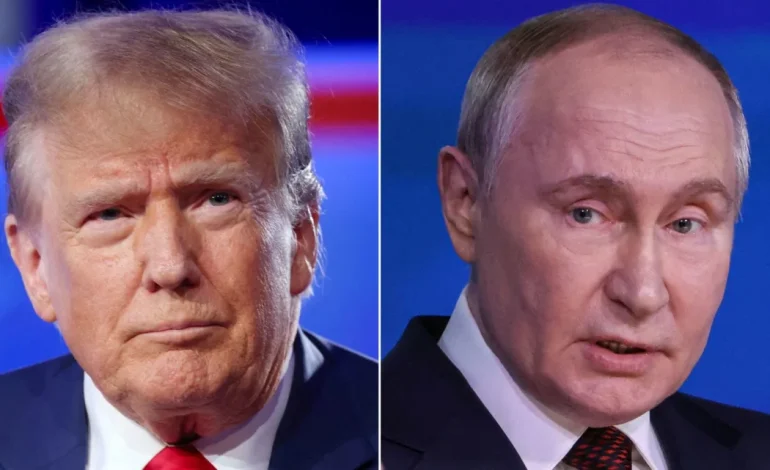

When reports emerged of a drone incident near one of President Vladimir Putin’s residences, the episode was instantly absorbed into the broader information war surrounding Ukraine. Moscow accused Kyiv of an attempted strike deep inside Russian territory, Ukraine denied responsibility, and Western officials downplayed the incident, with some suggesting it may not have occurred at all.
As with many moments in this war, the factual core of the event remains opaque. What is clear is how quickly the incident was instrumentalised, not only for domestic messaging, but also as part of a wider contest over who is seen as the aggressor, who controls escalation, and whether diplomacy remains viable at all.
To understand how such incidents should be interpreted, and whether they meaningfully affect ceasefire efforts, The Wyoming Star spoke with leading international policy analysts and examined how this episode fits into the evolving strategic landscape of the war.
Information Warfare, Struggle to Define Aggression
In prolonged conflicts, contested incidents rarely stand on their own. They are folded into narratives that serve strategic ends.
As Stephen Walt, professor of international relations at Harvard University, explains:
“In any protracted conflict, the warring parties try to portray the other side as the principal aggressor. It is therefore unsurprising that Russia made these accusations and that Ukraine denied them. Attacking one of Putin’s many residences has little strategic value, which may be why the US has concluded it did not occur.”
From this perspective, the alleged drone incident matters less as a military act than as a communicative one. Claims and counterclaims are not primarily about establishing truth but about reinforcing pre-existing frames.
For Moscow, portraying Ukraine as reckless and escalatory supports its domestic narrative of existential threat. For Kyiv, denial preserves Western confidence and avoids providing Russia with rhetorical justification for further escalation.
The uncertainty itself is not incidental. It is a feature of modern conflict, where ambiguity can be weaponised as effectively as certainty.
Can Facts Even Be Known?
The difficulty of verification is central to this episode. Independent confirmation is nearly impossible, and intelligence assessments are inherently partial.
Anatol Lieven, a British author and policy analyst, underscores this point:
“It seems that Ukraine did launch an attack on that part of Russia, but since all the missiles were shot down it is impossible to say if they were aimed at Putin’s residence. Obviously both sides have an incentive to lie on the subject, and Western intelligence reports also cannot be accepted without independent corroboration, which is impossible to obtain.”
This highlights a crucial reality: information warfare erodes the very possibility of authoritative truth. In such an environment, incidents become symbols rather than facts, and policy debates risk being driven by narrative momentum rather than strategic substance.
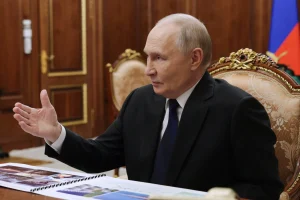
Does Dismissing Russia’s Claims Undermine Diplomacy?
One concern raised by some observers is whether Western scepticism toward Russia’s account risks reinforcing mistrust or derailing fragile diplomatic efforts. Walt downplays this concern:
“No. The negotiations will be determined by the evolving situation on the battlefield, and by the level of support that Ukraine receives from others, and not by an incident like this. There is already little or no trust between Moscow and Kyiv, and this event won’t change that.”
From this vantage point, diplomacy is not driven by episodic provocations, but by material realities: territorial control, military capacity, and external backing. Trust between Russia and Ukraine is already profoundly degraded. A single disputed drone incident, however symbolically charged, is unlikely to alter that baseline.
Ceasefire Talks: End of War or Tactical Pause?
While high-level discussions about ceasefires and partial de-escalation have re-emerged, expectations remain tempered. Both experts caution against interpreting current talks as a sign that the war is nearing a genuine conclusion.
Walt is blunt:
“A pause is much more likely than a genuine end to the war. Even if some sort of ‘final agreement’ is reached, it will leave one (or conceivably) both parties unhappy. The result will be a ‘frozen conflict’ that will probably break down at some point in the future.”
Lieven offers a complementary view, stressing how far positions have shifted but still remain far apart:
“Compared to a year ago when there were no negotiations at all, and both sides were putting forward completely impossible conditions, there has been a great deal of progress. But as long as the Russians insist on Ukrainian withdrawal from the whole of the Donbas (even if part of it is demilitarised) it will be extremely difficult for the Ukrainians to agree – unless the Russians can capture the territory, but they still do not seem close to doing that.”
He also notes a change in public sentiment inside Ukraine:
“According to opinion polls, a large majority of the Ukrainian population now wants peace – but not at the cost of sacrificing more territory.”
What Drone Incident Ultimately Reveals
The episode near Putin’s residence is unlikely to shift military balances or diplomatic trajectories on its own. Its real significance lies elsewhere.
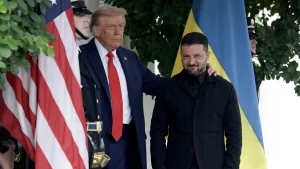
It illustrates how information warfare now operates alongside kinetic warfare, shaping perceptions, hardening narratives, and constraining political options. It shows how ambiguity itself becomes a strategic asset. And it underscores a sobering reality: negotiations are not driven by symbolic incidents, but by the slow, grinding calculus of power, endurance, and external support.
If a ceasefire comes, it is more likely to resemble a pause than a resolution. If an agreement is signed, it will almost certainly be fragile. And if the war freezes, history suggests it may only be temporarily dormant.


The latest news in your social feeds
Subscribe to our social media platforms to stay tuned