

EXCLUSIVE: After Absolute Resolve. What Comes Next for Venezuela, Maduro, and the World?
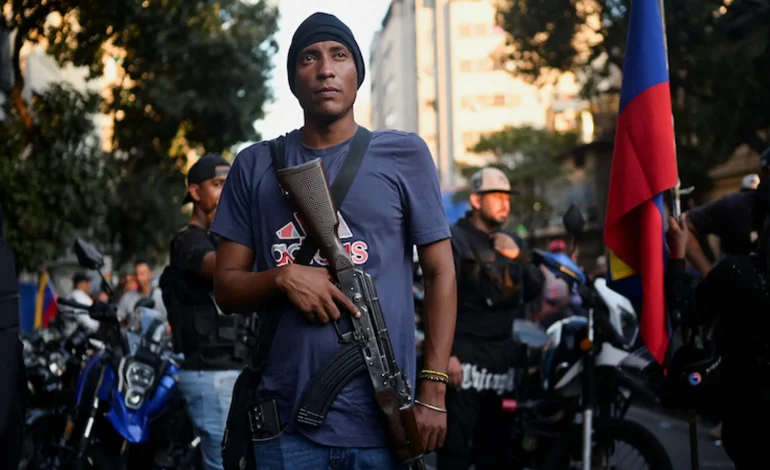

Two days ago, we published a deep dive into Operation Absolute Resolve, the clandestine US mission that ended with Nicolás Maduro in American custody and brought the long-simmering US–Venezuela crisis to a head. That piece capped months of reporting that traced the slide from diplomatic rupture to open confrontation. Back in October, we warned the fallout could spiral toward war. As the Caribbean lit up with interdictions and counternarcotics raids, we tracked what looked like a “forever war” on drugs morphing into something much bigger. By November, US planners were openly gaming out boots-on-the-ground scenarios in Venezuela. In December, the question shifted from if Maduro would fall to what happens after (Dec. 15). And on January 6, we reported how that arc culminated in Maduro’s capture itself.
Now the story is moving fast in three directions at once: a Manhattan courtroom, a tense and uncertain Venezuela, and a global chessboard where Washington, Beijing, and Moscow are recalculating.
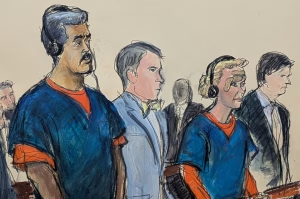
In New York, Maduro has wasted no time turning his prosecution into political theater. In a video circulated by Al Jazeera, he told a US court, “I am still president of my country,” rejecting the legitimacy of the proceedings outright. His legal team is reportedly leaning hard on claims of head-of-state immunity, an argument that has drawn skepticism but is now front and center in the case.
Outside the courtroom, the human details are piling up. CNN reported this week on complaints about the treatment of Maduro’s wife while she is held at the Metropolitan Detention Center, adding another layer of diplomatic friction to an already toxic case. The Justice Department, for its part, is sticking to the script, unsealing filings that lay out sweeping narcotics and conspiracy allegations tied to the so-called Cartel de los Soles. Drop Site News has framed Maduro’s not-guilty plea as both legally predictable and politically useful, buying time while the broader geopolitical stakes shake out.
Back home, the country Maduro once ruled is being reshaped in real time. According to Al Jazeera’s reporting, Washington is now dictating key economic decisions, including indefinite control over Venezuelan oil sales. The Guardian reports that interim leader Delcy Rodríguez has signed on to an oil deal that effectively places production and exports under US supervision, a claim Caracas officially disputes but has not convincingly rebutted.
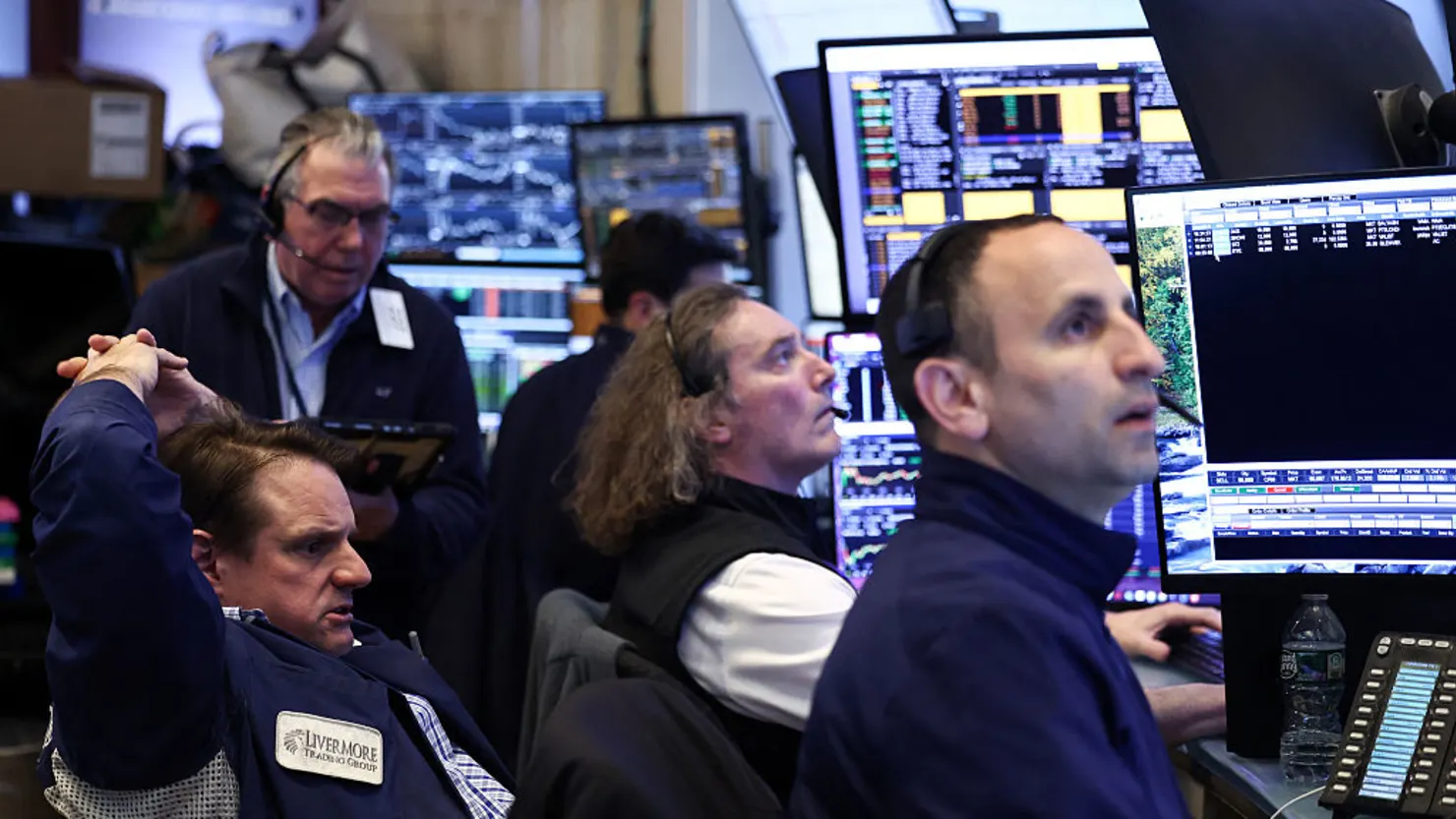
Markets are watching closely. The Financial Times notes that energy traders and regional governments are bracing for volatility as Washington’s plans become clearer. Meanwhile, the BBC reports on a population torn between relief that large-scale fighting has been avoided and fear that sovereignty is slipping away behind closed doors.
Dr. John Polga-Hecimovich, an Associate Professor of Political Science at the US Naval Academy, summed up the logic driving US decisions in blunt terms:
“In the short term, the US government’s priority is stabilization and order above all else. The choice of Delcy Rodríguez, a Chavista, over Edmundo González, a member of the democratic opposition and the winner of the 2024 national elections, is testament to this fact. It looks like the Trump administration trusts Rodríguez over González or opposition leader María Corina Machado to keep the military and the country’s disparate armed groups in order. Internal stability will help the Trump administration to pursue economic endeavors, especially in the oil sector. If Rodríguez or powerful Minister of the Interior Diosdado Cabello do not cooperate, President Trump has promised retribution.
If the security situation remains stable, I do not envision the US putting any more boots on the ground in Venezuela. In fact, as I understand, some of the ships in the Caribbean have already begun moving elsewhere. However, a breakdown in political order may necessitate US intervention to protect its economic interests.”
Internationally, the shockwaves are spreading. Live coverage from The New York Times and CNN shows allies quietly backing Washington while adversaries look for openings. Germany’s DW has broken down the implications of a rumored 50-million-barrel oil deal for global energy markets, while Al Jazeera reminds readers that Venezuela’s value goes far beyond oil, from gold to rare earths.
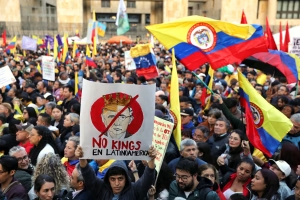
China is keeping its cards close. The Financial Times reports Beijing is reassessing billions in exposure while avoiding a direct clash with Washington. In the region, protests have erupted in Colombia over the US military action next door. And in Moscow, analysts are openly debating what Maduro’s capture means for Russia’s war in Ukraine and its waning influence in Latin America. Drop Site News adds that Washington’s Venezuela move is already intersecting with domestic US security and Russia-related arrests, underscoring how tangled this crisis has become.
If Operation Absolute Resolve was the climax, the fallout is the messy second act. The question now isn’t whether the world changes after Maduro’s fall – it’s how much and who pays the price.


The latest news in your social feeds
Subscribe to our social media platforms to stay tuned