




Supreme Court edges closer to tariff verdict that could upend Trump’s trade agenda
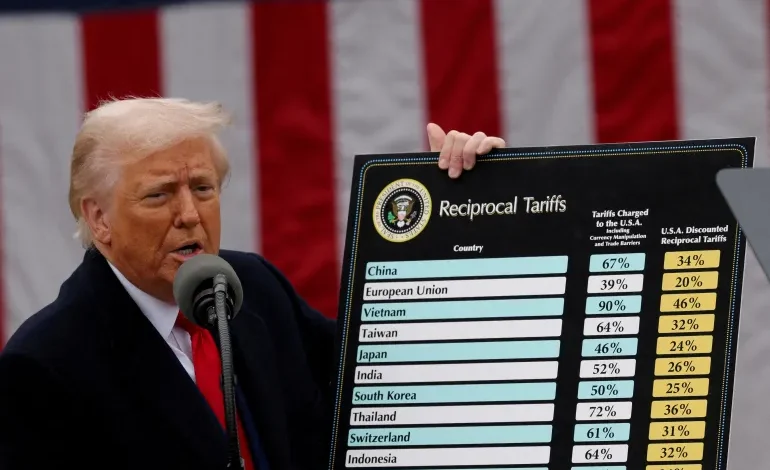

The US Supreme Court appears close to issuing a ruling on one of the most consequential legal fights of Donald Trump’s presidency: whether he had the authority to impose sweeping tariffs under emergency powers.
On Tuesday, the court quietly added a non-argument conference date to its schedule, a procedural move that often signals decisions may be released soon, though the justices never say in advance which rulings are coming.
The case, which challenges the legality of Trump’s tariffs, has been closely watched not just in Washington but across global markets. At stake is how far a president can go in reshaping trade policy without Congress, and whether emergency powers can be stretched to cover chronic trade deficits.
Trump has made clear what he thinks the court should do. In a social media post on Friday, he warned that an adverse ruling would be a “terrible blow” to the United States. Days later, he doubled down, declaring that “because of Tariffs, our Country is financially, AND FROM A NATIONAL SECURITY STANDPOINT, FAR STRONGER AND MORE RESPECTED THAN EVER BEFORE.”
The economic picture is more complicated. US GDP grew by 4.3 percent in the third quarter of 2025, the strongest showing in two years. But job growth has cooled, particularly in industries most exposed to tariffs.
A legal line Congress may not have crossed
Trump imposed the tariffs in February 2025 by invoking the International Emergency Economic Powers Act, a 1977 law that grants presidents broad authority to act economically during a declared national emergency. Trump argued that persistent trade deficits constituted such an emergency.
That interpretation quickly ran into legal trouble.
During Supreme Court arguments in November, several justices — including some conservatives — expressed discomfort with the idea that a decades-old emergency statute could be used to bypass Congress on tariffs, a power traditionally reserved for lawmakers.
“Congress, as a practical matter, can’t get this power back once it’s handed it over to the president,” Justice Neil Gorsuch said at the time.
Chief Justice John Roberts was even more direct, reminding the administration that imposing tariffs and taxes “has always been the core power of Congress.”
Lower courts have already ruled against the White House. The Court of International Trade found that the administration exceeded its authority, stressing that Congress holds “exclusive authority to regulate commerce.” A federal appeals court in Washington upheld that decision in August.
What happens if Trump loses
If the court strikes down the tariffs, the consequences would ripple quickly. Companies that paid duties deemed unlawful would be entitled to refunds — potentially billions of dollars.
“That would mean that those who paid tariffs that were imposed illegally would have to be reimbursed,” Shaffer said. “I would think that that would be the outcome.”
Treasury Secretary Scott Bessent acknowledged as much in September, telling NBC’s Meet the Press that the government might have to refund “about half the tariffs.”
The administration has already signalled it will not give up easily. Officials say that if the Supreme Court rules against them, they will turn to other statutes to keep tariffs in place — setting the stage for another round of legal and political battles.


The latest news in your social feeds
Subscribe to our social media platforms to stay tuned