
Maduro’s abduction sends a message, Tehran is listening
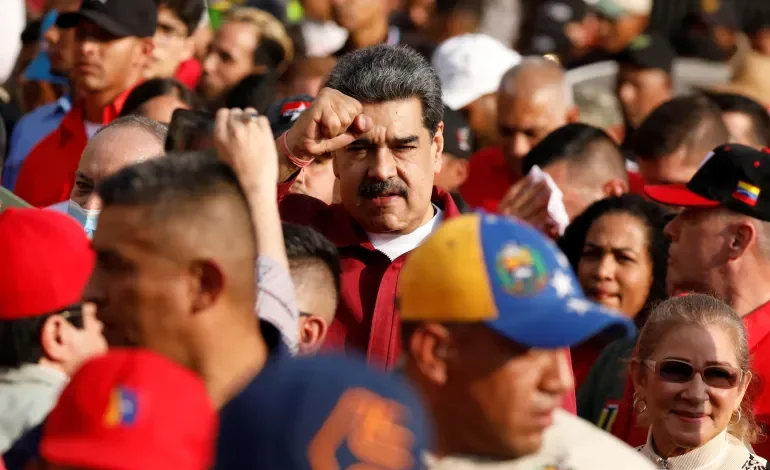

Hours after the United States announced it had abducted Venezuelan President Nicolás Maduro, Israeli opposition politician Yair Lapid issued a pointed warning to Iran.
“The regime in Iran should pay close attention to what is happening in Venezuela,” Lapid said.
The remark came less than a week after US President Donald Trump met Israeli Prime Minister Benjamin Netanyahu and publicly threatened new military action against Tehran, a convergence that analysts say has sharply raised the risk of a broader regional war.
While Washington’s disputes with Caracas and Tehran stem from different histories, Trump’s move against Maduro has sent shockwaves well beyond Latin America.
“A new lawlessness makes everything less stable and war more likely,” said Jamal Abdi, president of the National Iranian American Council (NIAC). “Whether Trump becomes enamoured with ‘surgical’ regime change, or gives Netanyahu a US imprimatur for similar actions, it’s hard not to see how this gives momentum for the many actors pushing for renewed war with Iran.”
Abdi warned that Maduro’s abduction could prompt Iran “to do something that triggers military action”, including accelerating efforts to develop its own deterrence or pre-empting US or Israeli strikes.
“This action reinforces every doubt and suspicion about US intentions, and gives more credence to those in Iran who say engaging the US is useless and [that] developing a nuclear deterrent is vital,” he said.
Iran–Venezuela alliance under strain
The US raid that seized Maduro followed months of escalating rhetoric from the Trump administration, which has accused the Venezuelan leader of running a drug trafficking network and increasingly argued that Washington has a right to Venezuela’s vast oil reserves.
US Secretary of State Marco Rubio has also highlighted Maduro’s ties to Iran, alleging that Caracas has given Hezbollah a foothold in the Western Hemisphere.
Maduro has long been a close ally of Tehran. The two heavily sanctioned countries have worked to deepen trade ties worth billions of dollars, making Venezuela one of Iran’s few remaining international partners.
With Maduro removed, Iran’s already narrow circle of allies could shrink further, following the fall of Syrian leader Bashar al-Assad and the weakening of Hezbollah in Lebanon.
Tehran was quick to condemn the US operation, urging the United Nations to intervene.
“The US military aggression against an independent state that is a member of the UN represents a grave breach of regional and international peace and security,” Iran’s Ministry of Foreign Affairs said.
“Its consequences affect the entire international system and will further expose the UN Charter-based order to erosion and destruction.”
On Saturday, Rubio suggested the abduction was meant as a warning to all of Washington’s rivals.
“When he tells you that he’s going to do something, when he tells you he’s going to address a problem, he means it,” Rubio told reporters.
Iran’s Supreme Leader Ali Khamenei responded defiantly.
“We will not give in to the enemy,” he wrote on social media. “We will bring the enemy to its knees.”
Escalation risks
Trump has repeatedly threatened Iran in recent days. After hosting Netanyahu in Florida last week, he warned that the US would strike again if Iran rebuilt its missile or nuclear programmes.
“Now I hear that Iran is trying to build up again, and if they are, we’re going to have to knock them down,” Trump said. “We’ll knock them down. We’ll knock the hell out of them.”
Israel launched a war against Iran in June, killing senior military commanders, nuclear scientists and hundreds of civilians. The US later joined the campaign, bombing Iran’s three main nuclear sites.
Despite Trump’s claims that the strikes “obliterated” Iran’s nuclear programme, Iran’s governing system survived. Tehran responded with large-scale missile barrages against Israel, dozens of which penetrated its air defences, before a ceasefire took hold.
Some critics argue regime change remains Israel’s ultimate objective, an idea Trump increasingly appears to entertain.
On Friday and again on Sunday, Trump warned the US was “locked and loaded” and prepared to strike Iran if authorities kill protesters during ongoing, sporadic demonstrations.
So could Iran face a Venezuela-style decapitation operation?
Abdi noted that Israel has already attempted to kill senior Iranian leaders, including President Masoud Pezeshkian, during the June war.
“Iranian officials have said they accordingly have plans in place so that killing or removing senior leaders does not paralyse or topple the regime,” Abdi said. “It would be far messier to run a ‘snatch and grab’ operation on Iran, given their ability to retaliate against US interests and personnel.”
Venezuela after Maduro
Even in Venezuela, Maduro’s removal has not produced immediate regime collapse.
Vice President Delcy Rodríguez, now acting president, said Maduro remains the country’s legitimate leader and condemned the US operation. She also suggested Israeli involvement.
“Governments around the world are shocked that the Bolivarian Republic of Venezuela has become the victim and target of an attack of this nature, which undoubtedly has Zionist undertones,” Rodríguez said.
Trump responded by threatening Rodríguez, telling The Atlantic she would pay a “very big price, probably bigger than Maduro” if she failed to comply with US demands.
Mortazavi questioned whether Venezuela would become another long-term US entanglement.
“I doubt Venezuela can be a ‘one and done’ or a quick ‘in and out’ situation,” she said. “His brand is quick shows of force, not forever wars.”
Trump, however, has already floated the idea of ground troops.
“We’re not afraid of boots on the ground,” he said. “We’re going to make sure that that country is run properly.”
Abdi suggested a prolonged US role in Venezuela could paradoxically delay war with Iran.
“There is also the possibility that the US gets bogged down in ‘running’ Venezuela and doesn’t have the bandwidth to wage, or to support Israel launching, the next Iran war,” he said.
The oil factor
Some critics argue Venezuela’s oil is central to Trump’s calculus. Republican Congresswoman Marjorie Taylor Greene suggested that controlling Venezuelan supply could cushion global markets if war with Iran disrupts Gulf exports.
“The next obvious observation is that, by removing Maduro, this is a clear move for control over Venezuelan oil supplies,” Greene wrote on X.
Roughly 20 percent of the world’s oil passes through the Strait of Hormuz, a chokepoint Iran could threaten in an all-out war.
Venezuelan oil “could theoretically provide some cushion”, Abdi said.
“But this would mean a lot of things going right for the US in Venezuela — and it is probably far too soon to make that judgement.”
The latest news in your social feeds
Subscribe to our social media platforms to stay tuned