





After Wildfires, Invasive Grass Is the Next Big Threat to Wyoming’s Mule Deer
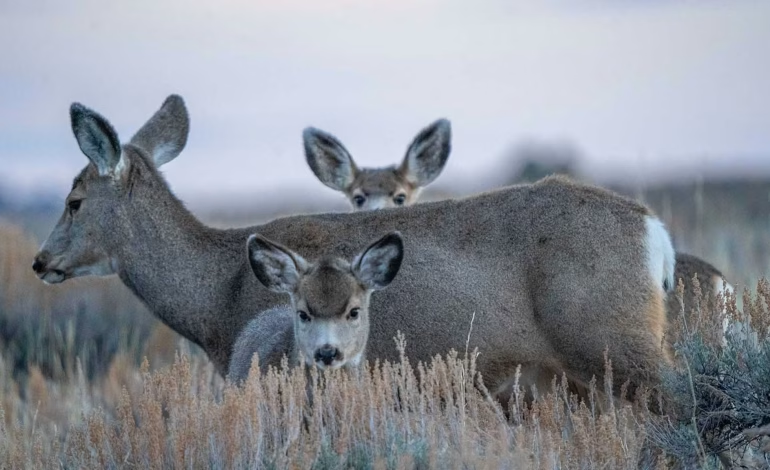

The original story by Mark Heinz for Cowboy State Daily.
As if Wyoming’s mule deer haven’t been through enough, the aftermath of last summer’s massive wildfires has opened the door to a new and fast-spreading problem: cheatgrass.
The invasive plant is creeping into burn scars left by big 2024 fires — especially the House Draw Fire in Johnson County — and biologists and ranchers alike say it’s bad news for deer.
“It’s bad stuff,” said Casper-area rancher Dennis Sun. “I can’t emphasize that enough.”
Mule deer across Wyoming and the West are already dealing with disease, shrinking migration corridors and highway traffic. Now cheatgrass is piling on.
Research out of the University of Wyoming shows mule deer could lose about two-thirds of their habitat in northeast Wyoming over the next 20 years if cheatgrass isn’t kept in check.
That’s because cheatgrass thrives in disturbed ground — and wildfire scars are basically an open invitation.
Once cheatgrass moves in, it crowds out native sagebrush and grasses that mule deer depend on, turning once-productive rangeland into something deer avoid altogether.
Cheatgrass won’t make mule deer sick, but they don’t like it either.
“They just don’t want to be there,” said Jerod Merkle, an associate professor in UW’s Department of Zoology and Physiology.
Merkle worked on a study with the Wyoming Game and Fish Department looking at deer herds near Gillette and Buffalo. The results were blunt: once invasive grasses cover about 20% of a sagebrush area, deer abandon it.
“It lowers the habitat quality,” Merkle said. “There’s just not much nutritional value there for them.”
Livestock feel the same way. Sun said cattle and sheep mostly refuse to graze cheatgrass once it dries out, which happens quickly.
In early spring, when cheatgrass greens up, animals might nibble it. But that window is short.
“When it cures, they won’t touch it,” Sun said. “They won’t even graze in those areas.”
Wildfires supercharge the problem. Burned areas lose the native plants that normally keep cheatgrass at bay, giving the invasive grass a chance to explode.
That’s exactly what researchers are seeing in places scorched by the House Draw Fire.
With mule deer already squeezed by fences, roads and development, losing large chunks of habitat to cheatgrass is something they can’t afford, Merkle said.
The outlook isn’t all doom and gloom — at least not yet.
UW researchers say strategically treating cheatgrass early could help protect core mule deer habitat before it’s lost.
Herbicides are the most effective tool, Merkle said, especially when applied where cheatgrass is just starting to gain a foothold.
“You defend the best areas first,” he said. “The places that are completely overrun can come later.”
Researchers have radio-collared deer and are tracking how they respond to treated areas. A new phase of the study will look at whether deer return to parts of the House Draw burn scar that were sprayed last year.
“That’s the big question,” Merkle said. “Do they come back?”
Ranchers are watching closely, too.
Sun said one-time treatments aren’t enough because cheatgrass seeds stick around in the soil for years. If spraying stops, the weed comes roaring back.
A newer herbicide called Rejuvra could be a game changer, he said. It costs more upfront, but it kills the seed bank — not just the plants you see that year.
“That’s the key,” Sun said. “If you don’t kill the seedbeds, cheatgrass will take over again.”
For Wyoming’s mule deer, the race is on. Wildfires may have lit the fuse, but cheatgrass could do the long-term damage — unless it’s stopped in time.

The latest news in your social feeds
Subscribe to our social media platforms to stay tuned