






ABC News, the New York Times, Reuters, and AP contributed to this report.
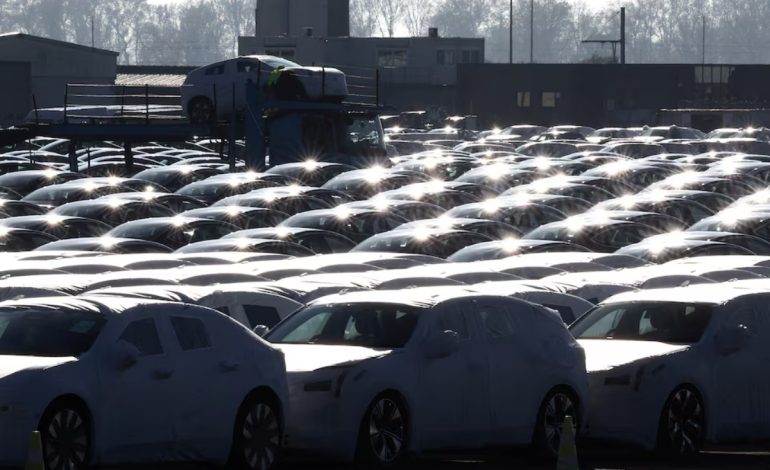
China and the European Union say they’re finally moving toward defusing their escalating trade spat over Chinese-made electric vehicles — and this time, there’s paperwork to prove it.
On Monday, both sides confirmed they’ve agreed on a set of steps aimed at resolving the dispute that erupted after the EU slapped tariffs of up to 35.3% on Chinese EV imports last year. Those duties followed a long-running EU investigation that concluded Chinese carmakers were benefiting from heavy government subsidies.
The centerpiece of the new approach is an EU “guidance document” that lays out how Chinese EV manufacturers can avoid those tariffs. Instead of paying the duties, companies can offer minimum import prices for each EV model they sell in Europe, along with other commitments. The idea is to neutralize what the EU says are the unfair price advantages created by subsidies.
Brussels says the price floors will vary by vehicle, since EVs come in all shapes, sizes and tech levels. The European Commission will review each proposal case by case, promising to do so “objectively and fairly,” in line with World Trade Organization rules. Chinese automakers’ plans to invest or manufacture inside the EU will also factor into the decision.
“The European market is open to electric vehicles from all around the world — as long as there’s a level playing field,” said Commission spokesperson Olof Gill.
China welcomed the move, calling it a constructive step that could cool tensions and keep trade flowing.
“This is conducive not only to healthy China-EU economic relations, but also to safeguarding the rules-based international trade order,” China’s Commerce Ministry said.
The China Chamber of Commerce to the EU described the plan as a potential “soft landing” after months of friction.
Economists agree it gives Chinese brands breathing room.
“The minimum prices probably offer Chinese brands some comfort to keep exporting long term, while avoiding higher tariffs,” said Rico Luman, an automotive industry economist at ING. “I’m convinced the inroads of Chinese brands will continue.”
The EU’s tough stance on Chinese EVs has always come with a caveat: Europe still needs them. Affordable electric cars are crucial if the bloc wants to hit its target of cutting greenhouse gas emissions by 55% by 2030.
At the same time, European automakers rely heavily on China for batteries, rare earth materials and chips — making this a careful balancing act.
The stakes are high. Europe’s imports of battery-powered cars jumped from $1.6 billion in 2020 to $11.5 billion in 2023. Many of those vehicles were built in China by Western brands like Tesla and BMW, but Chinese homegrown automakers are increasingly gaining ground.
Chinese-made cars accounted for 6% of EU sales in the first half of 2025, up from 5% a year earlier. By 2030, analysts expect that figure to double to around 10%.
EU officials remain cautious. A similar minimum-price deal with Chinese solar panel makers a decade ago allowed companies to rake in profits — and helped wipe out much of Europe’s solar manufacturing industry.
To avoid repeating that mistake, the new EV guidance requires minimum prices to be set model by model and allows the EU to limit volumes or time frames if needed.
For now, both sides are talking instead of trading punches — a notable shift in a dispute that has strained relations and rattled automakers on both continents.
Whether it leads to lasting peace or just a pause in the EV trade war will depend on how those price deals play out on Europe’s roads.

The latest news in your social feeds
Subscribe to our social media platforms to stay tuned