

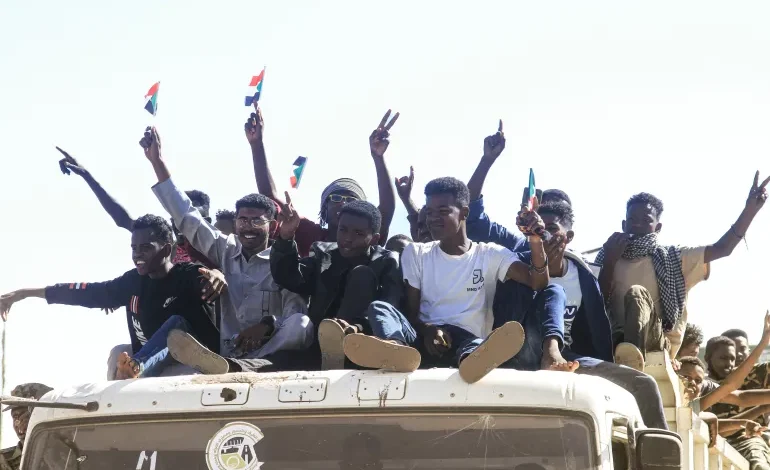

Sudan’s Prime Minister Kamil Idris has announced the government’s return to Khartoum, nearly three years after it fled the capital at the start of a devastating civil war.
When fighting erupted between the Sudanese Armed Forces and the paramilitary Rapid Support Forces in April 2023, the army-aligned government relocated to Port Sudan as rival forces overran much of Khartoum.
That exile is now formally ending after the army recaptured the capital last March and began a slow, partial return.
“Today, we return, and the Government of Hope returns to the national capital,” Idris told reporters on Sunday, standing in a city deeply scarred by nearly two years of urban warfare. “We promise you better services, better healthcare and the reconstruction of hospitals, the development of educational services … and to improve electricity, water and sanitation services,” he said.
For much of the war, Khartoum and its twin cities of Omdurman and Khartoum North were front-line battlefields. Neighbourhoods were besieged, artillery was fired across the Nile, and millions fled as homes, markets and hospitals were destroyed.
Between March and October alone, about 1.2 million people returned to the capital, according to the United Nations. Many came back to find little more than rubble: basic services barely functioning, homes ruined, and streets dotted with makeshift graves now being exhumed by authorities.
Tens of thousands are believed to have been killed in Khartoum during the fighting, though the true toll remains unknown as families buried loved ones wherever they could amid the chaos.
The UN estimates that restoring the capital’s essential infrastructure will cost roughly $350m. In recent months, the government has held cabinet meetings in Khartoum and launched limited reconstruction projects, even as RSF drone strikes have continued to target infrastructure.
Beyond the capital, the war shows no sign of ending.
South of Khartoum, RSF forces have advanced through Kordofan after pushing the army out of its last stronghold in Darfur last year. On Friday, Sudan’s military said it carried out a week of air and ground operations across Darfur and Kordofan, claiming to have destroyed around 240 RSF vehicles and killed hundreds of fighters.
The army said its ground forces had recaptured wide areas and were still pursuing remaining RSF units. The RSF did not comment, and the claims could not be independently verified.
The humanitarian cost continues to mount. The conflict has displaced around 11 million people inside Sudan and across its borders, producing what aid agencies describe as the world’s largest displacement and hunger crisis.
In North Darfur, the UN recently described the city of el-Fasher as a “crime scene” after gaining access for the first time since it was seized by the RSF. More than 100,000 residents fled after the takeover in October, with survivors reporting ethnically motivated mass killings and widespread detentions.
While the RSF stands accused of some of the worst atrocities, Sudan’s army has also been implicated in serious abuses during the war.

The latest news in your social feeds
Subscribe to our social media platforms to stay tuned