





BBC, CNBC, Forbes, and AP contributed to this report.
Bank and credit card stocks took a hit after President Donald Trump said he wants to put a lid on how much credit card companies can charge Americans to borrow.
In a post on Truth Social late Friday, Trump called for credit card interest rates to be capped at 10% for one year starting Jan. 20, 2026. That would slash rates roughly in half — the average US credit card interest rate currently sits around 20%. Trump didn’t explain how the cap would be enforced or whether it would pass legal muster, but markets reacted fast anyway.
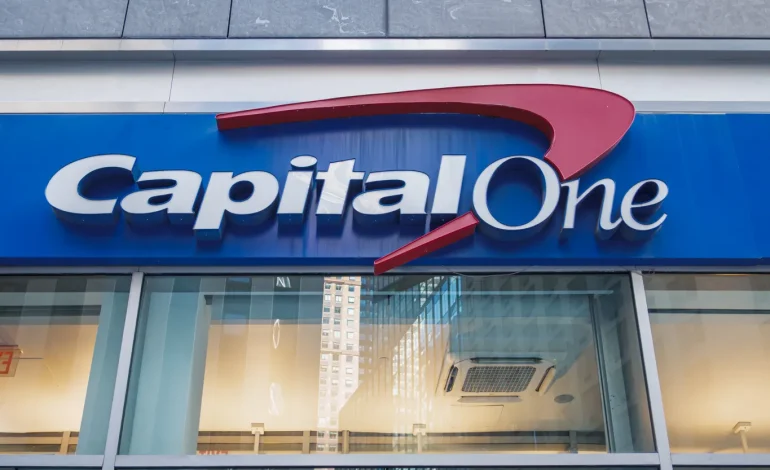
Shares in banks and card companies slid in early trading Monday. Capital One sank about 7% and Synchrony Financial dropped roughly 8%, reflecting their heavy reliance on credit card lending. American Express fell around 4% to 5%, while Visa and Mastercard — which process payments but don’t lend money themselves — were each down more than 2%. Big banks like JPMorgan Chase, Citigroup and Bank of America also opened lower.
Even overseas lenders felt the ripple effect. Barclays, which has a sizable US credit card business, saw its shares fall about 3.5%.
Trump framed the idea as a way to protect consumers from what he called predatory pricing.
“We will no longer let the American Public be ‘ripped off’ by Credit Card Companies that are charging Interest Rates of 20 to 30%,” he wrote.
Speaking to reporters aboard Air Force One on Sunday, Trump went further, saying card companies would be “in violation of the law” if they didn’t comply.
The banking industry isn’t buying it. Trade groups warned that a hard cap would backfire, cutting off access to credit for millions of Americans.
“Capping rates would reduce credit availability and be devastating for millions of families and small businesses,” five US banking associations said in a joint statement.
They added that consumers could end up pushed toward “less regulated, more costly alternatives.”
Analysts echoed those concerns. Matt Britzman, senior equity analyst at Hargreaves Lansdown, said forcing rates down to 10% would “upend the basic economics of the industry.”
“Banks would likely respond by cutting credit limits, closing riskier accounts and scaling back rewards programs,” he said. “They simply couldn’t cover losses at that price point.”
That matters because nearly half of US households carried credit card debt in 2022, according to the Federal Reserve. Those households owed more than $6,000 on average, paying roughly $100 a month in interest at current rates.
The idea of capping credit card rates isn’t new — or purely partisan. It has drawn support from progressives like Sen. Bernie Sanders and populists aligned with Trump’s MAGA movement. Sanders and Sen. Josh Hawley introduced a bipartisan bill last year to cap rates at 10% for five years, but it has gone nowhere in Congress.
That’s the big question hanging over Trump’s proposal: how it would actually become law. The president doesn’t have the power to impose such caps on his own, and similar efforts have stalled on Capitol Hill. Any executive action would almost certainly face legal challenges from the banking industry, which has a strong track record of fighting regulation in court.
Democrats were quick to call Trump out. Sen. Elizabeth Warren said on X that talk alone won’t fix the problem.
“Begging credit card companies to play nice is a joke,” she wrote, accusing Trump of undercutting regulators like the Consumer Financial Protection Bureau rather than empowering them.
Adding to the mixed signals, the Trump administration last year moved to scrap a Biden-era rule that capped credit card late fees at $8, part of a broader crackdown on so-called “junk fees.”
For now, Trump’s rate cap remains more threat than policy. But even the suggestion was enough to rattle investors — and put the credit card industry on notice that Washington may be coming for its profits.

The latest news in your social feeds
Subscribe to our social media platforms to stay tuned