


The United Nations’s top court is set to hear a landmark case accusing Myanmar of committing genocide against its mostly Muslim Rohingya minority, a trial that could reshape how international law defines and prosecutes the crime of genocide.
Proceedings at the International Court of Justice will begin at 09:00 GMT on Monday and run for three weeks. It is the first genocide case the court will examine in full in more than a decade, and legal experts say its outcome is likely to reverberate well beyond Myanmar, including for South Africa’s case against Israel over its war on Gaza.
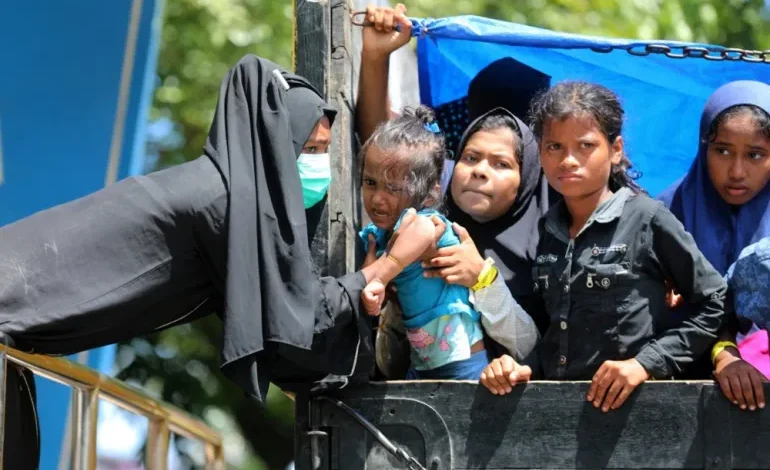
The case was brought in 2019 by The Gambia, two years after Myanmar’s military launched a sweeping campaign that forced around 750,000 Rohingya to flee into neighbouring Bangladesh. Refugees described mass killings, rape and the burning of entire villages.
A UN fact-finding mission later concluded that the 2017 offensive included “genocidal acts”. Myanmar’s authorities rejected those findings, insisting the military operation was a legitimate counterterrorism response to attacks by alleged Rohingya armed groups.
“The case is likely to set critical precedents for how genocide is defined and how it can be proven, and how violations can be remedied,” Nicholas Koumjian, head of the UN’s Independent Investigative Mechanism for Myanmar, told Reuters.
For Rohingya refugees living in sprawling camps in Bangladesh’s Cox’s Bazar, the opening of the case has stirred cautious hope.
Others said they were realistic about the court’s limits. The ICJ has no enforcement arm, meaning any ruling would rely on political pressure and international compliance.
The hearings will be the first time Rohingya victims’ experiences are formally heard by an international court. Those sessions, however, will be closed to the public and media because of the sensitivity of the testimony.
The case has unfolded against dramatic political change inside Myanmar. During preliminary hearings in 2019, the country’s then-leader Aung San Suu Kyi dismissed The Gambia’s allegations as “incomplete and misleading”. She was overthrown by the military in a 2021 coup that plunged the country into turmoil and sparked a nationwide armed resistance.
Myanmar’s military continues to deny any genocidal intent. But the opposition National Unity Government, formed by lawmakers ousted in the coup, has taken a markedly different position. It has said it accepts the ICJ’s jurisdiction, has withdrawn earlier objections to the case, and has acknowledged that state failures “enabled grave atrocities” against minority groups. It has also formally recognised the Rohingya by name, something the previous civilian government refused to do.
Parallel to the ICJ case, Myanmar’s military leader, Min Aung Hlaing, faces a separate arrest warrant from the International Criminal Court over alleged crimes against humanity linked to the Rohingya’s forced deportation.


The latest news in your social feeds
Subscribe to our social media platforms to stay tuned