





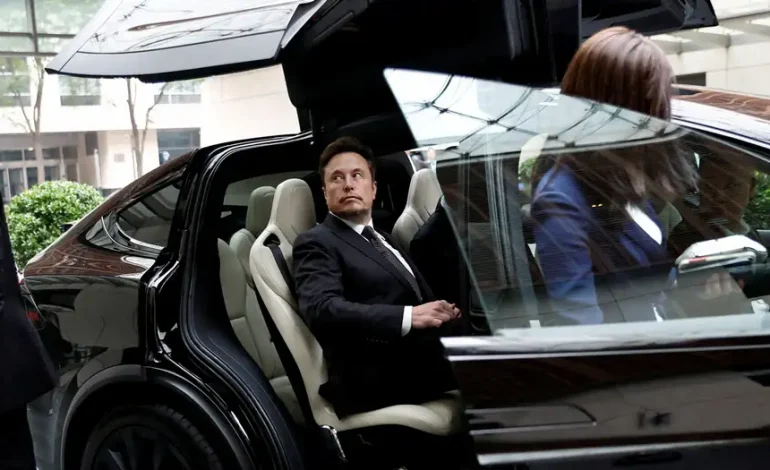

When Tesla lost its crown as the world’s top electric vehicle seller in 2025, the headline numbers told only part of the story. Beneath them sits a deeper shift in how fast the global EV and clean-energy industry is rebalancing, and who is setting the pace as 2026 begins.
Tesla reported sales of 1.64 million vehicles last year, down 9 percent from 2024. China’s BYD, by contrast, delivered 2.26 million vehicles, overtaking Tesla for the first time. For a company that once defined the category almost single-handedly, the loss is symbolic.
Asked by The Wyoming Star what lies behind the shift, Dan Ives, managing director and senior equity research analyst at Wedbush Securities, pointed first to competitive pressure and brand erosion.
“We believe competition is increasing globally for EVs and Tesla has lost some market share in China to BYD and domestic players,” Ives said. “There was some brand damage in Europe from Musk that has still lingered negatively over the story.”
China’s EV market has exploded in both scale and sophistication, with domestic manufacturers rapidly improving quality while undercutting foreign rivals on price. BYD has benefited from vertical integration, aggressive pricing and strong state-backed industrial policy, allowing it to move faster than many Western competitors.
“BYD has been a shining star and shows the industry is changing quickly into 2026,” Ives said.
Tesla’s slide has also been shaped by politics as much as product. CEO Elon Musk’s high-profile alignment with US President Donald Trump in 2024 and his leadership of the controversial Department of Government Efficiency triggered protests, consumer backlash and a measurable dip in sales in parts of Europe and the US. The expiration of a $7,500 US tax credit for EV purchases last September further squeezed demand.
At the same time, BYD’s rise has come as Western automakers struggle to match China’s speed from design to production. Chinese firms are releasing new models at a pace that compresses innovation cycles, while leveraging domestic supply chains for batteries, software and power electronics.
The question, then, is whether BYD’s ascent marks a temporary swing or a longer-term shift in industrial power.
For Ives, the answer leans toward the latter.
“BYD has been a shining star,” he said, framing the company not as a one-off success but as evidence that leadership in EVs is no longer guaranteed by early innovation alone. Execution, cost discipline and geopolitical positioning now matter just as much.
That does not mean Tesla is finished. Investors remain bullish on Musk’s ambitions in autonomous driving, robotaxis and humanoid robots, helping Tesla stock finish 2025 up around 11 percent despite falling vehicle sales. The company has also rolled out cheaper versions of the Model Y and Model 3 to compete more directly with Chinese rivals in Europe and Asia.
But the balance of power is clearly more contested. Where Tesla once forced the rest of the industry to play catch-up, it is now defending ground on multiple fronts, from China to Europe to its home market in the United States.


The latest news in your social feeds
Subscribe to our social media platforms to stay tuned