
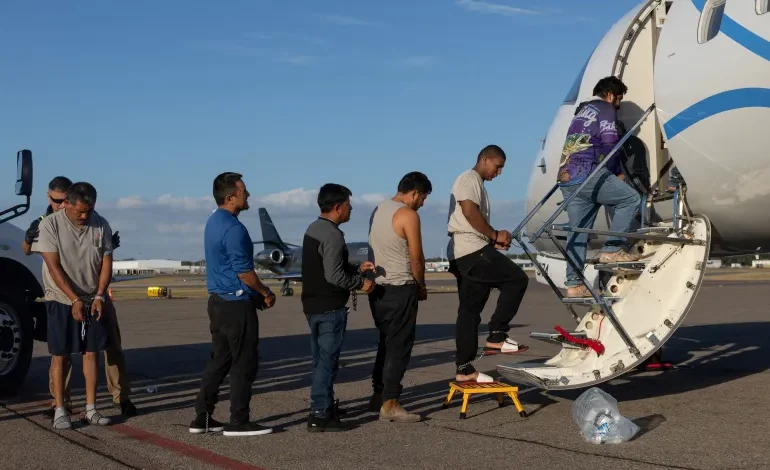

The United States has revoked more than 100,000 visas since President Donald Trump returned to office last year, the State Department said, underscoring the scale and intensity of the administration’s hardline immigration push.
In a post on social media on Monday, the State Department said the visa purge included 8,000 students and 2,500 specialised workers. It added that most revocations stemmed from “encounters with US law enforcement for criminal activity”, without clarifying whether those encounters resulted in formal charges.
The figures highlight how broadly the crackdown has been applied since Donald Trump resumed the presidency. The administration has claimed more than 2.5 million voluntary departures and deportations since then, calling it a “record-breaking achievement”.
But the campaign has also swept up people who held valid visas, prompting questions about due process and civil liberties.
Alongside mass revocations, the administration has tightened visa approvals more generally, expanding social media vetting and background screening.
“We will continue to deport these thugs to keep America safe,” the State Department wrote on X.
Deputy spokesperson Tommy Pigott said the four most common reasons for revocation were overstays, driving under the influence, assault and theft, adding that visa withdrawals had risen by 150 percent compared with 2024.
The department has also set up a new Continuous Vetting Center, designed to monitor foreign nationals already in the US.
“All foreign nationals on American soil [must] comply with our laws – and the visas of those who pose a threat to American citizens are swiftly revoked,” Pigott said.
The expanded enforcement effort goes beyond criminal conduct. US diplomats have been instructed to watch closely for visa applicants deemed hostile to the US or linked to political activism.
In November, the State Department said it had revoked about 80,000 non-immigrant visas since Trump’s inauguration, for offences ranging from DUI to assault and theft.
Trump campaigned in 2024 on a pledge to carry out the “largest deportation programme of criminals in the history of America” and was sworn in for a second term on January 20, 2025.
Critics argue the policy has blurred the line between targeting criminals and punishing dissent. In March, the administration began stripping visas from student protesters involved in pro-Palestinian activism. One case involved Rumeysa Ozturk, whose visa was reportedly revoked after she wrote an editorial in her campus newspaper.
In October, the State Department also announced it had removed visas from six foreign nationals accused of “celebrating” the assassination of conservative activist Charlie Kirk online.
“The United States has no obligation to host foreigners who wish death on Americans,” the department said at the time.
Those actions have raised alarm among free speech advocates, who warn that visa enforcement is being used to punish political expression, potentially infringing First Amendment protections.
Anger has also grown over the use of force in the administration’s immigration operations. In Minnesota, heightened enforcement led to the fatal shooting of Renee Nicole Good, a 37-year-old mother of three, who was killed while sitting in her car during an immigration operation. Her death sparked protests across the country.

The latest news in your social feeds
Subscribe to our social media platforms to stay tuned