




Cold Weather, Costly Gas and Data Centers Push US Carbon Pollution Back Up

With input from Bloomberg, the New York Times, CNBC.
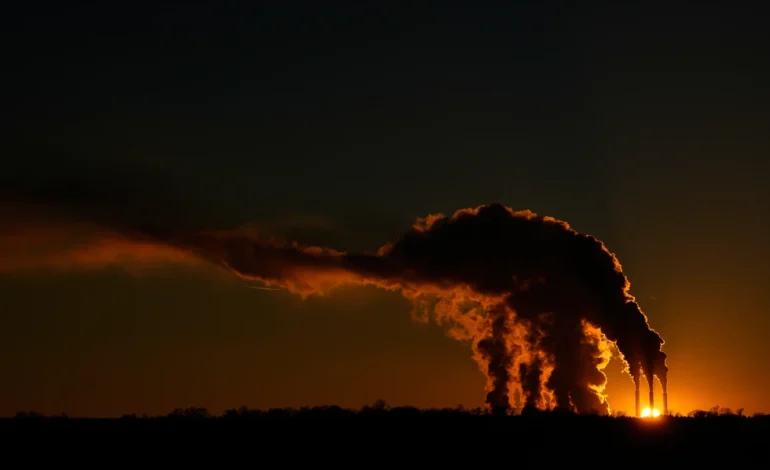
After years of steady progress, US carbon pollution went the wrong way in 2025.
New estimates from the Rhodium Group show that US greenhouse gas emissions rose 2.4% last year, snapping a two-year streak of declines. Researchers say the jump wasn’t driven by new White House policies — at least not yet — but by a mix of colder weather, surging electricity demand from data centers and crypto mining, and higher natural gas prices that nudged utilities back toward coal.
All told, the US pumped about 5.9 billion tons of carbon dioxide equivalent into the atmosphere in 2025 — roughly 139 million tons more than in 2024, according to Rhodium.
The biggest culprit was a cold winter, which pushed up heating demand across homes and buildings. Emissions from fuel used to heat buildings jumped 6.8%, driven largely by natural gas and fuel oil.
At the same time, electricity demand surged — something the US hadn’t seen meaningfully in years. Power-hungry data centers, artificial intelligence computing and cryptocurrency mining helped drive that growth. To meet the demand, utilities leaned harder on existing fossil-fuel plants.
Higher natural gas prices made coal temporarily more attractive, leading to a 13% increase in coal-fired power generation. Power sector emissions rose 3.8%, marking just the second year in the past decade that coal use increased at all.
“It’s not like coal is roaring back,” said Ben King, a director in Rhodium’s energy group. “But the increase we saw was a big reason emissions went up in the power sector.”
Coal use is still down about 64% from its 2007 peak, but 2025 showed how quickly trends can reverse under the right conditions.
Perhaps more concerning to researchers: pollution grew faster than the economy. US GDP expanded by an estimated 1.9% in 2025, while emissions rose 2.4%, reversing recent years when economic growth and carbon pollution had largely decoupled.
Overall emissions are still 18% below 2005 levels and 6% below pre-pandemic levels, but experts warn last year could be a sign of tougher times ahead.
“This is likely a harbinger of what’s to come,” said Jonathan Overpeck, dean of the University of Michigan’s environment school, warning that renewed reliance on fossil fuels could hurt both the economy and air quality.
Climate activist Bill McKibben was more blunt:
“It’s so incredibly stupid that the US is going backwards on this stuff.”
Despite President Donald Trump’s aggressive rollback of climate rules and renewable energy incentives, Rhodium says those changes didn’t meaningfully affect 2025 emissions, largely because most were implemented too late to show up in the data.
But that could change soon.
The administration has repealed electric vehicle tax credits, loosened fuel-efficiency standards, rolled back pollution rules on power plants and moved to stall wind and solar development. Rhodium estimates those moves could significantly slow emissions reductions in the coming decade.
Before Trump returned to office, researchers projected US emissions would fall 38% to 56% below 2005 levels by 2035. Now, that drop is expected to be roughly one-third smaller.
One bright spot: solar power jumped 34% in 2025, overtaking hydropower and helping zero-carbon sources reach 42% of US electricity generation. Wind power also grew modestly.
“If it weren’t for the growth of solar, we’d probably be in an even worse spot emissions-wise,” King said, adding that renewables remain cost-competitive despite political headwinds.
Transportation emissions stayed mostly flat despite record travel, thanks to growing sales of electric and hybrid vehicles. Oil and gas production emissions rose only slightly, as companies continued to cut methane leaks — though delayed EPA rules could threaten that progress.
For now, researchers caution against reading too much into a single year. But the message from the data is clear: weather, energy prices and fast-growing electricity demand can still overwhelm climate gains — and future policy shifts could make the challenge even steeper.
“It’s one year of data,” King said. “But it’s a reminder that progress isn’t guaranteed.”



The latest news in your social feeds
Subscribe to our social media platforms to stay tuned