



NBC News, FOX News, ABC News, and Reuters contributed to this report.
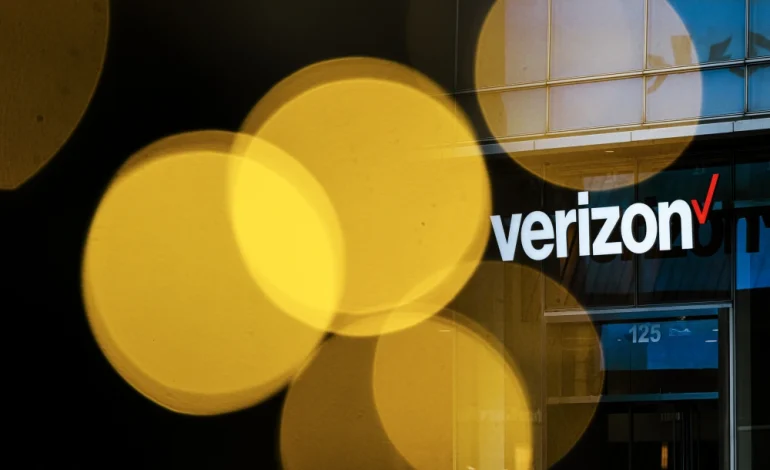
Verizon users woke up to a modern-day blackout on Wednesday – not of electricity, but of bars. Starting around noon Eastern, customers across the US began reporting phones showing “SOS” or no signal at all, social feeds filled with complaints, and emergency systems in Washington, DC, and New York City telling people to use other carriers if they couldn’t reach 911.
The nation’s biggest wireless provider acknowledged the problem and, in a straight-to-the-point line, said engineers “are engaged and are working to identify and solve the issue quickly.” The company followed up at about 2:14–2:15 p.m. ET saying its teams remained “fully deployed and focused on the issue,” but it didn’t offer a timeline for a fix or a root cause.
Here’s what happened, who was hit and what officials told people to do.
What unfolded (and when)
- User reports on social platforms pegged the first interruptions at roughly 12:00 p.m. ET.
- Downdetector, the outage tracking site, showed about 172,980 reports around 12:30 p.m. ET, dipping to 120,628 by 1:22 p.m. ET and to 67,646 by 2:36 p.m. ET. At one point coverage estimates put affected users near 175,000.
- The outages were concentrated in major metro areas: New York City, Washington, DC, Chicago, Atlanta, Houston, Los Angeles and Portland all showed heavy report volumes.
- Most problems were classic mobile complaints: about 62% of Downdetector reports flagged mobile phone issues, 34% were “no signal,” and 4% were mobile internet interruptions.
Verizon kept its updates short and repetitive – engineers on it, teams deployed, sorry for the inconvenience. Two separate statements emphasized the same thing: teams were working to identify and resolve the issue quickly and understood the disruption’s impact on customers’ days.
The outage crossed a key line when government alert systems began telling residents to find other ways to contact emergency services.
- Washington’s AlertDC sent a citywide message: if you can’t connect on a Verizon device, use another carrier, a landline, or go to a police district or fire station to report an emergency.
- New York City’s Office of Emergency Management said it was aware of the outage and working with partners to assess any effects on city agencies and essential services, and warned residents that some users might be unable to call 911 on Verizon.
Those notices aren’t boilerplate – they show why network outages are more than a nuisance. Officials warned that in an emergency, if you can’t reach help through your Verizon phone, switch carriers or use a landline.
T-Mobile and AT&T both said their networks were operating normally. T-Mobile added the caveat that Verizon’s outage might prevent its customers from reaching people on Verizon’s network – a reminder that cross-carrier connectivity depends on the absent network being available. AT&T’s spokeswoman likewise said their systems were fine.
The Federal Communications Commission is watching. FCC Chair Brendan Carr said the agency would review the interruption and “take appropriate action.” That attention isn’t new: Verizon suffered a widely noticed nationwide outage in September 2024 that knocked many iPhone users into “SOS” mode and prompted an FCC probe that ended with Verizon paying more than $1 million and entering a compliance plan.
Phones showing “SOS” or zero bars are an immediate and alarming sign: they signify that the device can’t register on the carrier’s network to place calls or use mobile data. For many people midday is when they rely on mobile-dependent apps, maps, or to call workplaces, schools or emergency contacts – which explains the flurry of social posts and the spike in outage reports.
Practical fallout and advice
- If your Verizon phone isn’t connecting: try a different carrier device, a landline, or physically go to a police precinct or fire station if it’s an emergency.
- Check your carrier’s official feeds for updates – they’ll post progress reports even when answers are thin.
- If you’re in a place where internet and Wi-Fi are still available, use messaging apps that work over Wi-Fi as a stopgap.
The outage numbers trended downward over the afternoon, suggesting the issue was easing for many users – but not for everyone. Downdetector’s figures are user-submitted and don’t measure every single affected device, yet they gave a rough sense of scale: tens to hundreds of thousands of customers felt impact at the peak.
Network outages are flashes of fragility in systems we assume are always-on. Beyond missed Zoom calls or lost streaming, when cellular networks hiccup they can interrupt public safety, business operations and anyone who depends on mobile connectivity to navigate daily life. That’s why city emergency systems and the FCC treat big outages as serious events, not just social-media fodder.
Verizon’s brief timeline of customer-facing actions – public acknowledgments and repeated promises that engineers are “working to identify and solve the issue quickly” – is the playbook carriers use when they don’t yet know the cause. Consumers, regulators and city officials will want more: why did it happen, who was affected, and what steps are being taken to prevent a recurrence?
Until Verizon posts a fuller postmortem, the questions will linger. For now: if your phone says “SOS,” try a different device or line for anything urgent – and maybe, for once, keep a landline or a neighbor’s number handy.


The latest news in your social feeds
Subscribe to our social media platforms to stay tuned