





Wyoming Officials Promise a Reset on Wind Boom — After Residents Sound the Alarm
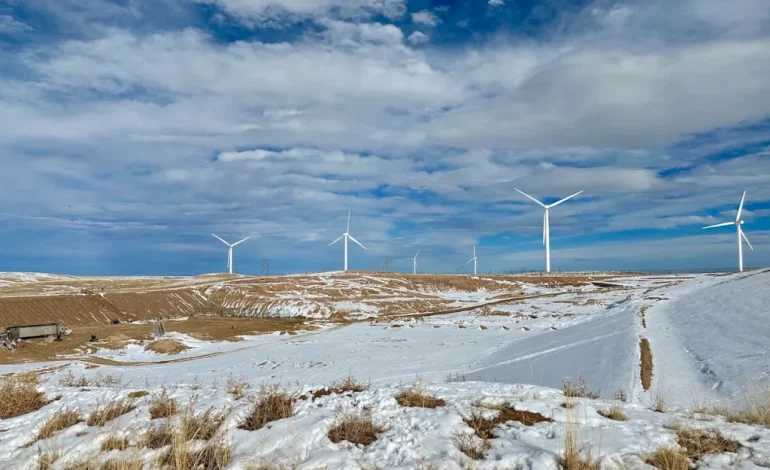

Wyoming’s top elected officials are signaling they may finally take a harder look at the rapid spread of wind farms and other large-scale development across the state — after residents packed a special meeting this week to vent frustration, fear and outright anger over what they see as an unchecked industrial buildout, Oil City News reports.
For more than 2½ hours Thursday in Douglas, nearly two dozen residents from central and southeast Wyoming urged the State Board of Land Commissioners to slow down and rethink how it approves projects on state land. Over and over, speakers said the board has failed to meaningfully involve the public, underestimated the cumulative impacts of development and approved leases it later seemed to regret.
“This is no longer a series of isolated projects,” said Cheyenne-area resident Wendy Volk. “It’s a continuous, or near-continuous, industrial corridor stretching across multiple counties and landscapes.”
Others were more blunt.
“When 90% of people are saying, ‘We don’t want this,’ why is it still being shoved down our throats?” asked Niobrara County rancher Bobby Giesse. “Why aren’t people listening?”
The meeting was held in Douglas, ground zero for several existing and proposed energy developments — including the controversial Pronghorn H2 wind and hydrogen project. While wind energy dominated the discussion, residents also pointed to a wave of solar proposals, mining operations and even data centers piling onto the same landscapes.
Taken together, they said, the projects threaten ranching, tourism, water supplies and private property — with no single agency responsible for looking at the big picture.
“My request is simple,” said Cheyenne-area resident Niffy McNiff Bube. “Please slow down, take a broader view and fully consider cumulative impacts — especially where development is forming continuous corridors.”
The State Board of Land Commissioners is made up of Wyoming’s five top elected officials: the governor, secretary of state, auditor, treasurer and superintendent of public instruction. Several members acknowledged the process has fallen short.
State Auditor Kristi Racines went further, offering a rare apology for the board’s past actions — particularly its decision last year to grant state land leases to the Pronghorn H2 developer.
“One of the complaints I’ve heard is that we aren’t willing to admit we made a mistake,” Racines said. “So I’m here to tell you that I apologize. I apologize for the mess that this has become.”
Racines also criticized the board’s handling of public engagement, calling a December meeting that limited discussion with residents “horrifying” and “unsatisfying to everyone there.”
Despite the emotional testimony, the meeting stayed civil — until the final minutes, when a long-simmering feud between Gov. Mark Gordon and Secretary of State Chuck Gray boiled over.
While debating procedural issues, Gordon accused Gray of taking shots at Attorney General Keith Kautz, who was not present. Gray denied it, and the exchange quickly escalated.
“Step outside,” Gordon said.
“Are you threatening me?” Gray shot back.
The tense back-and-forth ended only after Superintendent of Public Instruction Megan Degenfelder stepped in, calling the exchange “very unproductive.”
Gordon’s office later downplayed the incident, saying the governor was simply trying to “cleanse the palate” and have a private conversation.
Public frustration with the board has been growing, largely because of its influence over whether major projects move forward. The Office of State Lands and Investments manages more than 3 million acres of school trust lands scattered across Wyoming. Because those parcels are spread statewide, large energy projects almost always intersect with state land.
Once a developer secures a state lease, residents said, the project suddenly looks far more legitimate — to investors, regulators and even neighboring landowners.
Some speakers argued developers intentionally target state land to gain leverage, while others pointed to conflicts between the board’s constitutional duty to maximize revenue for schools and other land uses like grazing, recreation and community planning.
State Treasurer Curt Meier acknowledged the impacts but stopped short of apologizing.
“I’m going to continue to live up to my constitutional duties,” Meier said. “I understand the situation you’re in. You’re impacted.”
That response didn’t sit well with residents who say the system itself is broken.
“Our regulatory framework was not designed for development at this scale,” Volk said. “Looking at projects one-by-one creates blind spots big enough to affect entire landscapes and communities.”
Tensions are especially high around the Pronghorn H2 project between Glenrock and Douglas. After the board approved leases covering about 15,500 acres, a rancher challenged the decision in court — and won. A judge ordered the leases repealed.
That ruling was later appealed to the Wyoming Supreme Court by the attorney general, angering Gray, who had voted against the leases. Gordon said the appeal was necessary to avoid broader legal consequences for how the state handles leases.
When Gray tried to force a vote Thursday to rescind the leases outright, Gordon ruled the motion out of order due to lack of public notice.
Despite the drama, several board members appeared to agree that Wyoming’s current approach isn’t cutting it.
Gordon compared today’s wind debates to controversies during the coalbed methane boom of the early 2000s — another time when development outpaced regulation. He floated reviving a little-used provision of the Wyoming Environmental Quality Act that could allow certain lands to be set aside as especially important.
“I’ve been trying for at least four years to repurpose that provision,” Gordon said, suggesting it could give communities a way to protect special places without focusing solely on revenue.
State Rep. Kevin Campbell said he’s open to taking up the idea in the Legislature.
For residents, though, the message was clear: this isn’t about stopping wind energy altogether.
“It’s about responsible asset management,” Volk said. “Wyoming’s trust lands are finite. Once they’re fragmented and industrialized at this scale, the damage can’t be undone.”
Whether Thursday’s promises turn into real change — or just another meeting — remains to be seen.


The latest news in your social feeds
Subscribe to our social media platforms to stay tuned