






AP, BBC, NBC News, and the Hill contributed to this report.
China just posted the biggest trade surplus the world has ever seen – and it did it in a year when US tariffs were supposed to slow it down.
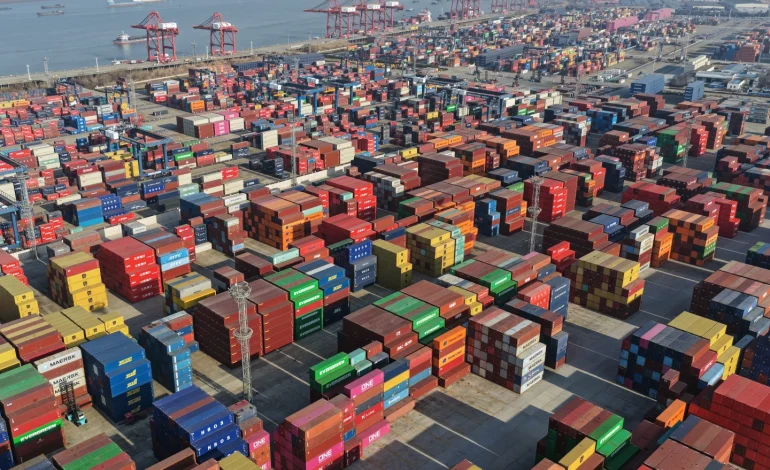
Customs data released Wednesday showed China’s trade surplus surged nearly 20% in 2025 to almost $1.2 trillion, blowing past the previous record of about $992 billion in 2024. It’s the first time China’s full-year surplus has crossed the $1 trillion mark, underscoring how aggressively the country has shifted its export machine beyond the US.
The headline numbers tell the story. China’s exports rose 5.5% last year to $3.77 trillion, while imports barely moved, coming in at $2.58 trillion. That imbalance – strong overseas sales paired with weak domestic demand – is what powered the record surplus.
And the momentum didn’t fade at year-end. In December alone, exports climbed 6.6% year over year, beating economists’ expectations and accelerating from November’s pace. Imports also picked up, rising 5.7%, a notable improvement from November’s sluggish 1.9% growth.
President Donald Trump’s return to the White House and his renewed trade war hit China’s exports to the US hard. Shipments to the American market fell about 20% over the year, weighed down by steep tariffs that at one point reached triple-digit levels.
But China found plenty of other buyers.
Exports to Africa jumped 26%, shipments to Southeast Asia rose 13%, exports to the European Union increased 8%, and sales to Latin America climbed 7%. By November, China’s surplus had already passed $1 trillion for the first time, reaching $1.08 trillion in the first 11 months of the year.
“Trade partners are more diversified, and the ability to resist risks has significantly increased,” Wang Jun, a vice minister at China’s customs administration, said at a briefing in Beijing, even as he acknowledged the external environment remains “severe and complex.”
A big chunk of China’s export strength came from high-demand sectors. Analysts pointed to strong global appetite for computer chips, electronics and related materials, along with rapid growth in vehicle exports.
China’s automakers had a standout year. Auto exports surged 21% to more than 7 million vehicles, driven largely by electric vehicles and plug-in hybrids, according to industry data. Mechanical and electrical products – China’s largest export category – rose 8.4% from a year earlier.
Not everything moved higher. Exports of labor-intensive goods like furniture, clothing and shoes declined, reflecting shifting global demand and rising competition. China also exported more grain and fertilizer, adding to the surplus.
The export surge helped keep China’s economy growing near its official 5% target, even as a prolonged property slump continued to weigh on confidence at home. Weak consumer spending and cautious business investment meant imports barely grew, reinforcing China’s reliance on selling goods abroad.
Economists say exports will likely remain a key growth engine this year, despite geopolitical tensions and trade friction.
“We continue to expect exports to act as a big growth driver in 2026,” said Jacqueline Rong, chief China economist at BNP Paribas, though she warned domestic demand is likely to stay soft.
HSBC economists echoed that view, noting that even if exports grow modestly, China will need more help from consumers and businesses at home to sustain growth.
So far, policy efforts to jump-start spending – including trade-in subsidies for appliances and vehicles – have delivered limited results. Passenger car sales rose 6% in 2025, but growth cooled late in the year as subsidies were scaled back.
China’s export dominance is also stirring anxiety abroad. Countries from the US to Europe and emerging markets worry that a flood of low-priced Chinese goods could undercut local industries.
The International Monetary Fund has urged Beijing to rebalance its economy and rely less on exports by boosting domestic consumption and investment. Trade analysts warn that China’s growing surplus could trigger tougher trade defenses in foreign markets.
“This is a mixed blessing,” said Deborah Elms of the Hinrich Foundation, noting that while exports support jobs and growth, they also invite scrutiny and retaliation.
Looking ahead, forecasts suggest China’s export growth may slow to around 3% in 2026, down from 2025’s pace. Even so, with imports expected to remain weak, economists think the trade surplus will likely stay above $1 trillion.
For now, the message from Beijing is clear: despite Trump’s tariffs and rising global tensions, China has proven it can reroute its export engine – and the rest of the world is still buying.



The latest news in your social feeds
Subscribe to our social media platforms to stay tuned