
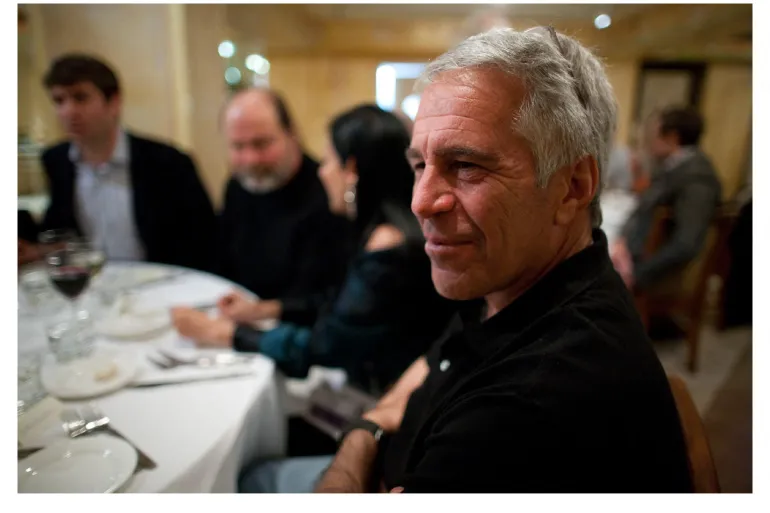




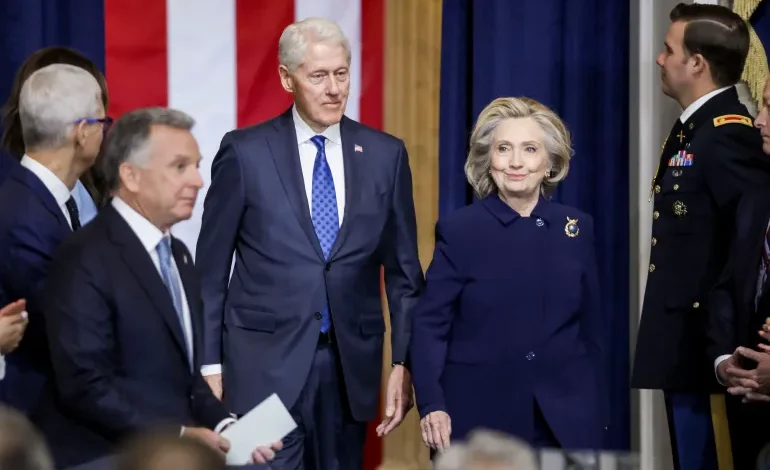

Former US President Bill Clinton and former secretary of state Hillary Clinton have refused to comply with a congressional subpoena ordering them to testify in a House investigation into disgraced financier Jeffrey Epstein, escalating a confrontation that now threatens contempt proceedings.
In a letter sent on Tuesday, the Clintons dismissed the subpoena as “legally invalid” and accused the Republican-led probe, chaired by James Comer, of partisan targeting designed to punish political opponents while sparing allies, including President Donald Trump.
“We will forcefully defend ourselves,” the couple wrote, claiming the investigation was “literally designed to result in our imprisonment”.
Comer responded by saying he would initiate contempt of Congress proceedings next week, a move that would require approval by the full United States House of Representatives before any referral to the Justice Department.
“No one’s accusing the Clintons of any wrongdoing,” Comer told reporters. “We just have questions.”
While the Clintons argue the subpoena amounts to harassment, Hillary Clinton’s long and controversial public record looms over the standoff and shapes how the confrontation is being received.
As secretary of state, Clinton faced sustained criticism over her use of a private email server for official communications, a decision she acknowledged as a mistake and which became a defining controversy of the 2016 election. Though the FBI ultimately declined to recommend charges, the episode damaged public trust and cemented perceptions of elite impunity that still dog her political legacy.
Her role in the 2011 NATO intervention in Libya, which she publicly supported, remains another flashpoint. The collapse of the Libyan state and subsequent regional instability have been widely cited by critics as an enduring consequence of US policy decisions taken during her tenure at the State Department.
Clinton has also drawn criticism over remarks that were later viewed as politically costly, including her description of some Trump supporters in 2016 as a “basket of deplorables”, a phrase that opponents continue to invoke as emblematic of elite disdain for voters.
Those controversies, all well-documented in the public record, have made Hillary Clinton a lightning rod in US politics, and they continue to shape scepticism among critics who argue that powerful figures too often evade meaningful scrutiny.
Epstein died by suicide in 2019 while awaiting trial on federal sex trafficking charges, but the question of who in his elite social circle knew what has only intensified. Both Bill Clinton and Trump had documented social interactions with Epstein in the past, though both men deny any knowledge of his criminal activities.
In their letter, the Clintons said they had already provided all relevant information in writing and that an in-person appearance would serve no investigative purpose beyond “harass[ing] and embarrass[ing]”.
“We have tried to give you the little information we have,” they wrote. “We’ve done so because Mr Epstein’s crimes were horrific.”
The dispute unfolds as the Justice Department continues to release only a limited portion of Epstein-related files, despite a law passed last year mandating full disclosure. Critics across party lines have accused authorities of selectively releasing material that fuels political narratives rather than transparency.
Two lawmakers, Democrat Ro Khanna and Republican Thomas Massie, have already asked a federal judge to appoint a neutral expert to oversee the release of the remaining documents, warning of possible legal violations in how the process has been handled.

The latest news in your social feeds
Subscribe to our social media platforms to stay tuned