




The original story by Clair McFarland for Cowboy State Daily,
A push by Wyoming lawmakers to block $58 million in federal funding for tribal health clinics is raising red flags from both health care leaders and fellow legislators, who say the move could end up costing the state more money than it saves – while putting essential care at risk for tribal communities.
The proposal surfaced this week during a Joint Appropriations Committee meeting in Cheyenne, where lawmakers advanced a slate of deep cuts and funding denials to the Wyoming Department of Health’s roughly $3 billion budget. The $58 million denial isn’t final, but unless reversed during the legislative session that begins Feb. 9, it would block tribal clinics from receiving federal Medicaid money already earmarked for them.
Rep. Lloyd Larsen, R-Lander, didn’t mince words about the proposal. A former House Appropriations member who oversaw the health department’s budget for eight years, Larsen said the denial makes little fiscal sense.
“If tribal clinics are forced to cut services, those patients don’t just disappear,” Larsen said. “They’ll go off the reservation for care – and then Wyoming pays half the bill.”
Under federal law, Medicaid services provided at tribal clinics are covered 100% by the federal government. But when Medicaid patients seek care at non-tribal facilities, the state picks up 50% of the cost.
“So the effort to save money here,” Larsen said, “actually shifts costs onto Wyoming taxpayers.”
The money in question was never coming from Wyoming’s general fund. Instead, it was fully federally funded Medicaid money, funneled through the Wyoming Department of Health, which serves as a pass-through agency but must have legislative approval to spend it.
The funding was designed to cover an 11% Medicaid rate increase that took effect Jan. 1, 2025, along with previous underfunding. Federal officials determined tribal clinics weren’t being reimbursed adequately for Medicaid-covered visits and boosted the rates accordingly.
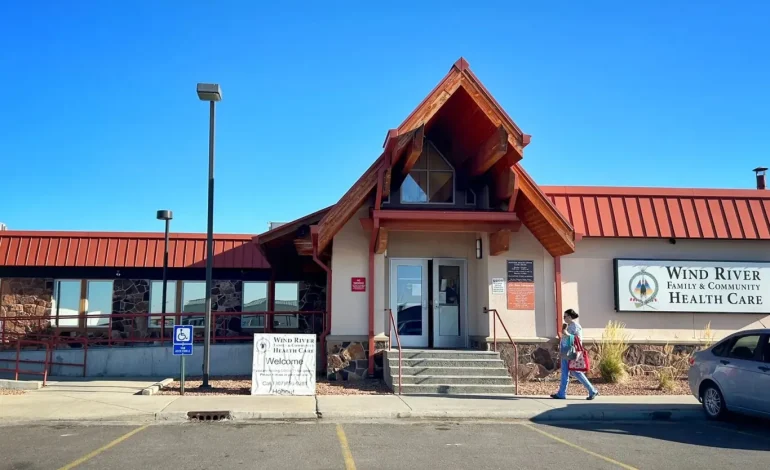
That money was intended for clinics serving the Wind River Indian Reservation, including:
- Wind River Family and Community Health Care (often called Wind River Cares), run by the Northern Arapaho Tribe;
- Warm Valley Health Care, operated by the Eastern Shoshone Tribe;
- Morning Star Care Center, a long-term care facility run by the Shoshone Tribe.
On reservations, the federal government sets Medicaid rates and pays the full cost. Off-reservation, Wyoming sets rates and splits the bill.
Rick Brannan, CEO of Wind River Family and Community Health Care, said the proposal reflects a misunderstanding of both treaty obligations and on-the-ground realities.
“Health care here isn’t a luxury,” Brannan said. “It’s a necessity.”
He pushed back against comments made by Rep. Ken Pendergraft, R-Sheridan, who introduced the denial and framed it as part of a broader effort to curb government dependency.
“It’s not addiction,” Brannan said. “The federal government made promises to tribes through treaties. Health care was part of that.”
Brannan said his clinic is already underfunded and serving a population with serious health challenges, including high rates of diabetes and shorter life expectancy than non-tribal residents.
“You see people in wheelchairs, missing limbs because of diabetes,” he said. “This money isn’t for freebies. It’s for basic clinic operations – equipment, supplies, and skilled medical professionals.”
If clinics lose funding and are forced to scale back, Brannan echoed Larsen’s concern that patients will end up in off-reservation facilities – shifting costs directly to the state.
The $58 million denial is just one piece of a larger and increasingly contentious budget picture. During Tuesday’s meeting, the Joint Appropriations Committee advanced millions of dollars in cuts and denials across the Department of Health, including blocking authorization to spend federal funds tied to state-administered programs.
Among the most controversial proposals:
- Denying $27.6 million for the “community choices waiver,” which helps Medicaid recipients stay in their homes rather than move into nursing homes;
- Blocking funding increases for behavioral health services, including mental health, substance abuse treatment, and autism care;
- Denying money for critical access hospitals, OB services, home health care, and public health labs.
Larsen said the community choices waiver cut is especially troubling. Home care costs about $2,000 per month, compared to roughly $6,000 for nursing homes – half of which Wyoming pays.
“That’s another example where cutting now means paying more later,” he said.
Pendergraft framed his proposals as part of a broader philosophical push to reduce government intervention.
“We’ve become addicted to government,” he said during Tuesday’s meeting.
But Larsen and others argue that ideology shouldn’t override basic math – especially when federal dollars are on the table.
“If these are the kinds of changes we’re going to see in the budget bill,” Larsen said, “it’s going to open the door for some very big debates on the House and Senate floors.”
Pendergraft and committee chair Rep. John Bear, R-Gillette, did not respond to requests for comment on Larsen’s concerns.
To be fair, the committee didn’t just slash funding. Pendergraft also successfully advanced increases for Medicaid-funded developmental disability services, adding $10.9 million to reduce a long-standing wait list that currently sits at around 440 people.
Other lawmakers pushed through targeted pay raises for nurses and State Hospital staff, and additional funding to address disparities in public health nurse pay across Wyoming.
Still, critics say those increases don’t offset the broader impact of the proposed denials.
None of the committee’s decisions are final. The full Wyoming Legislature will take up the budget when the session begins Feb. 9, and lawmakers can reverse or amend the cuts.
For now, tribal health leaders and fiscal conservatives like Larsen are sounding the same alarm: blocking federal health dollars may score political points – but it could leave Wyoming paying more, while tribal communities pay the price.


The latest news in your social feeds
Subscribe to our social media platforms to stay tuned