





The Philippines and Japan have signed two new defence agreements, further tightening military cooperation as both countries position themselves against China’s growing assertiveness in the region.
The deals, signed on Thursday in Manila, include a pact allowing Japanese and Philippine forces to exchange supplies and services during joint activities, a move that cements years of steadily deepening security ties between the two US allies.
Tokyo and Manila have drawn closer in recent years through expanded military cooperation with Washington, as well as Japan’s transfer of patrol boats and communications equipment to the Philippines. The latest agreements build on that momentum at a time of rising friction in the South China Sea.
The Philippines and China have repeatedly clashed in the contested waters, which Beijing claims almost in their entirety despite an international court ruling that found its claims have no legal basis.
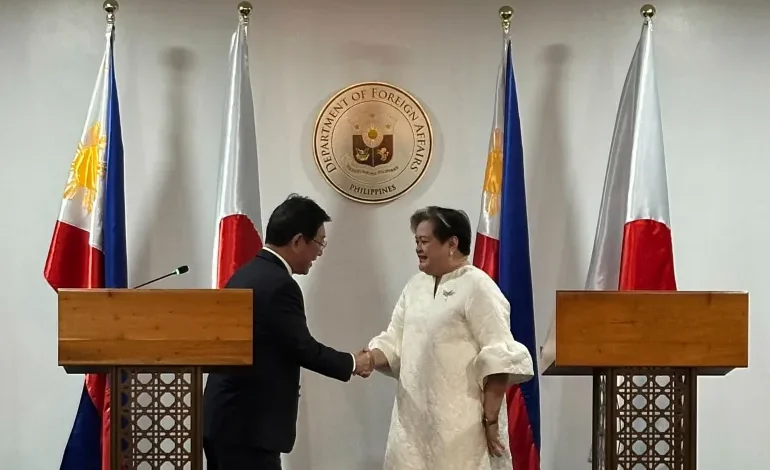
Japanese Foreign Minister Toshimitsu Motegi and Philippine Foreign Secretary Theresa Lazaro signed an Acquisition and Cross-Servicing Agreement that allows for the tax-free provision of ammunition, fuel, food, and other essentials when the two militaries conduct joint training exercises.
The ministers also announced a six-million-dollar Official Security Assistance package from Japan to fund facilities for rigid-hulled inflatable boats previously donated to the Philippines, part of Tokyo’s effort to strengthen Manila’s naval capabilities.
Speaking at a joint briefing, Lazaro said the resupply deal would “enhance our mutual military interoperability and readiness” and would build on an earlier visiting forces agreement between the two countries.
“We both recognised the value of promoting the rule of law, including the freedom of navigation and overflight, especially in the South China Sea,” she said.
Motegi echoed the message, saying he and Lazaro “concurred on continuing to oppose unilateral attempts to change the status quo by force or coercion in the East and South China seas”. While China was not mentioned by name, the target of the statement was clear.
The new agreements follow the Reciprocal Access Agreement signed in mid-2024, which allows troops from each country to deploy to the other’s territory for larger-scale exercises, including live-fire drills. That deal came into force in September and marked a significant expansion of bilateral military cooperation.
The moves also come as Japan’s broader relationship with China remains strained. Longstanding historical and territorial disputes have worsened since Japanese Prime Minister Sanae Takaichi suggested late last year that Tokyo could intervene militarily if China attacked Taiwan.
Those remarks drew sharp condemnation from Beijing, which has vowed to bring Taiwan under its control and has responded with a mix of military pressure and economic measures.
In his New Year’s address, Chinese President Xi Jinping described the “reunification” of China and Taiwan as “unstoppable”, comments delivered just days after China’s military concluded live-fire drills simulating a blockade of the island.
For Manila and Tokyo, the message from Beijing has reinforced the urgency of coordination. The latest defence pacts do not formally create an alliance, but they further weave Japan and the Philippines into a shared security architecture aimed at deterring coercion and signalling that unilateral moves in regional waters will not go unanswered.
Tags: Japan Philippines relations, defence cooperation, South China Sea, China tensions, regional security, military alliances, Indo-Pacific geopolitics


The latest news in your social feeds
Subscribe to our social media platforms to stay tuned